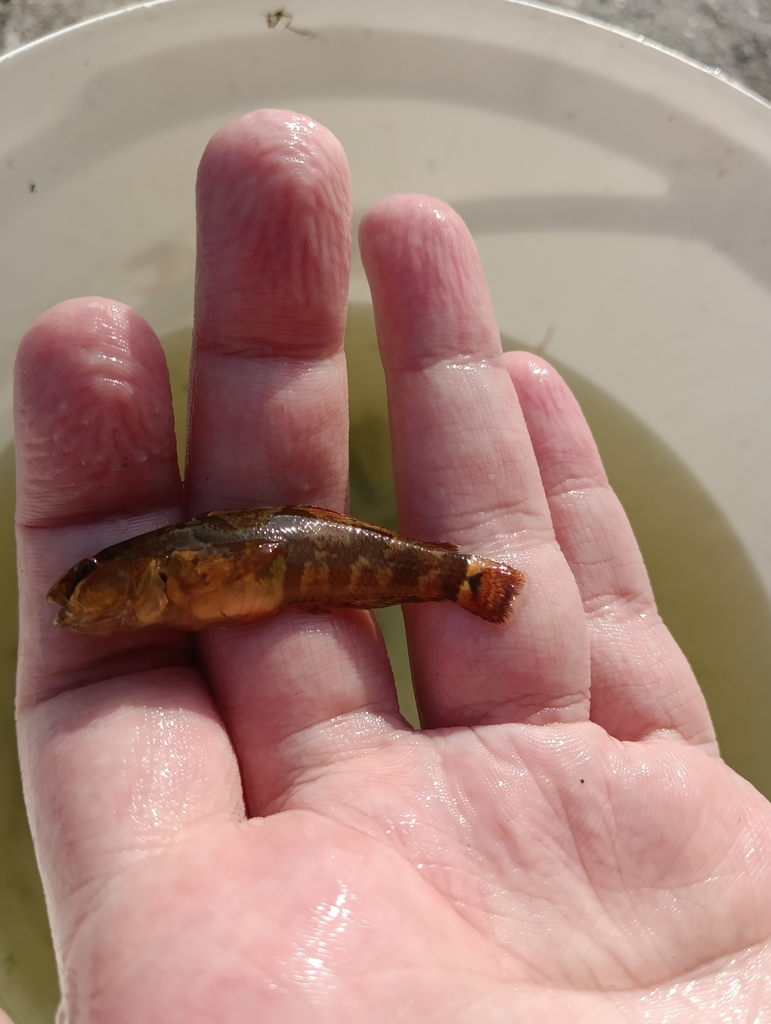
The Tubenose goby (Proterorhinus marmoratus) is a fish that lives in both fresh and salt water of the family Gobiidae that grows up to 12 cm.
Description
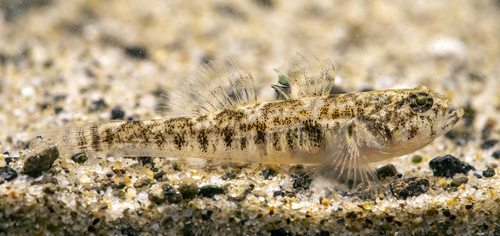
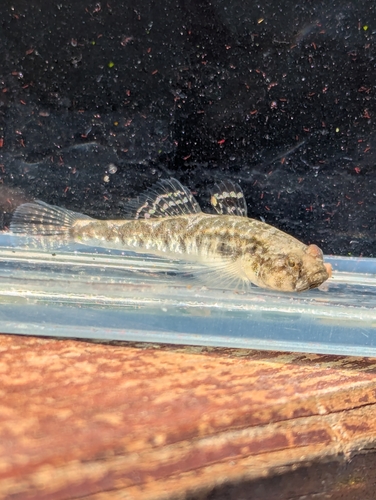
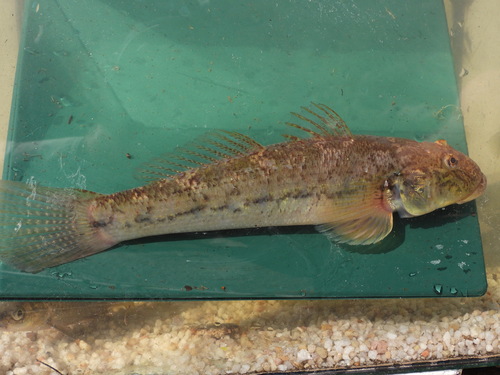
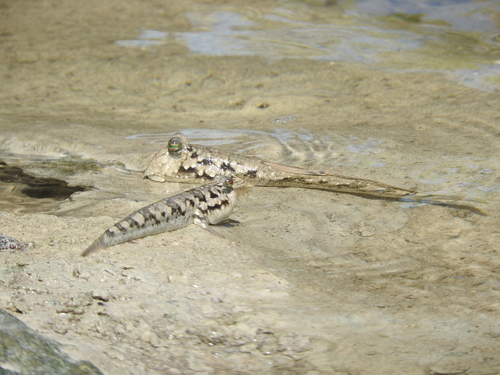
The tubenose goby is a small goby of the family Gobiidae reaching about 12 cm. Characteristic are the tube-like extended front nostrils, which hang like little tubes over the upper lip and give the fish its name; the brownish mottled body provides camouflage and the pelvic fins are, as in all gobies, fused into a sucking disc. The species is euryhaline and lives in brackish coastal waters, lagoons and river mouths of the Black Sea and Caspian Sea basins. As a bottom-dweller it hunts small crustaceans, worms and insect larvae. The male defends a territory and guards the eggs laid under a stone or shell. Closely related tubenose gobies have established themselves as an invasive species in western European rivers.
Frequently asked questions
How do you recognise the Tubenose goby?
The Tubenose goby has a torpedo-shaped body, is mainly brown and shows a marbled pattern.
Where does the Tubenose goby live?
The Tubenose goby lives in both fresh and salt water and is mostly found around sand or mud bottom.
How big does the Tubenose goby get?
The Tubenose goby grows to a maximum of about 12 cm.
Is the Tubenose goby dangerous to humans?
No, the Tubenose goby is harmless to humans.
Is the Tubenose goby edible?
The Tubenose goby is not usually eaten.
Download Fin's Fish Guide
Identify fish in seconds, log your catches and dives. Join the TestFlight beta.
All data
Identification
Appearance
Habitat & distribution
Behaviour & biology
For anglers
Safety
Status & sources
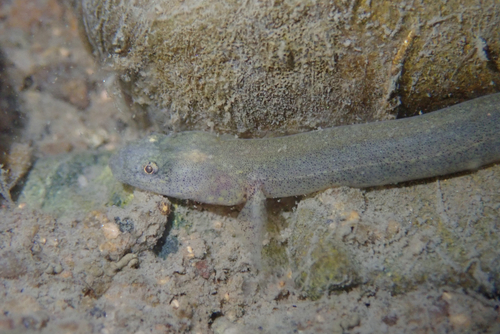
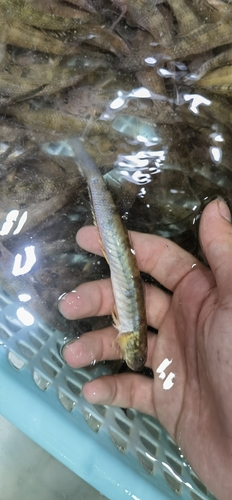
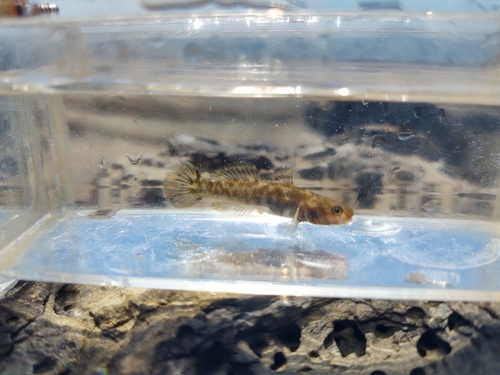
More from the family Gobiidae
Download Fin's Fish Guide
Identify fish in seconds, log your catches and dives. Join the TestFlight beta.