
The Shortwing searobin (Prionotus stearnsi) is a saltwater fish of the family Triglidae that grows up to 18 cm.
Description
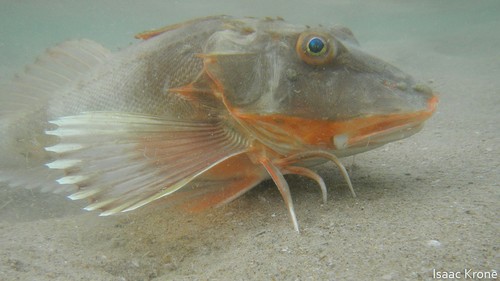
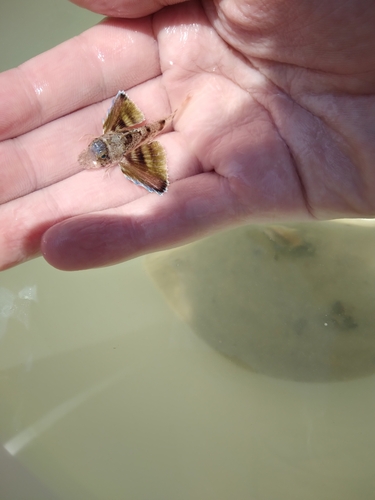
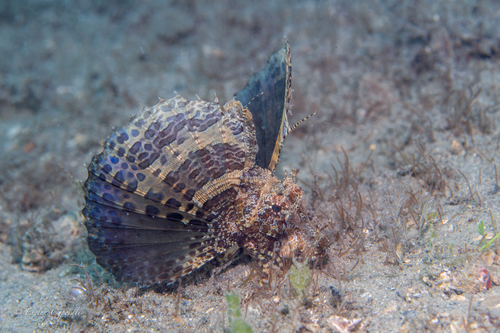
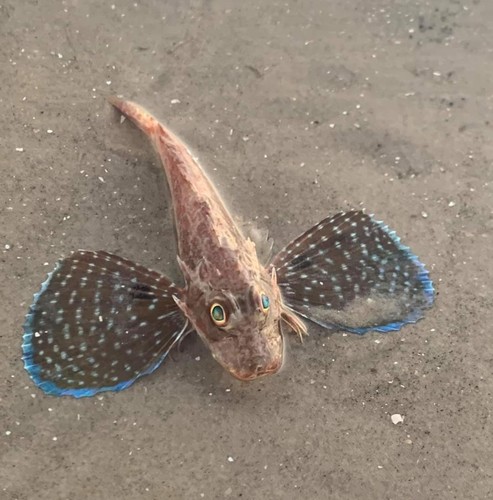
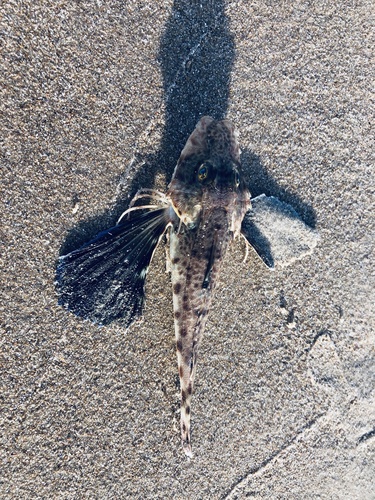
The shortwing searobin is a bottom-dwelling marine fish of the searobin family (Triglidae) of the western Atlantic. The species grows to about 17 cm and has an elongate body with a bony head shield and, unlike many relatives, rather short pectoral fins. The lower fin rays are separated into finger-like feelers with which the fish 'walks' over the bottom and probes for prey. It lives in deeper coastal waters, usually between about 70 and 180 metres, and feeds on small bottom animals. The species is of little commercial value and is harmless to humans.
Frequently asked questions
How do you recognise the Shortwing searobin?
The Shortwing searobin has an elongate, eel-like body, is mainly red-orange and shows a spots pattern.
Where does the Shortwing searobin live?
The Shortwing searobin lives in the sea (marine waters) and is mostly found around sand or mud bottom.
How big does the Shortwing searobin get?
The Shortwing searobin grows to a maximum of about 18 cm.
Is the Shortwing searobin dangerous to humans?
No, the Shortwing searobin is harmless to humans.
Is the Shortwing searobin edible?
The Shortwing searobin is not usually eaten.
Download Fin's Fish Guide
Identify fish in seconds, log your catches and dives. Join the TestFlight beta.
All data
Identification
Appearance
Habitat & distribution
Behaviour & biology
For anglers
Safety
Status & sources
Same genus Prionotus
More from the family Triglidae


Download Fin's Fish Guide
Identify fish in seconds, log your catches and dives. Join the TestFlight beta.