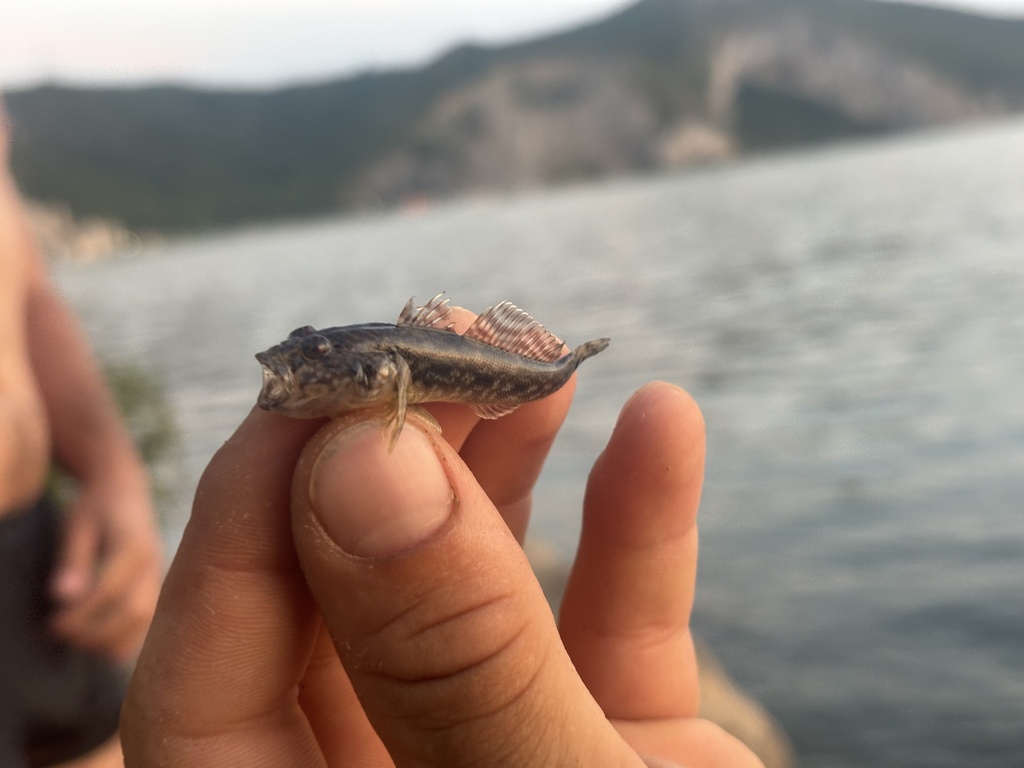
The Bighead goby (Ponticola kessleri) is a brackish-water fish of the family Gobiidae that grows up to 22 cm.
Description
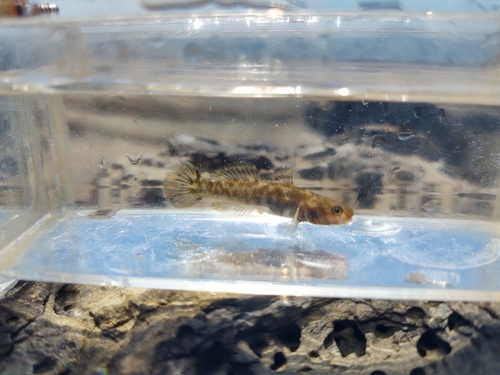
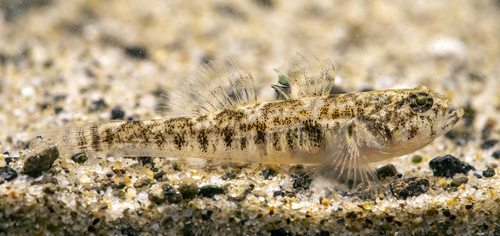
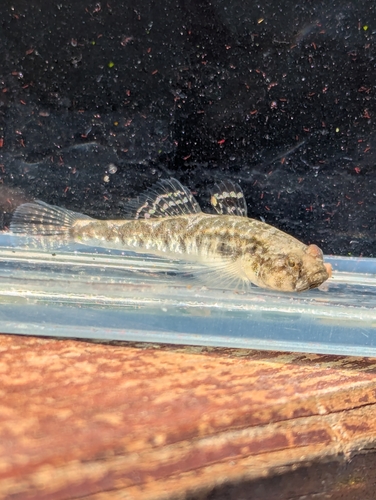
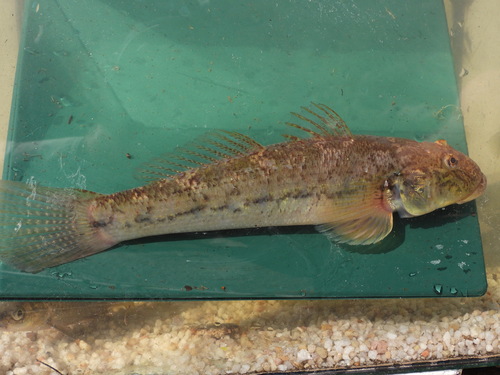
The bighead goby is a Ponto-Caspian goby of the family Gobiidae reaching about 22 cm. Characteristic is the broad, large head; the brown-mottled body bears dark saddle blotches. Like other gobies the pelvic fins are fused into a sucking disc. The species is native to the brackish and fresh water of the Black Sea and Danube drainages, on vegetated and stony bottoms. As a bottom-dweller it hunts small crustaceans, molluscs, insect larvae and small fish. The bighead goby, like several related Ponto-Caspian gobies, spreads quickly northward across Europe via connected rivers, canals and shipping, becoming a conspicuous newcomer in places. In spring the male guards the eggs laid under a stone.
Frequently asked questions
How do you recognise the Bighead goby?
The Bighead goby has a torpedo-shaped body, is mainly brown and shows a marbled pattern.
Where does the Bighead goby live?
The Bighead goby lives in brackish water and is mostly found around mixed bottom.
How big does the Bighead goby get?
The Bighead goby grows to a maximum of about 22 cm.
Is the Bighead goby dangerous to humans?
No, the Bighead goby is harmless to humans.
Is the Bighead goby edible?
The Bighead goby is not usually eaten.
Download Fin's Fish Guide
Identify fish in seconds, log your catches and dives. Join the TestFlight beta.
All data
Identification
Appearance
Habitat & distribution
Behaviour & biology
For anglers
Safety
Status & sources
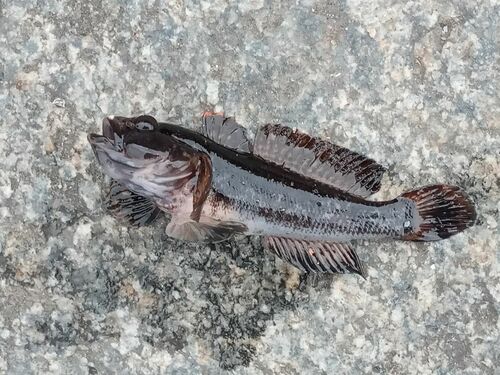
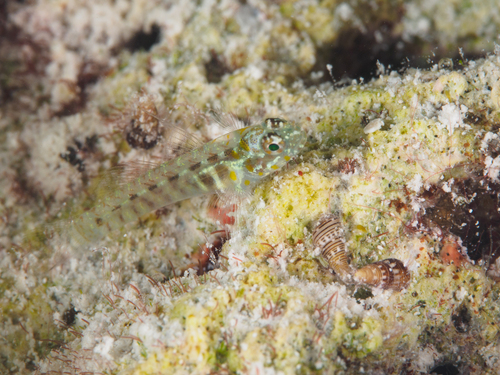
Same genus Ponticola

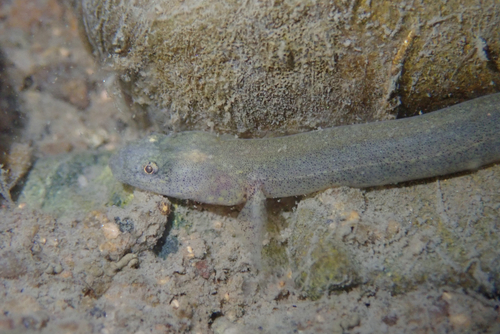
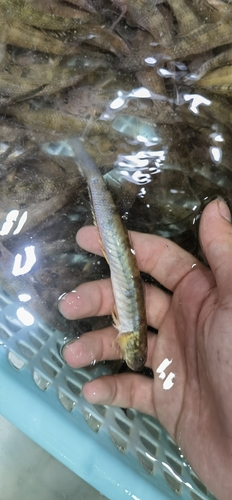
More from the family Gobiidae
Download Fin's Fish Guide
Identify fish in seconds, log your catches and dives. Join the TestFlight beta.