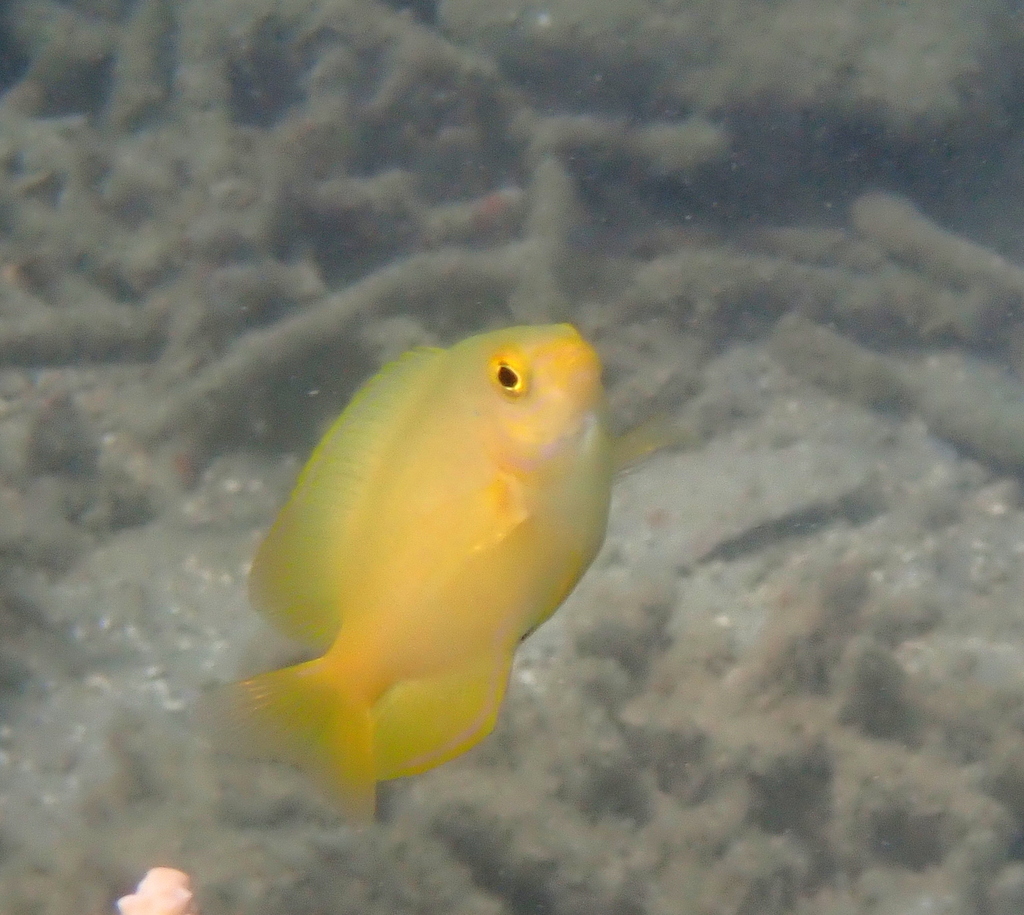
The Damselfish (Pomacentrus moluccensis) is a saltwater fish of the family Pomacentridae that grows up to 9 cm.
Description
The lemon damsel is a small, bright-yellow damselfish of the family Pomacentridae from the western Pacific. The species grows to about 9 cm and has a uniform lemon-yellow body, sometimes with fine blue lines on the head. Adults inhabit clear lagoon and seaward reefs, often among branching coral into which they dive when threatened. As an omnivore it feeds on zooplankton, algae and small invertebrates in the water column. In spawning the male guards the eggs laid on the substrate. The species is popular in the marine aquarium and is harmless to humans.
Frequently asked questions
How do you recognise the Damselfish?
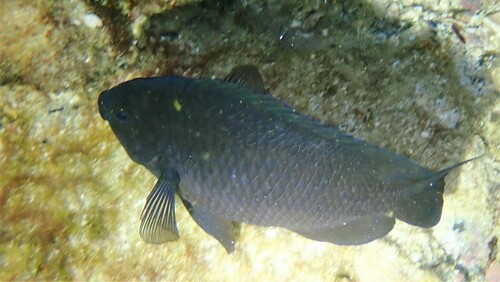
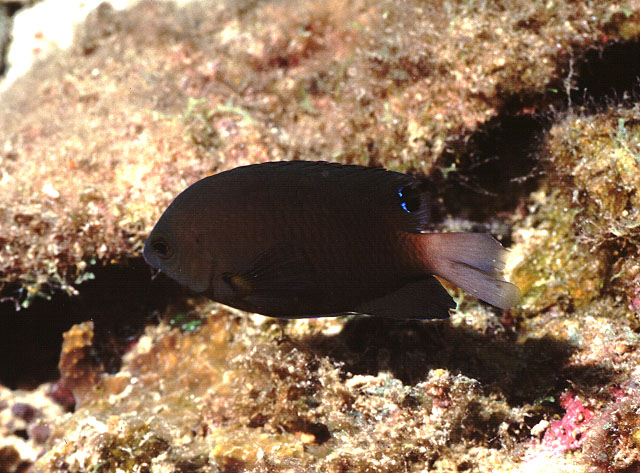
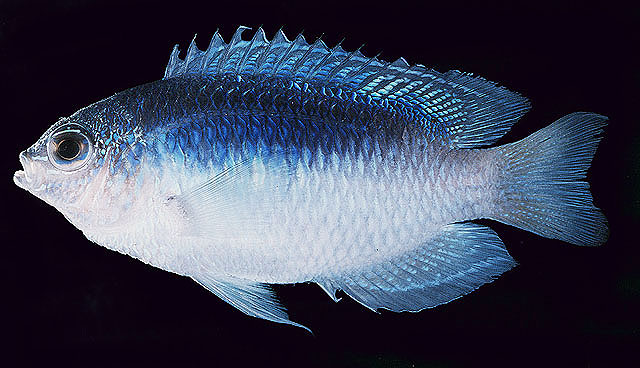
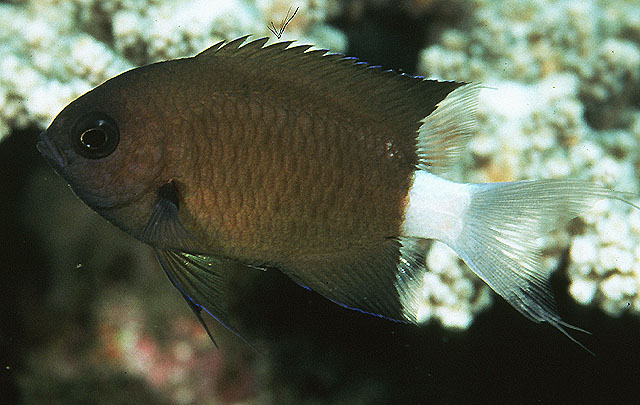
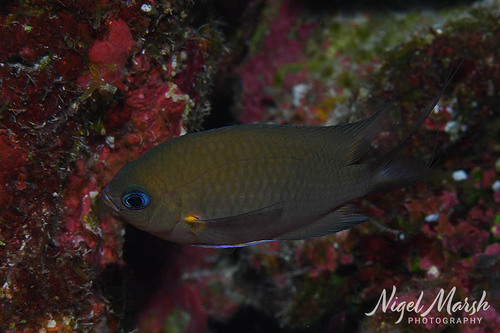
The Damselfish has a flattened, disc-shaped body, is mainly yellow-gold and shows a plain pattern.
Where does the Damselfish live?
The Damselfish lives in the sea (marine waters) and is mostly found around stony or rocky ground.
How big does the Damselfish get?
The Damselfish grows to a maximum of about 9 cm.
Is the Damselfish dangerous to humans?
No, the Damselfish is harmless to humans.
Is the Damselfish edible?
The Damselfish is not usually eaten.
Download Fin's Fish Guide
Identify fish in seconds, log your catches and dives. Join the TestFlight beta.
All data
Identification
Appearance
Habitat & distribution
Behaviour & biology
For anglers
Safety
Status & sources
Same genus Pomacentrus
More from the family Pomacentridae
Download Fin's Fish Guide
Identify fish in seconds, log your catches and dives. Join the TestFlight beta.