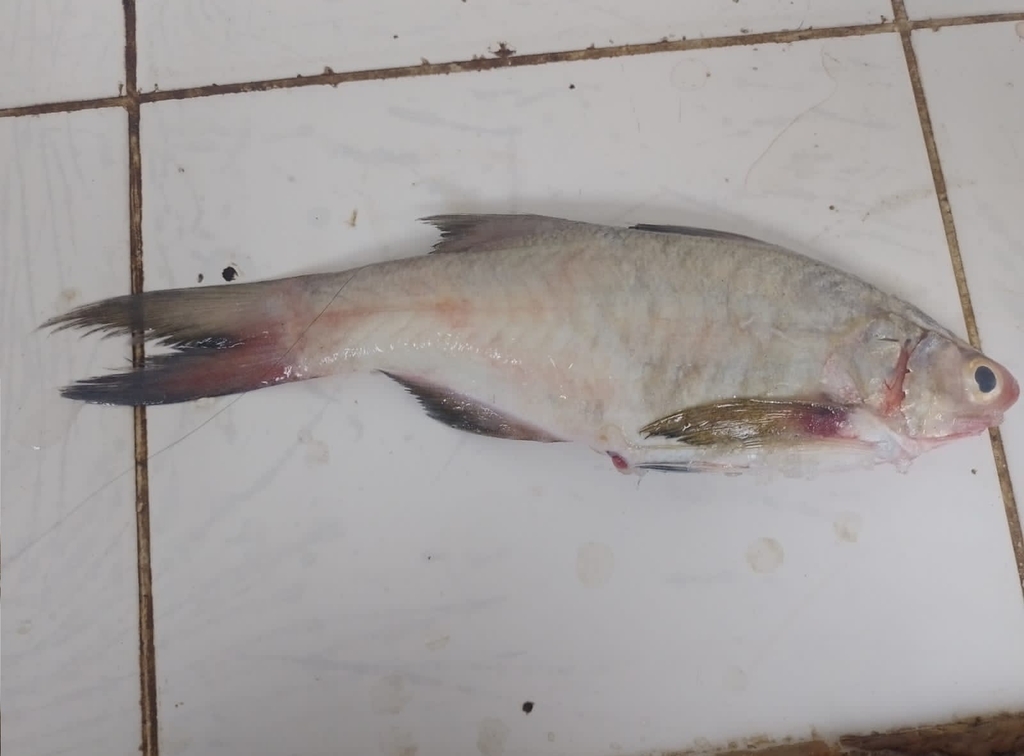
The Blue bobo (Polydactylus approximans) is a brackish-water fish of the family Polynemidae that grows up to 37 cm.
Description
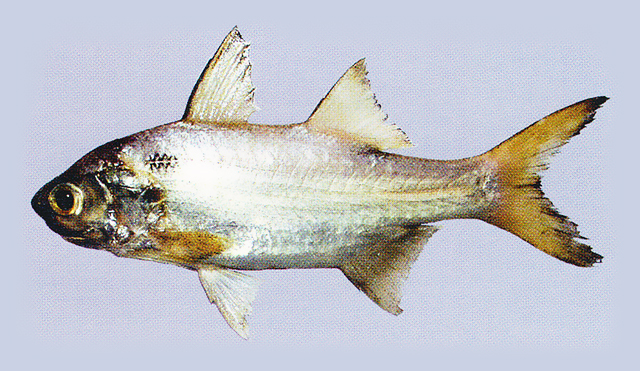
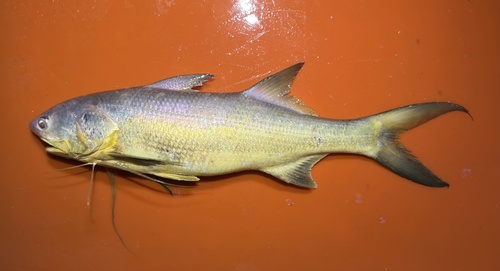
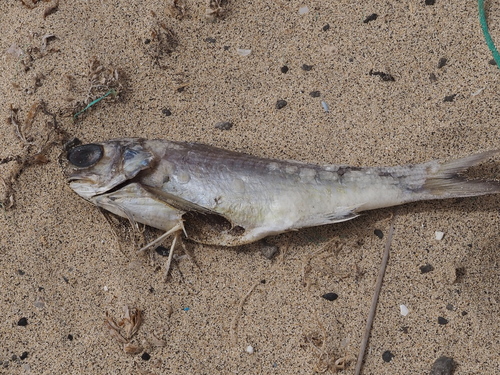
The Pacific threadfin (Polydactylus approximans), or blue bobo, is a threadfin of the family Polynemidae from the eastern Pacific. The species has a streamlined, silvery body, a blunt snout with a ventral mouth and, characteristic of threadfins, several separate, thread-like lower pectoral rays that serve as feelers to locate prey on the bottom in turbid water. It reaches about 37 cm and lives in shallow coastal water on sand and mud bottoms; young larvae are pelagic and sometimes occur far offshore, while larger fish prefer bays and estuaries. The diet consists of crustaceans and small fishes. The species is fished commercially.
Frequently asked questions
How do you recognise the Blue bobo?
The Blue bobo has a torpedo-shaped body, is mainly silver-grey and shows a plain pattern.
Where does the Blue bobo live?
The Blue bobo lives in brackish water and is mostly found around sand or mud bottom.
How big does the Blue bobo get?
The Blue bobo grows to a maximum of about 37 cm. On average the species is around 20 cm.
Is the Blue bobo dangerous to humans?
No, the Blue bobo is harmless to humans.
Is the Blue bobo edible?
Yes, the Blue bobo is commonly eaten.
Download Fin's Fish Guide
Identify fish in seconds, log your catches and dives. Join the TestFlight beta.
All data
Identification
Appearance
Habitat & distribution
Behaviour & biology
For anglers
Safety
Status & sources
Same genus Polydactylus

More from the family Polynemidae
Download Fin's Fish Guide
Identify fish in seconds, log your catches and dives. Join the TestFlight beta.