 Fin's Fish Guide
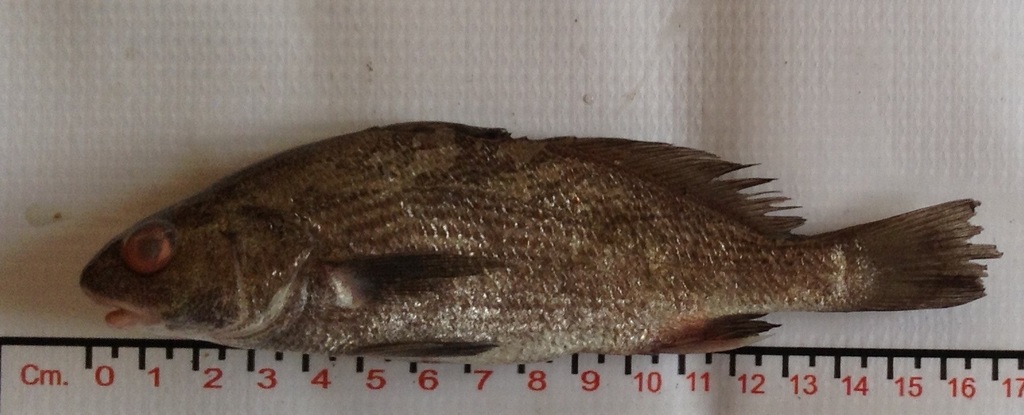
The Point-Tuza croaker (Ophioscion scierus) is a saltwater fish of the family Sciaenidae that grows up to 35 cm.
Eastern Pacific; shallow coastal waters over soft sediment, sometimes estuaries.
Description
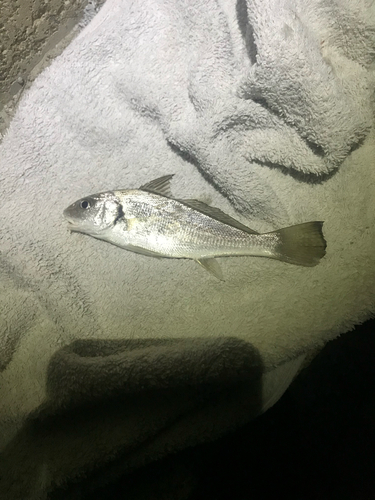
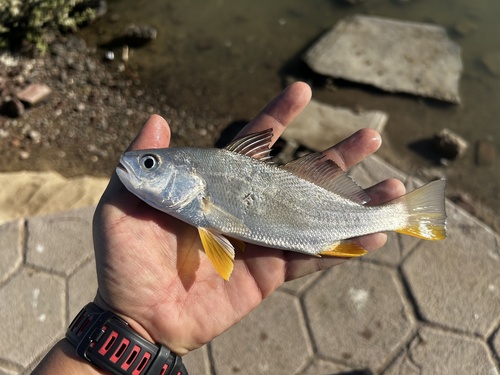
The point-nose croaker is a drum of the family Sciaenidae from the eastern Pacific. The species grows to about 35 cm and has a stocky, silver-grey body with a blunt, rounded snout and an inferior mouth. It inhabits shallow coastal waters over soft sediment and sometimes enters estuaries. As a bottom predator it feeds mainly on shrimps and other bottom animals. Like other drums it can make drumming sounds with the swim bladder, used in courtship. The point-nose croaker is a local food fish and is harmless to humans.
Frequently asked questions
How do you recognise the Point-Tuza croaker?
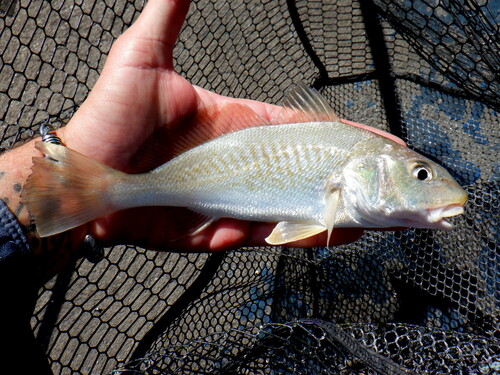
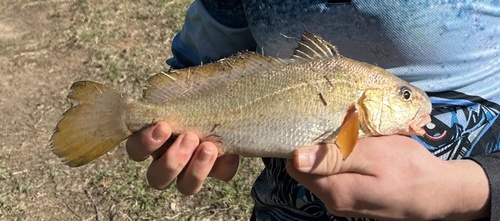
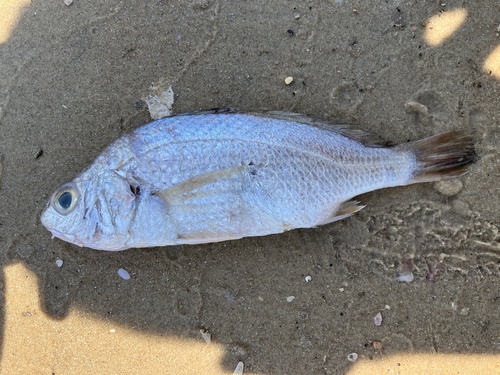
The Point-Tuza croaker has an elongate, eel-like body, is mainly silver-grey and shows a plain pattern. Blunt, round snout and inferior mouth; makes drumming sounds with the swim bladder.
Where does the Point-Tuza croaker live?
The Point-Tuza croaker lives in the sea (marine waters) and is mostly found around sand or mud bottom. Eastern Pacific; shallow coastal waters over soft sediment, sometimes estuaries.
How big does the Point-Tuza croaker get?
The Point-Tuza croaker grows to a maximum of about 35 cm. On average the species is around 25 cm.
Is the Point-Tuza croaker dangerous to humans?
No, the Point-Tuza croaker is harmless to humans. None required: this species is harmless to humans.
Is the Point-Tuza croaker edible?
Yes, the Point-Tuza croaker is commonly eaten.
More photos


Want the complete picture on the Point-Tuza croaker?
Point your camera at the fish and Fin names the species in seconds. Free, and the Point-Tuza croaker is one of 12,519 species in the app.
All data
Identification
Appearance
Habitat & distribution
Behaviour & biology
For anglers
Safety
Status & sources
Same genus Ophioscion

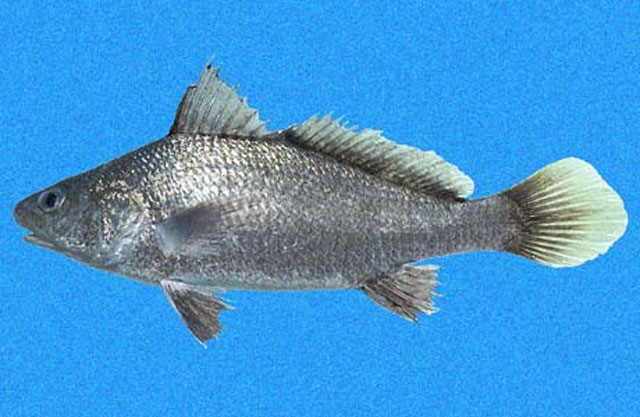

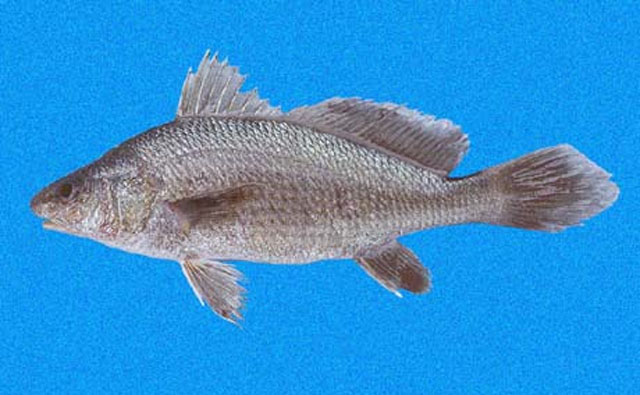
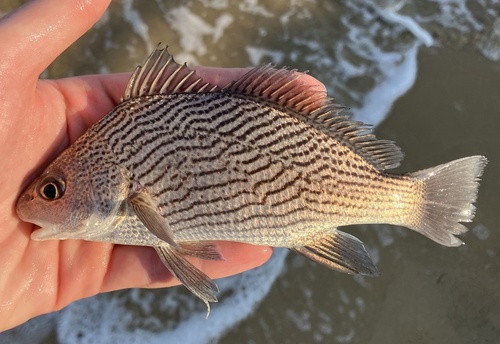
More from the family Sciaenidae

Want the complete picture on the Point-Tuza croaker?
Point your camera at the fish and Fin names the species in seconds. Free, and the Point-Tuza croaker is one of 12,519 species in the app.