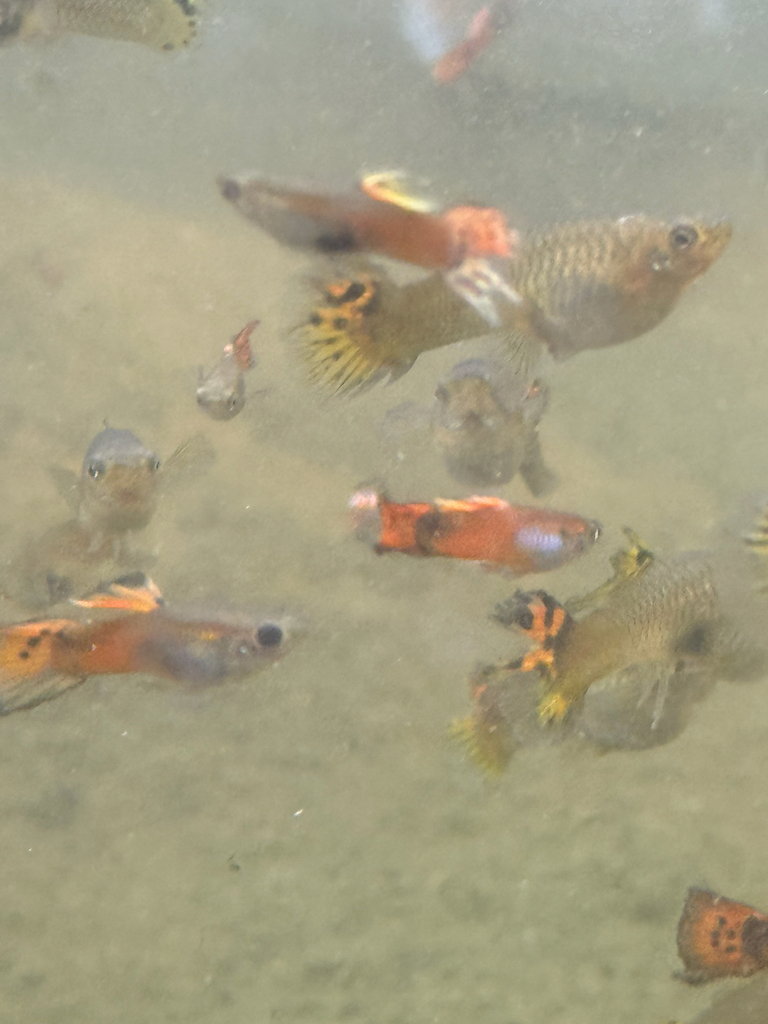
The Barbados millions (Poecilia reticulata) is a brackish-water fish of the family Poeciliidae that grows up to 5 cm.
Description
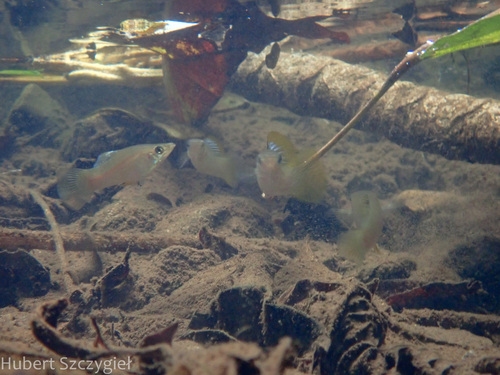
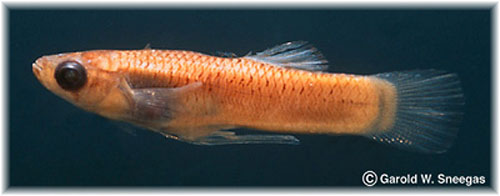
The guppy (Poecilia reticulata) is one of the best-known aquarium fishes in the world, a small livebearing freshwater fish of the family Poeciliidae, native to northern South America. The species shows strong sexual dimorphism: males are only a few centimetres but very colourful with a fan-shaped tail, while the larger females are plain grey. Guppies live in very diverse waters, from turbid ditches to clear mountain streams, and reproduce rapidly by internal fertilisation and bearing live young. They eat mosquito larvae, small invertebrates and algae. They have been introduced worldwide, often to control mosquitoes.
Frequently asked questions
How do you recognise the Barbados millions?
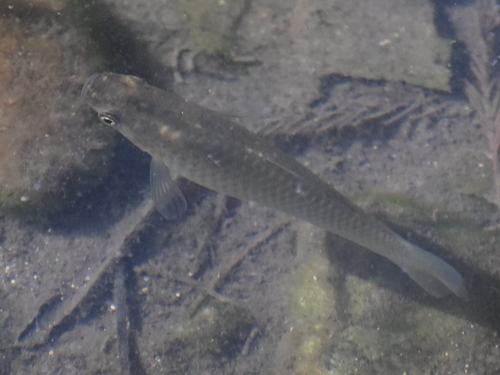
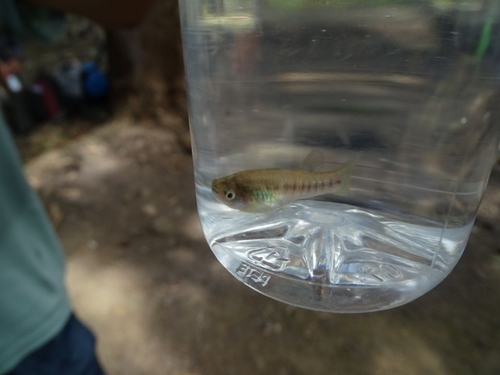
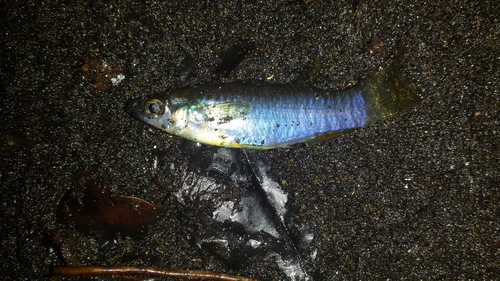
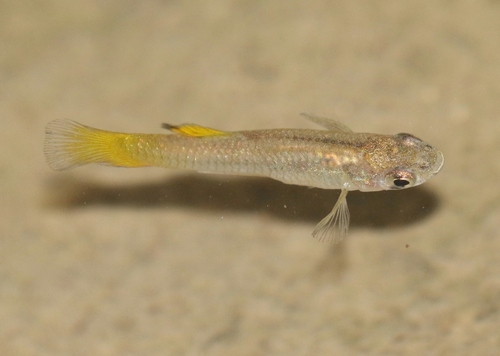
The Barbados millions has a torpedo-shaped body, is mainly multicoloured and shows a spots pattern.
Where does the Barbados millions live?
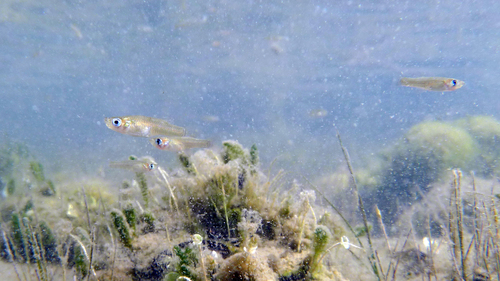
The Barbados millions lives in brackish water and is mostly found around mixed bottom.
How big does the Barbados millions get?
The Barbados millions grows to a maximum of about 5 cm. On average the species is around 3 cm.
Is the Barbados millions dangerous to humans?
No, the Barbados millions is harmless to humans.
Is the Barbados millions edible?
The Barbados millions is not usually eaten.
Download Fin's Fish Guide
Identify fish in seconds, log your catches and dives. Join the TestFlight beta.
All data
Identification
Appearance
Habitat & distribution
Behaviour & biology
For anglers
Safety
Status & sources
Same genus Poecilia

More from the family Poeciliidae


Download Fin's Fish Guide
Identify fish in seconds, log your catches and dives. Join the TestFlight beta.