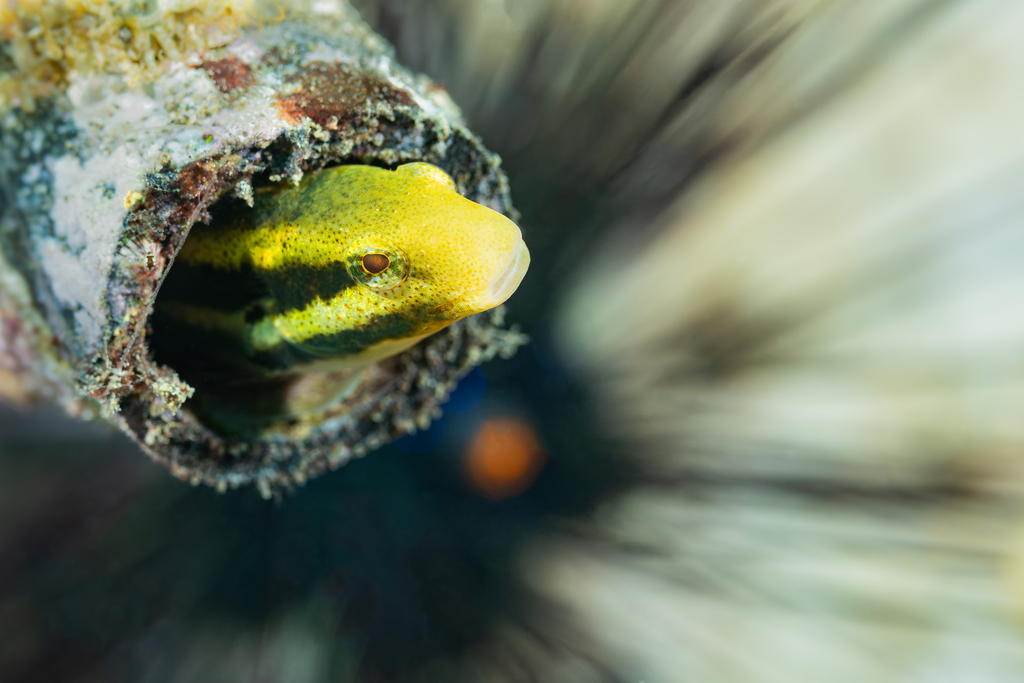
The Black-banded blenny (Petroscirtes breviceps) is a brackish-water fish of the family Blenniidae that grows up to 11 cm.
Description
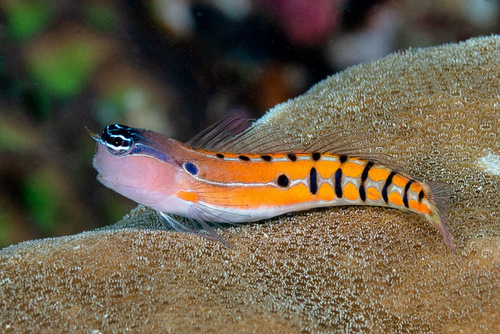
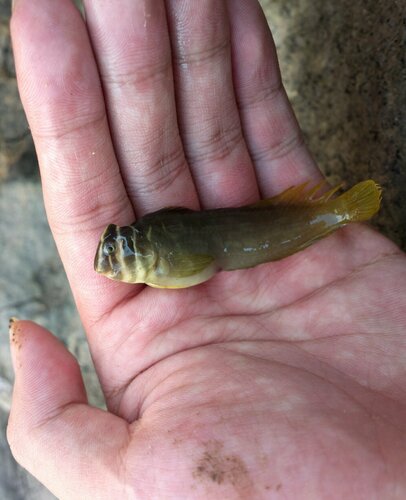
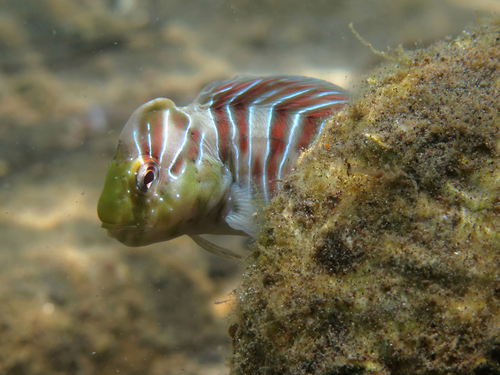
The striped poison-fang blenny mimic is a blenny from the Indo-West Pacific, ranging from East Africa to Papua New Guinea, north to southern Japan. The species grows to about 11 cm and has an elongate body with a broad dark stripe from the snout through the eye to the tail. It mimics the venomous fang blennies of the genus Meiacanthus and has enlarged canine teeth in the lower jaw. It lives on coastal reefs, in estuaries and among weed, and likes to shelter in empty bottles and tubes. When handled it does not hesitate to bite with its teeth. The IUCN assesses the species as Least Concern (LC).
Frequently asked questions
How do you recognise the Black-banded blenny?
The Black-banded blenny has an elongate, eel-like body, is mainly silver-grey and shows a horizontal stripes pattern.
Where does the Black-banded blenny live?
The Black-banded blenny lives in brackish water and is mostly found around stony or rocky ground.
How big does the Black-banded blenny get?
The Black-banded blenny grows to a maximum of about 11 cm.
Is the Black-banded blenny dangerous to humans?
The Black-banded blenny can cause injury; handle it with care.
Is the Black-banded blenny edible?
The Black-banded blenny is not usually eaten.
Download Fin's Fish Guide
Identify fish in seconds, log your catches and dives. Join the TestFlight beta.
All data
Identification
Appearance
Habitat & distribution
Behaviour & biology
For anglers
Safety
Status & sources
Same genus Petroscirtes
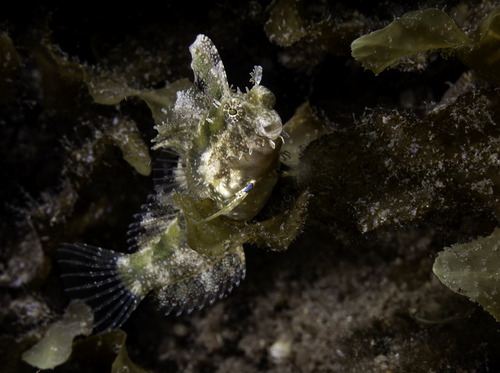
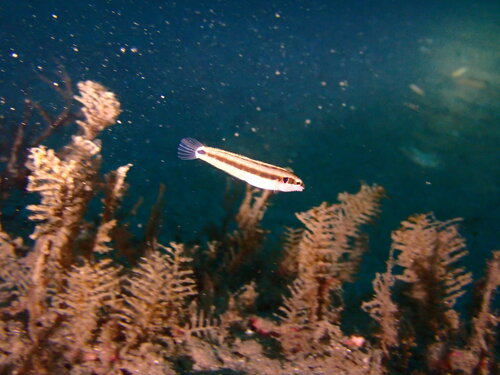

More from the family Blenniidae
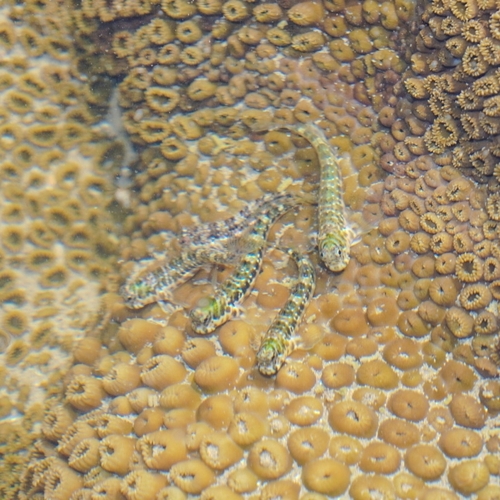
Download Fin's Fish Guide
Identify fish in seconds, log your catches and dives. Join the TestFlight beta.