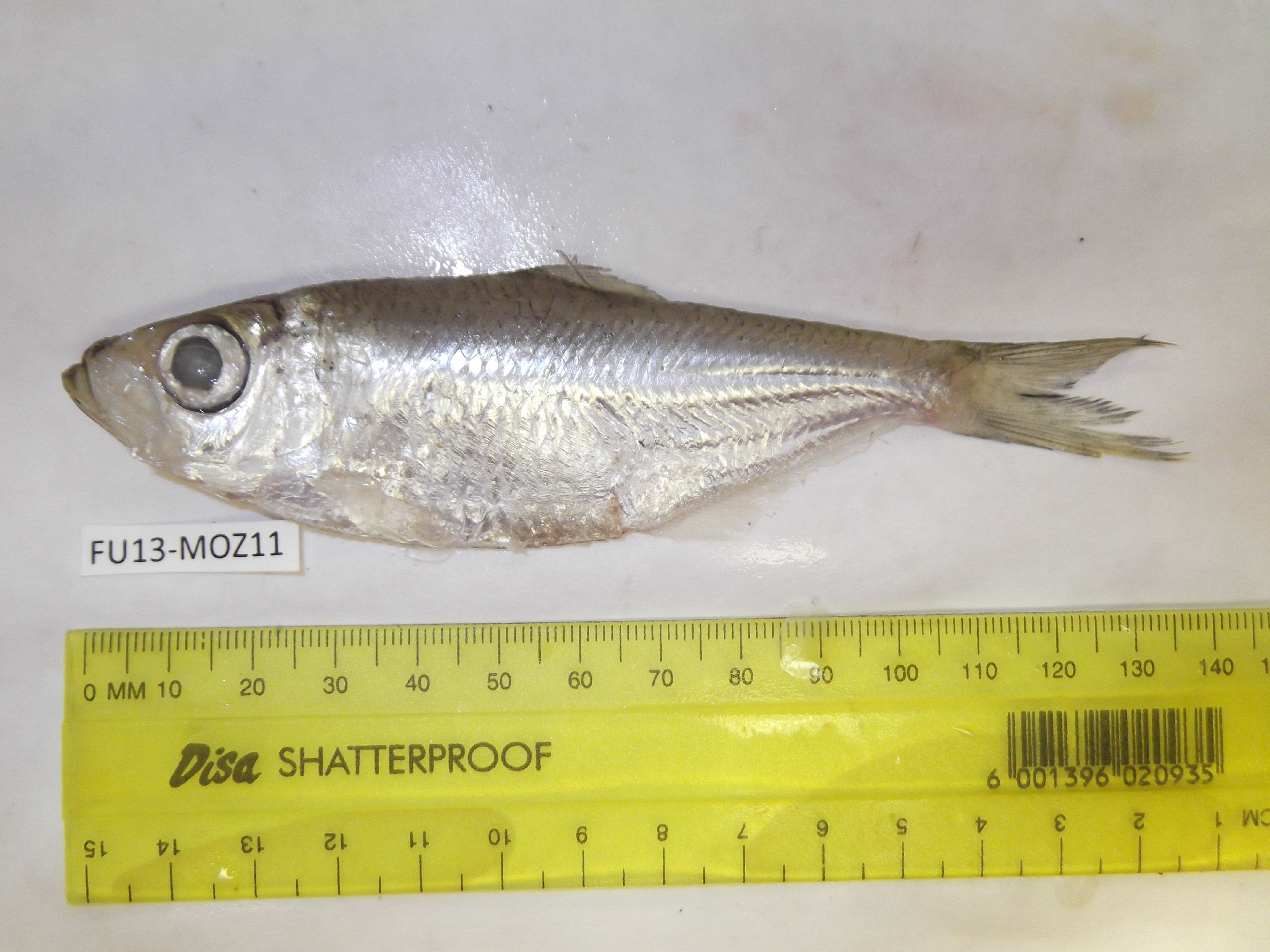
The Big-eyed herring (Pellona ditchela) is a fish that lives in both fresh and salt water of the family Pristigasteridae that grows up to 16 cm.
Description
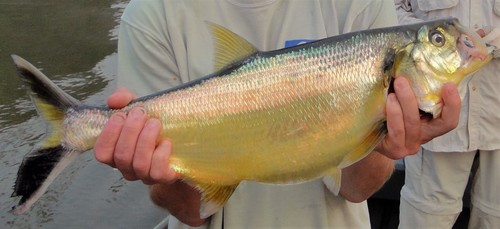
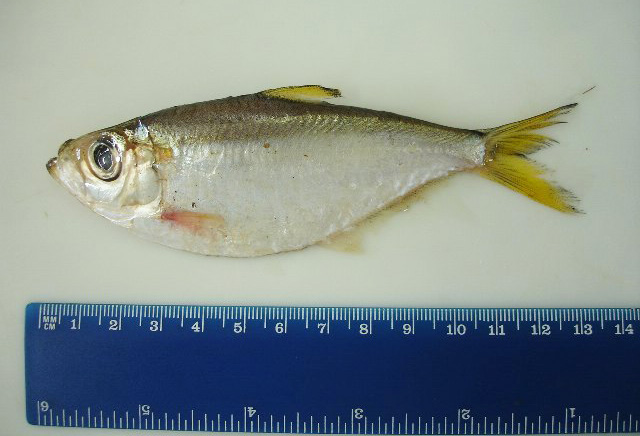
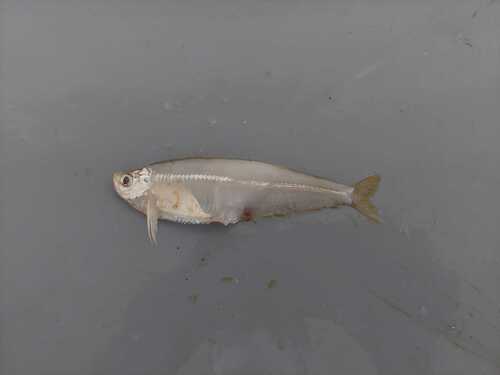
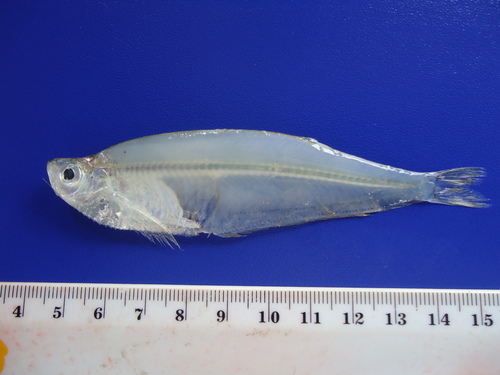
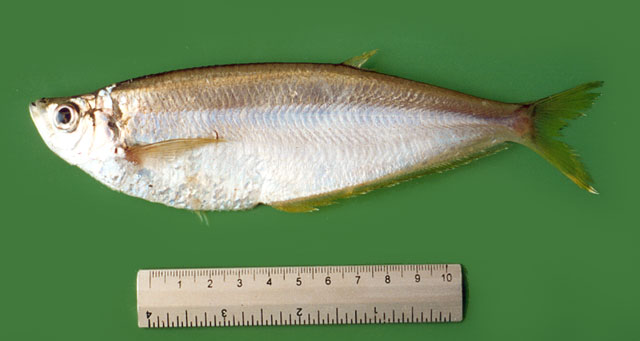
The Indian pellona is a herring-like fish of the family Pristigasteridae from the Indo-West Pacific. The species grows to about 16 cm and has a strongly laterally compressed, silvery body with a sharp, serrated belly keel. It is a pelagic species of coastal waters that also enters estuaries. As a predatory plankton feeder it feeds on small zooplankton and small invertebrates. It forms schools in the upper water layers. The Indian pellona is a local food fish eaten fresh or dried. It is harmless to humans.
Frequently asked questions
How do you recognise the Big-eyed herring?
The Big-eyed herring has a torpedo-shaped body, is mainly silver-grey and shows a plain pattern.
Where does the Big-eyed herring live?
The Big-eyed herring lives in both fresh and salt water and is mostly found around open water.
How big does the Big-eyed herring get?
The Big-eyed herring grows to a maximum of about 16 cm. On average the species is around 13 cm.
Is the Big-eyed herring dangerous to humans?
No, the Big-eyed herring is harmless to humans.
Is the Big-eyed herring edible?
Yes, the Big-eyed herring is commonly eaten.
Download Fin's Fish Guide
Identify fish in seconds, log your catches and dives. Join the TestFlight beta.
All data
Identification
Appearance
Habitat & distribution
Behaviour & biology
For anglers
Safety
Status & sources
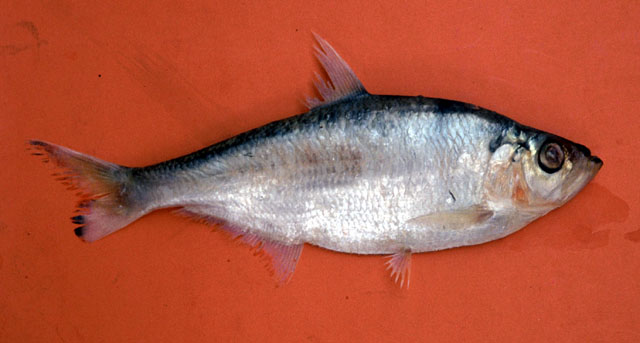
Same genus Pellona
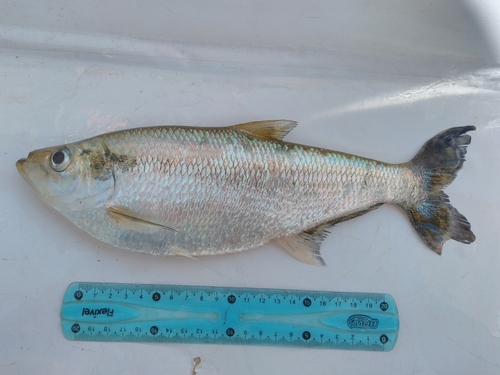
More from the family Pristigasteridae
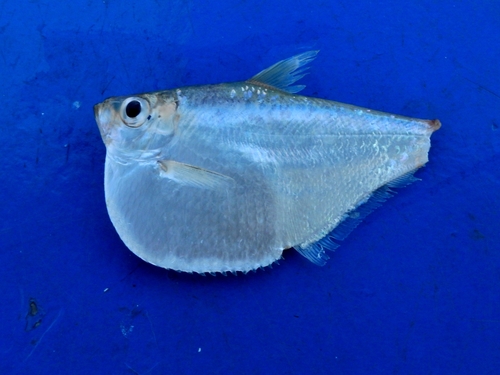
Download Fin's Fish Guide
Identify fish in seconds, log your catches and dives. Join the TestFlight beta.