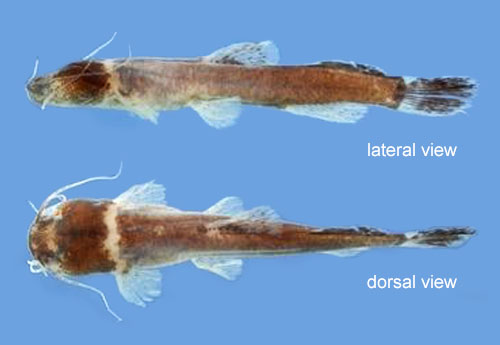
The Banded longwhisker catfish (Pariolius armillatus) is a freshwater fish of the family Heptapteridae that grows up to 3 cm.
Description
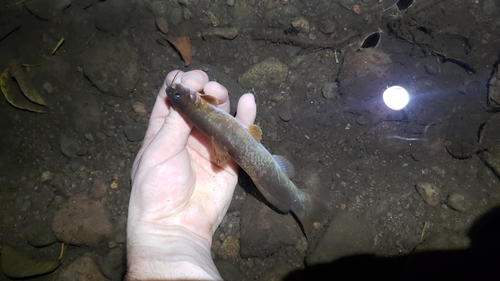
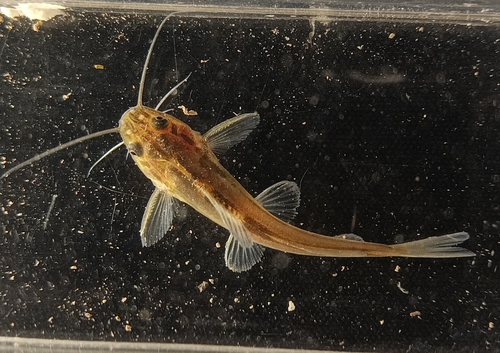
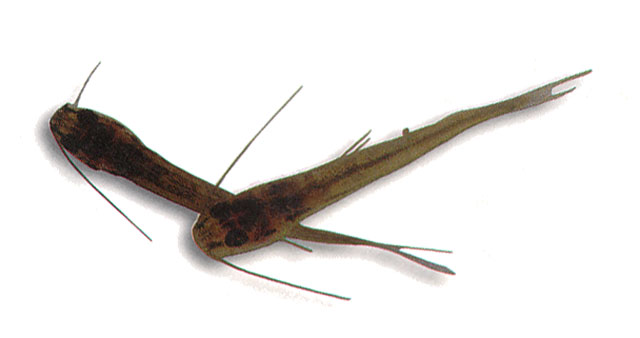
The banded longwhisker catfish is an antenna catfish (Pimelodidae) from rivers and streams of the Amazon basin in South America. The species grows to about 12 cm and has a slender, scaleless, brown body with long barbels and stout spines in the dorsal and pectoral fins. As a nocturnal bottom-dweller it searches over sand and mud for insect larvae, worms and small invertebrates. The fin spines can give a painful puncture wound when handled.
Frequently asked questions
How do you recognise the Banded longwhisker catfish?
The Banded longwhisker catfish has an elongate, eel-like body and is mainly brown.
Where does the Banded longwhisker catfish live?
The Banded longwhisker catfish lives in fresh water and is mostly found around sand or mud bottom.
How big does the Banded longwhisker catfish get?
The Banded longwhisker catfish grows to a maximum of about 3 cm.
Is the Banded longwhisker catfish dangerous to humans?
The Banded longwhisker catfish can cause injury; handle it with care.
Download Fin's Fish Guide
Identify fish in seconds, log your catches and dives. Join the TestFlight beta.
All data
Identification
Appearance
Habitat & distribution
Behaviour & biology
For anglers
Safety
Status & sources
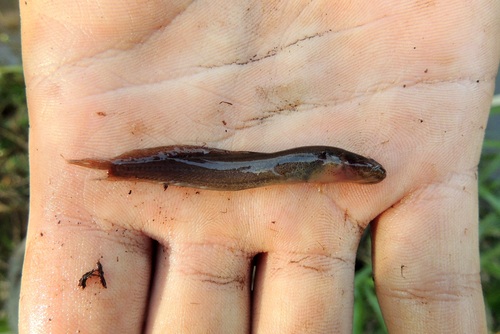
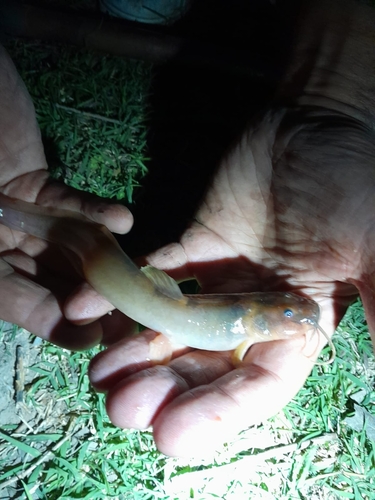
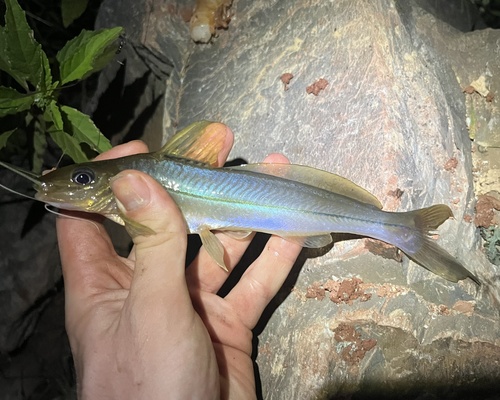
More from the family Heptapteridae


Download Fin's Fish Guide
Identify fish in seconds, log your catches and dives. Join the TestFlight beta.