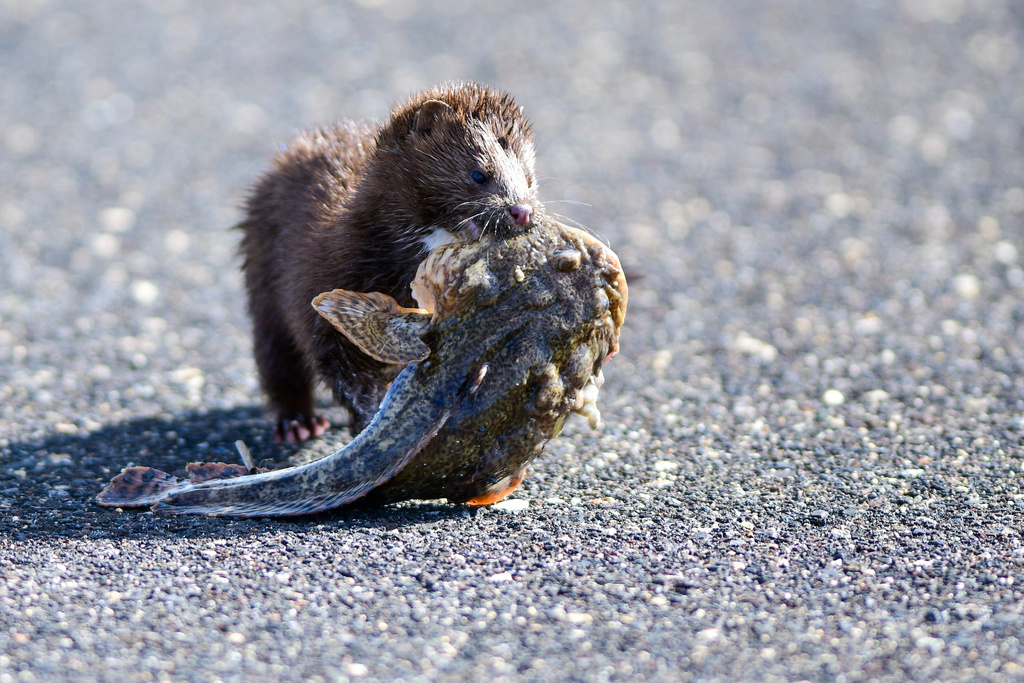
The Oyster toadfish (Opsanus tau) is a brackish-water fish of the family Batrachoididae that grows up to 43 cm.
Description
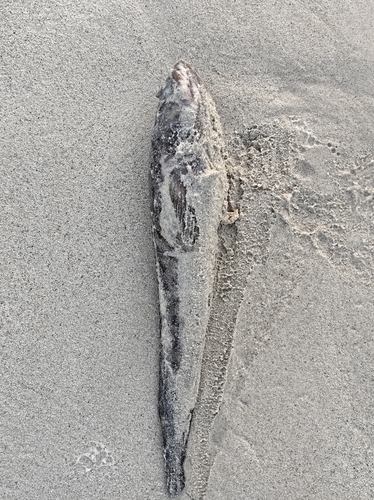
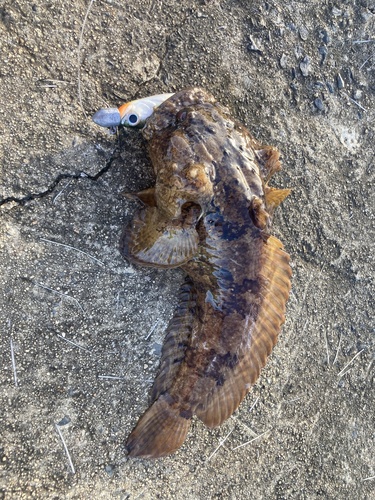
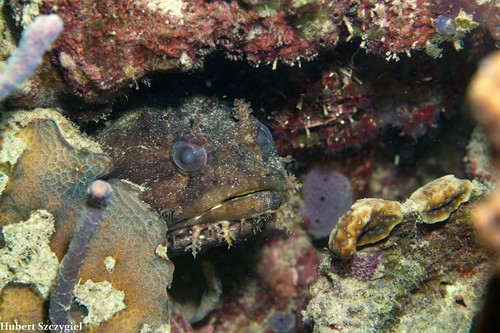
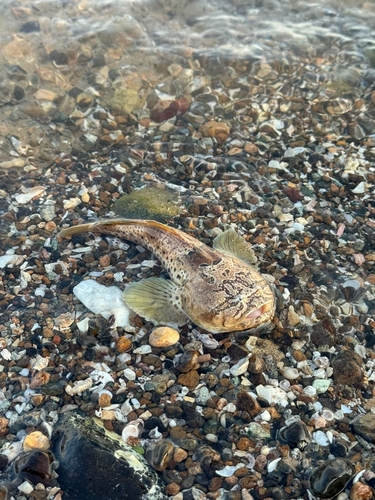
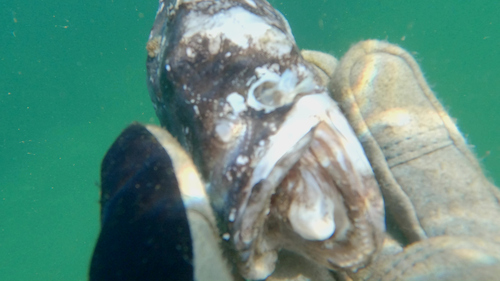
The oyster toadfish (Opsanus tau) is a stocky bottom fish of the family Batrachoididae from the western Atlantic. The species has a broad, flattened head with skin flaps, a large mouth and a brownish, mottled body, and reaches about 43 cm. It lives in shallow coastal water on rocky bottoms, reefs, jetties and wrecks, often shelters among litter and tolerates polluted water. The diet consists of crustaceans, mollusks and fishes. The dorsal and gill-cover spines are venomous and can cause painful wounds. Owing to its size and hardiness the species is widely used as a laboratory animal and has been reared in captivity.
Frequently asked questions
How do you recognise the Oyster toadfish?
The Oyster toadfish has a torpedo-shaped body, is mainly brown and shows a marbled pattern.
Where does the Oyster toadfish live?
The Oyster toadfish lives in brackish water and is mostly found around stony or rocky ground.
How big does the Oyster toadfish get?
The Oyster toadfish grows to a maximum of about 43 cm.
Is the Oyster toadfish dangerous to humans?
The Oyster toadfish is venomous — handle spines with care and seek medical help after a sting if needed.
Is the Oyster toadfish edible?
Yes, the Oyster toadfish is commonly eaten.
Download Fin's Fish Guide
Identify fish in seconds, log your catches and dives. Join the TestFlight beta.
All data
Identification
Appearance
Habitat & distribution
Behaviour & biology
For anglers
Safety
Status & sources
Same genus Opsanus
More from the family Batrachoididae

Download Fin's Fish Guide
Identify fish in seconds, log your catches and dives. Join the TestFlight beta.