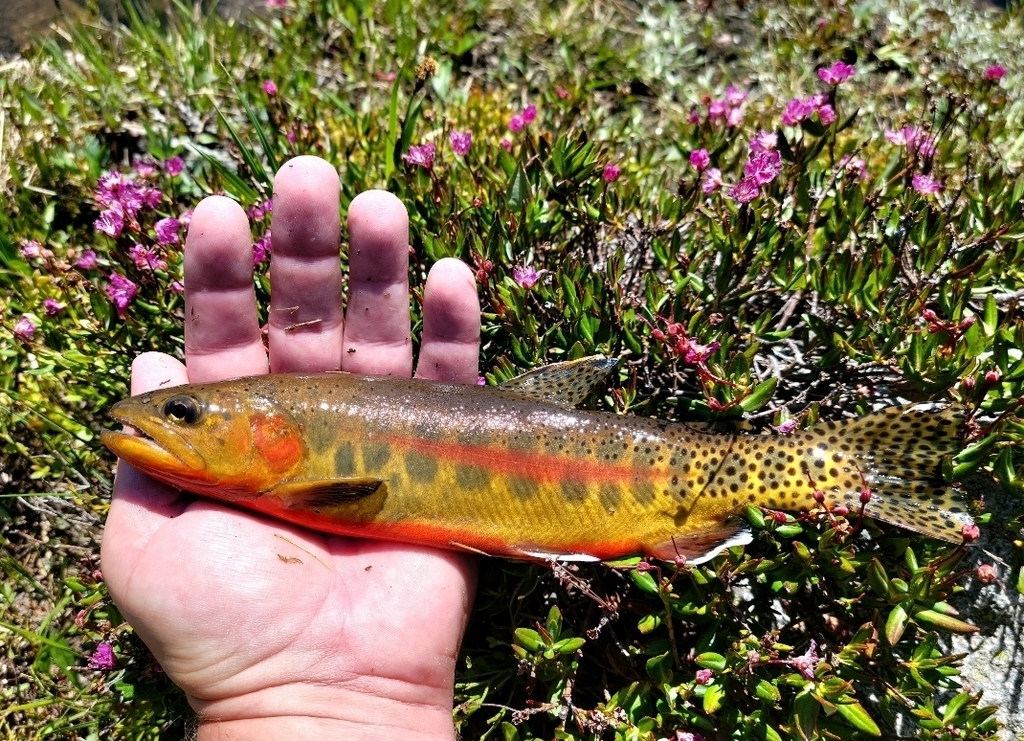
The Golden trout (Oncorhynchus aguabonita) is a freshwater fish of the family Salmonidae that grows up to 71 cm.
Description
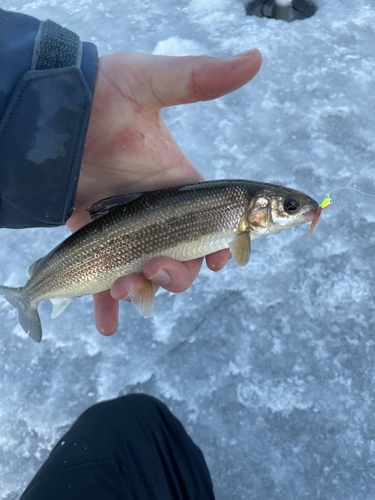
The golden trout is a colourful salmonid (Salmonidae) native only to cold mountain headwaters of the southern Sierra Nevada in California. The species grows to about 71 cm but in its small mountain streams usually stays much smaller; it has a golden-yellow to coppery flank with a red lateral stripe, dark round spots and a few parr marks. As a cold-water predator it eats insects, larvae and small crustaceans. It is prized by anglers, but its native range is limited and vulnerable. The fish is harmless to humans.
Frequently asked questions
How do you recognise the Golden trout?
The Golden trout has a torpedo-shaped body, is mainly yellow-gold and shows a spots pattern.
Where does the Golden trout live?
The Golden trout lives in fresh water and is mostly found around sand or mud bottom.
How big does the Golden trout get?
The Golden trout grows to a maximum of about 71 cm. On average the species is around 30 cm.
Is the Golden trout dangerous to humans?
No, the Golden trout is harmless to humans.
Is the Golden trout edible?
Yes, the Golden trout is commonly eaten.
Download Fin's Fish Guide
Identify fish in seconds, log your catches and dives. Join the TestFlight beta.
All data
Identification
Appearance
Habitat & distribution
Behaviour & biology
For anglers
Safety
Status & sources
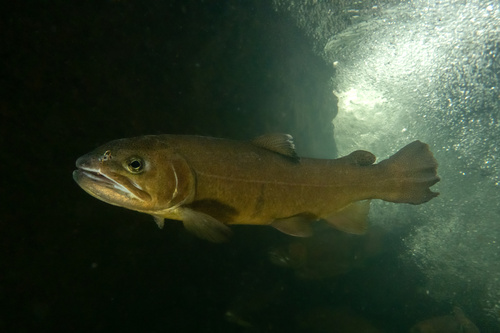
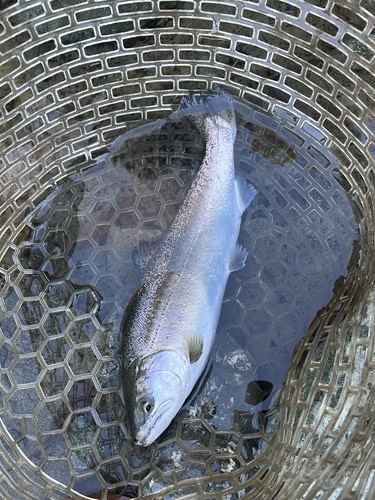
Same genus Oncorhynchus
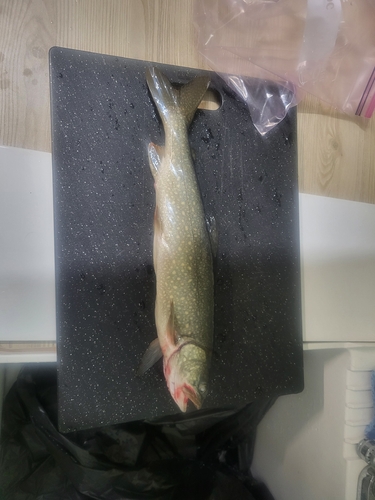
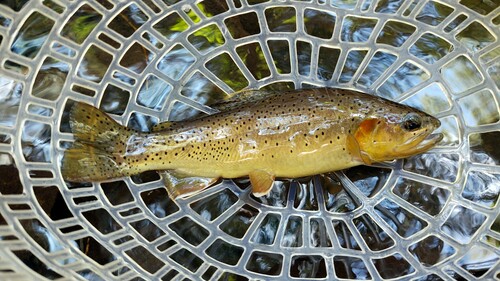
More from the family Salmonidae

Download Fin's Fish Guide
Identify fish in seconds, log your catches and dives. Join the TestFlight beta.