Home · Ginglymostomatidae · Nurse shark
Nurse shark (Ginglymostoma cirratum) — Ginglymostomatidae

Nurse shark

Ginglymostoma cirratum
VU · Vulnerable

The Nurse shark (Ginglymostoma cirratum) is a saltwater fish of the family Ginglymostomatidae that grows up to 430 cm.

Length
430 cm
Water
Saltwater
Depth
0.0–130.0 m
Diet
Carnivore
Behaviour
Small groups
Activity
Nocturnal
Body shape
Torpedo-shaped
Substrate
Stone or rock
Danger
May bite
Range
Atlantic Ocean on both sides and the eastern Pacific, near rocky bottoms, reefs and mangroves of shallow, warm coastal waters.
Edibility
Rarely eaten

Want the complete picture on the Nurse shark?

Get the app

Description

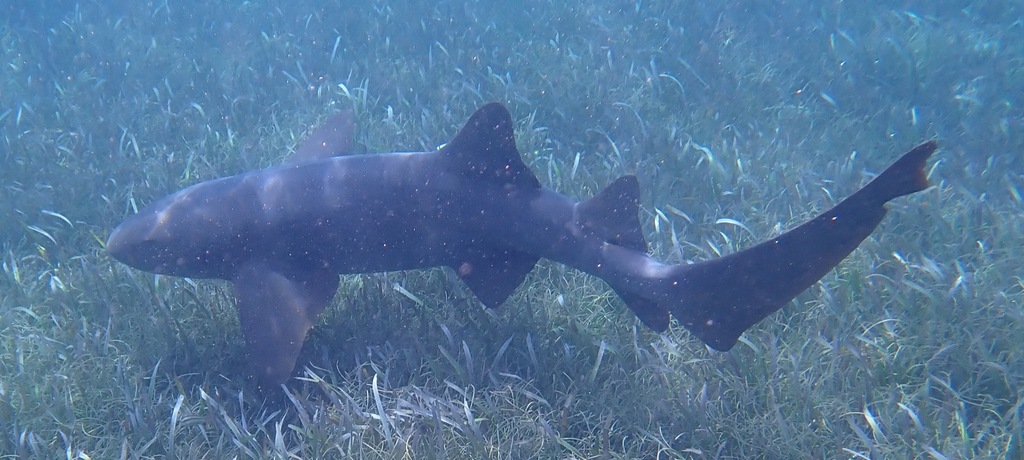
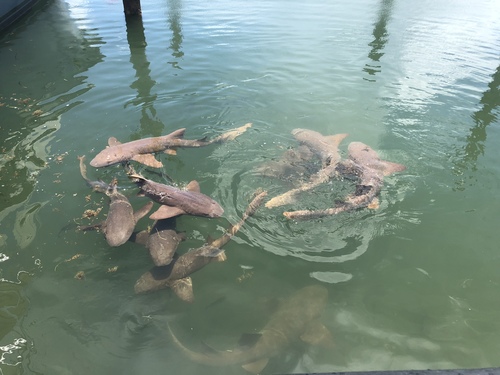
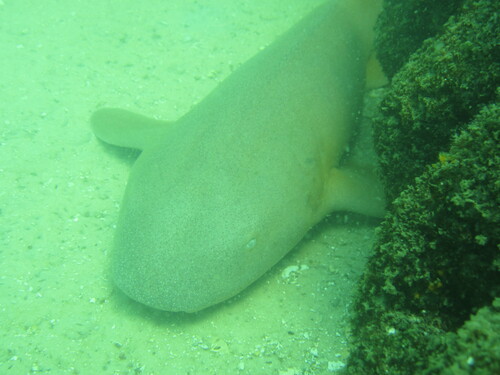
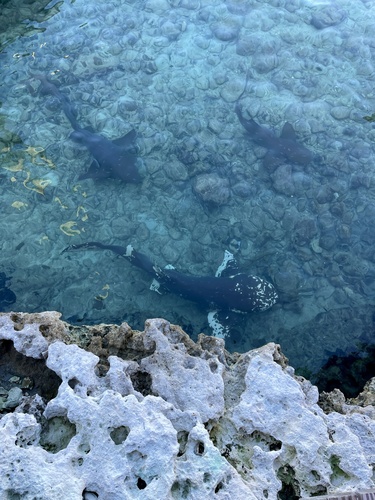
The nurse shark is a slow, brown bottom shark of the family Ginglymostomatidae reaching about 3 metres (rarely more). The sturdy body has a flattened head with two short barbels at the small mouth, small eyes and a long tail without a distinct lower lobe. With its small mouth and strong throat muscles it sucks prey off the bottom. By day it often rests motionless, sometimes piled in groups, under rock ledges and in caves; at night it hunts shellfish, crabs, lobsters, sea urchins and bottom fish. The species lives near rocky bottoms, reefs and mangroves of shallow, warm coastal water. It is usually peaceful but can bite fiercely with its powerful jaws if harassed. Through fishing it is assessed as Vulnerable (VU).

Frequently asked questions

How do you recognise the Nurse shark?

The Nurse shark has a torpedo-shaped body, is mainly brown and shows a plain pattern. Slow, brown bottom shark with two barbels at the mouth, a small mouth and a long tail; during the day it often rests motionless under rock ledges. Note: in tropical regions this species can cause ciguatera poisoning when eaten; large specimens of coral reef predators can accumulate the toxin. Eat with caution or avoid in risk areas.

Where does the Nurse shark live?

The Nurse shark lives in the sea (marine waters) and is mostly found around stony or rocky ground. Atlantic Ocean on both sides and the eastern Pacific, near rocky bottoms, reefs and mangroves of shallow, warm coastal waters.

How big does the Nurse shark get?

The Nurse shark grows to a maximum of about 430 cm. On average the species is around 304 cm.

Is the Nurse shark dangerous to humans?

The Nurse shark can bite, but is otherwise not dangerous to humans. Not venomous, but a large predatory shark with powerful jaws: keep your distance from a hooked or landed shark and handle only with proper equipment.

Is the Nurse shark edible?

The Nurse shark is rarely eaten.

More photos
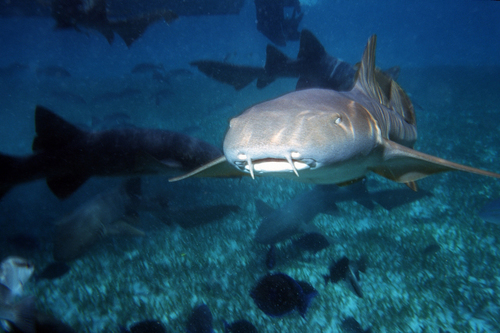
Nurse shark (Ginglymostoma cirratum) — Ginglymostomatidae — 2
iNaturalist ((c) Pauline Walsh Jacobson, some rights reserved (CC BY))
Nurse shark (Ginglymostoma cirratum) — Ginglymostomatidae — 3
iNaturalist ((c) ghosttofu, some rights reserved (CC BY-NC))
Nurse shark (Ginglymostoma cirratum) — Ginglymostomatidae — 4
iNaturalist ((c) Robert Pitts, some rights reserved (CC BY-NC))
Nurse shark (Ginglymostoma cirratum) — Ginglymostomatidae — 5
iNaturalist ((c) savcarrrr, some rights reserved (CC BY-NC))
Fin

Want the complete picture on the Nurse shark?

Point your camera at the fish and Fin names the species in seconds. Free, and the Nurse shark is one of 12,519 species in the app.

Get the app →

All data

Identification

English name
Nurse shark verified
Scientific name
Ginglymostoma cirratum
Family
Ginglymostomatidae
Other names
Cat shark; Dogfish; Nurse shark; Carpet shark; Sand shark verified

Appearance

Size class
Extra large verified
Max length (cm)
430.0 verified
Average length (cm)
304.0 verified
Body shape
Torpedo-shaped verified
Dominant colour
Brown sourced
Pattern
Plain sourced
Tail shape
Straight inferred
Mouth position
Inferior (downward) inferred
Lips
Thick / fleshy inferred
Barbels
Yes verified
Dorsal fins
Two separate sourced
Dorsal spines
No verified

Habitat & distribution

Water type
Saltwater verified
Substrate
Stone or rock verified
Min depth (m)
0.0 verified
Max depth (m)
130.0 verified
Natural range
Atlantic Ocean on both sides and the eastern Pacific, near rocky bottoms, reefs and mangroves of shallow, warm coastal waters. verified
Origin
Native verified

Behaviour & biology

Diet
Carnivore verified
Diet (detail)
Shellfish, crabs, lobsters, sea urchins and bottom-dwelling fishes, sucked up from the bottom sourced
Social behaviour
Small groups verified
Territorial
No verified
Activity
Nocturnal inferred
Reproduction
Separate sexes verified
Sexual dimorphism
No verified
levensduur_max_jaar
25.0 verified
Seasonality
Rests during the day in groups under ledges and hunts at night; ovoviviparous (live-bearing), with a small litter of young. sourced
Special features
Slow, brown bottom shark with two barbels at the mouth, a small mouth and a long tail; during the day it often rests motionless under rock ledges. Note: in tropical regions this species can cause ciguatera poisoning when eaten; large specimens of coral reef predators can accumulate the toxin. Eat with caution or avoid in risk areas. verified

For anglers

Edibility
Rarely eaten verified
Fishing method
Fishing with natural bait (fish, shrimp, worm) or lures close to reef and rock structures. inferred
Regulations source
FishBase ↗ inferred

Safety

Danger to humans
May bite verified
First aid
Not venomous, but a large predatory shark with powerful jaws: keep your distance from a hooked or landed shark and handle only with proper equipment. sourced

Status & sources

Sources
FishBase via GBIF (DwC-A), CC-BY-NC 4.0

More from the family Ginglymostomatidae
Fin

Want the complete picture on the Nurse shark?

Point your camera at the fish and Fin names the species in seconds. Free, and the Nurse shark is one of 12,519 species in the app.

Get the app →
Is this the Nurse shark? Get the app