Home · Gobiidae · Monkey goby
Monkey goby (Neogobius fluviatilis) — Gobiidae

Monkey goby

Neogobius fluviatilis
Family: Gobiidae
LC · Least Concern
NativeIntroduced

The Monkey goby (Neogobius fluviatilis) is a fish that lives in both fresh and salt water of the family Gobiidae that grows up to 20 cm.

Length
20 cm
Water
Euryhaline
Diet
Carnivore
Behaviour
Small groups
Activity
Diurnal
Body shape
Torpedo-shaped
Substrate
Mixed bottom
Danger
Harmless
Range
Originally in fresh and brackish water of the basins of the Black Sea and the Caspian Sea.
Edibility
Not eaten

Want the complete picture on the Monkey goby?

Get the app

Description

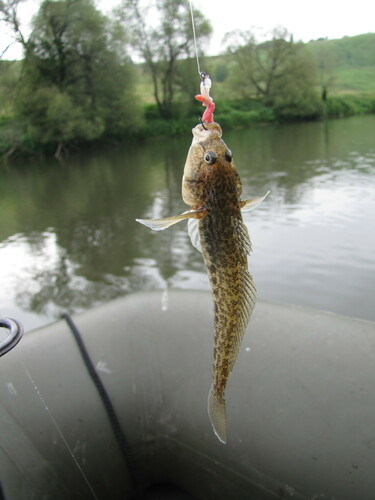
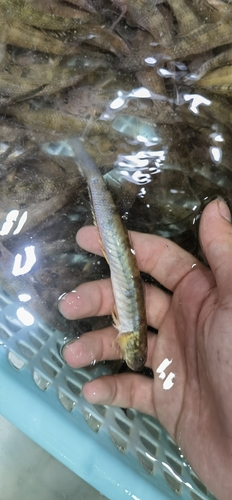
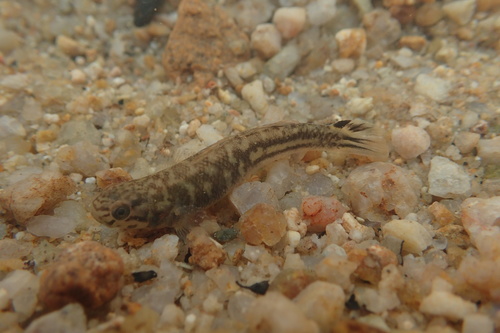
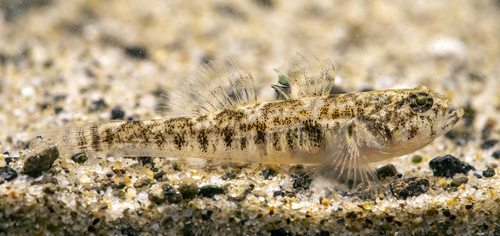
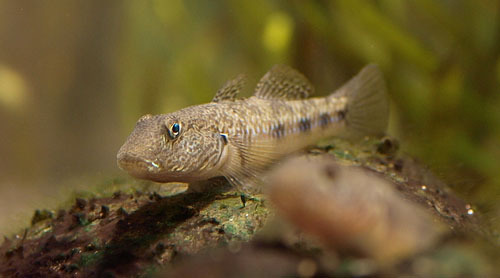
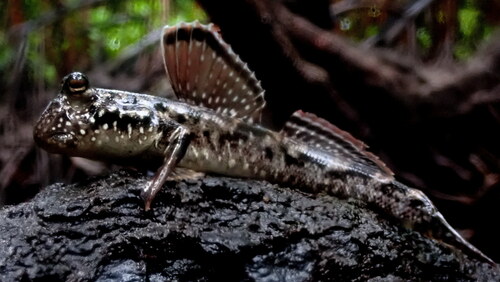
The monkey goby is a slender, sand-coloured goby of the family Gobiidae reaching about 20 cm. The elongate body is pale sandy-brown with fine speckles and has, like all gobies, pelvic fins fused into a sucking disc with which it clings to the bottom. The species is native to fresh and brackish water of the Black Sea and Caspian Sea basins but has spread invasively through shipping and canals into western and central European rivers such as the Danube and the Rhine. As a bottom-dweller it hunts small crustaceans, worms, insect larvae and fish fry. The male fiercely guards the eggs laid under a stone or shell. As an abundant newcomer it can displace native bottom fish.

Frequently asked questions

How do you recognise the Monkey goby?

The Monkey goby has a torpedo-shaped body, is mainly silver-grey and shows a plain pattern. Slender, sand-coloured small goby with pelvic fins fused into a sucker; a fast coloniser that is spreading invasively in Western European rivers.

Where does the Monkey goby live?

The Monkey goby lives in both fresh and salt water and is mostly found around mixed bottom. Originally in fresh and brackish water of the basins of the Black Sea and the Caspian Sea.

How big does the Monkey goby get?

The Monkey goby grows to a maximum of about 20 cm.

Is the Monkey goby dangerous to humans?

No, the Monkey goby is harmless to humans. None required: this species is harmless to humans.

Is the Monkey goby edible?

The Monkey goby is not usually eaten.

More photos
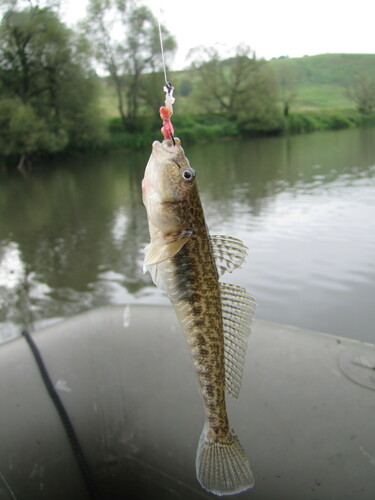
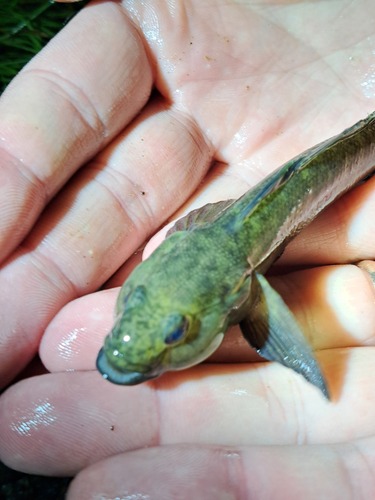
Monkey goby (Neogobius fluviatilis) — Gobiidae — 2
iNaturalist ((c) Соколков Юрий Павлович, some rights reserved (CC BY-NC))
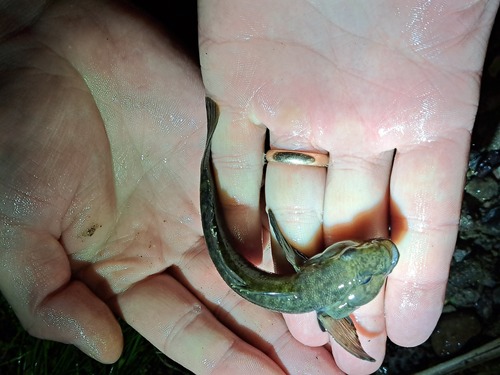
Monkey goby (Neogobius fluviatilis) — Gobiidae — 3
iNaturalist ((c) Соколков Юрий Павлович, some rights reserved (CC BY-NC))
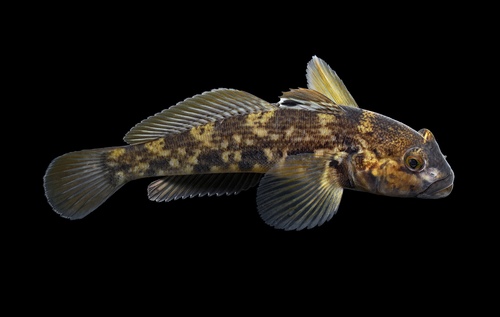
Monkey goby (Neogobius fluviatilis) — Gobiidae — 4
iNaturalist ((c) ognevit, some rights reserved (CC BY))
Monkey goby (Neogobius fluviatilis) — Gobiidae — 5
iNaturalist ((c) ognevit, some rights reserved (CC BY))
Fin

Want the complete picture on the Monkey goby?

Point your camera at the fish and Fin names the species in seconds. Free, and the Monkey goby is one of 12,519 species in the app.

Get the app →

All data

Identification

English name
Monkey goby verified
Scientific name
Neogobius fluviatilis
Family
Gobiidae
Other names
Monkey goby; Sand goby verified

Appearance

Size class
Medium verified
Max length (cm)
20.0 verified
Body shape
Torpedo-shaped sourced
Dominant colour
Silver / grey sourced
Pattern
Plain sourced
Tail shape
Rounded inferred
Mouth position
Terminal inferred
Lips
Thick / fleshy inferred
Barbels
No verified
Dorsal fins
Two separate sourced
Dorsal spines
Yes verified

Habitat & distribution

Water type
Euryhaline verified
Substrate
Mixed bottom sourced
Natural range
Originally in fresh and brackish water of the basins of the Black Sea and the Caspian Sea. verified
Origin
Non-native (invasive) verified

Behaviour & biology

Diet
Carnivore verified
Diet (detail)
Small crustaceans, worms, insect larvae and fish fry sourced
Social behaviour
Small groups verified
Territorial
Yes verified
Activity
Diurnal inferred
Reproduction
Separate sexes verified
Sexual dimorphism
Yes verified
levensduur_max_jaar
5.0 verified
Seasonality
Spawns in spring and summer; the male fiercely guards the eggs deposited under a stone or shell. sourced
Special features
Slender, sand-coloured small goby with pelvic fins fused into a sucker; a fast coloniser that is spreading invasively in Western European rivers. sourced

For anglers

Edibility
Not eaten verified
Fishing method
Bottom fishing with natural bait (worm, shrimp or fish) on or just above the seabed. inferred
Regulations source
FishBase ↗ inferred

Safety

Danger to humans
Harmless sourced
First aid
None required: this species is harmless to humans. sourced

Status & sources

Sources
FishBase via GBIF (DwC-A), CC-BY-NC 4.0

Same genus Neogobius

More from the family Gobiidae
Fin

Want the complete picture on the Monkey goby?

Point your camera at the fish and Fin names the species in seconds. Free, and the Monkey goby is one of 12,519 species in the app.

Get the app →
Is this the Monkey goby? Get the app