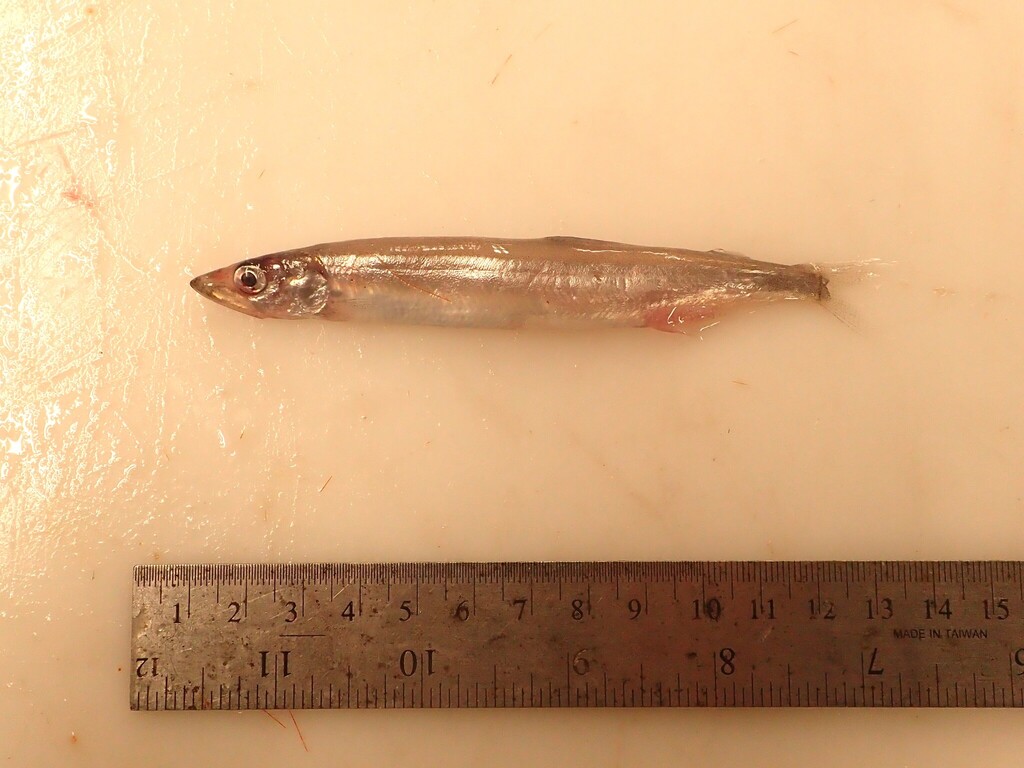
The Breakfast fish (Mallotus villosus) is a fish that lives in both fresh and salt water of the family Osmeridae that grows up to 20 cm.
Description
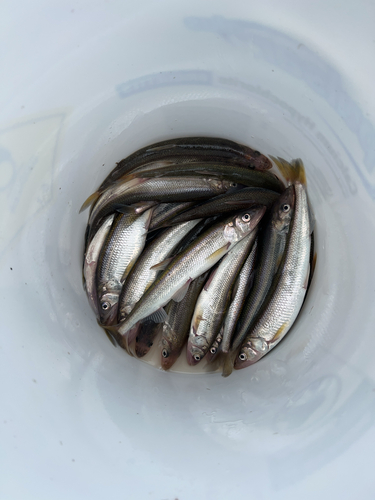
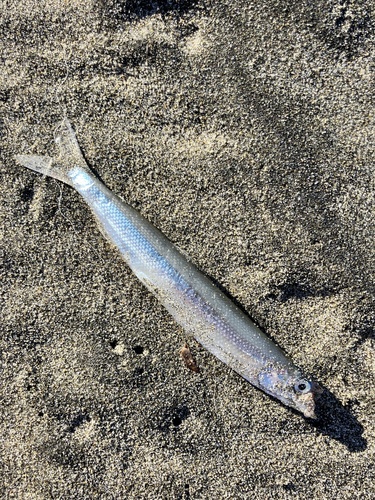
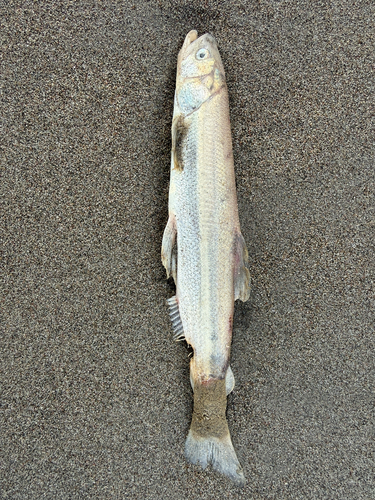
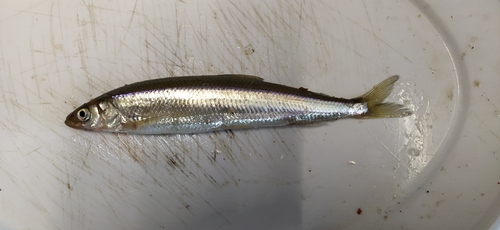
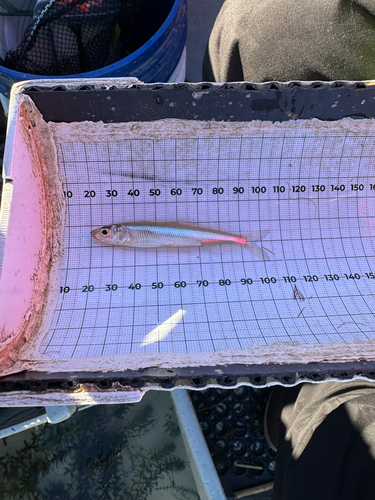
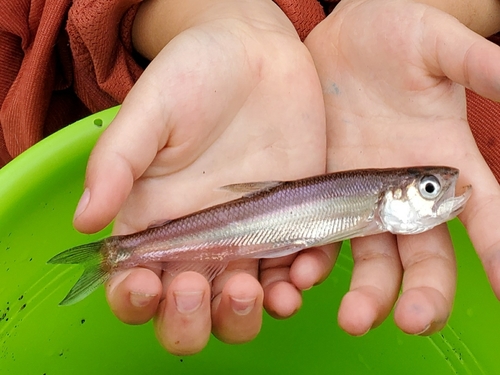
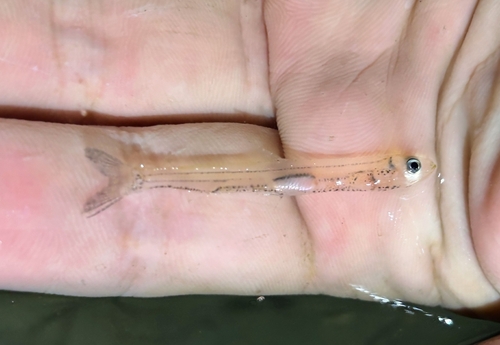
The capelin is a small, slender smelt of the family Osmeridae reaching about 25 cm. The body is olive-green on the back and silvery on the flanks and belly, with an adipose fin behind the dorsal. Spawning males develop a ridge of hairy scales along the flank. The capelin lives in vast schools across the Arctic Ocean and the northern Atlantic and Pacific, feeding on zooplankton. In spring it migrates inshore in huge numbers to spawn on gravel beaches, after which many die. As a keystone forage species the capelin is of great importance to seabirds, fish and whales, and is harvested commercially.
Frequently asked questions
How do you recognise the Breakfast fish?
The Breakfast fish has an elongate, eel-like body, is mainly green and shows a plain pattern.
Where does the Breakfast fish live?
The Breakfast fish lives in both fresh and salt water and is mostly found around open water.
How big does the Breakfast fish get?
The Breakfast fish grows to a maximum of about 20 cm. On average the species is around 15 cm.
Is the Breakfast fish dangerous to humans?
No, the Breakfast fish is harmless to humans.
Is the Breakfast fish edible?
Yes, the Breakfast fish is a highly prized food fish.
Download Fin's Fish Guide
Identify fish in seconds, log your catches and dives. Join the TestFlight beta.
All data
Identification
Appearance
Habitat & distribution
Behaviour & biology
For anglers
Safety
Status & sources
More from the family Osmeridae

Download Fin's Fish Guide
Identify fish in seconds, log your catches and dives. Join the TestFlight beta.