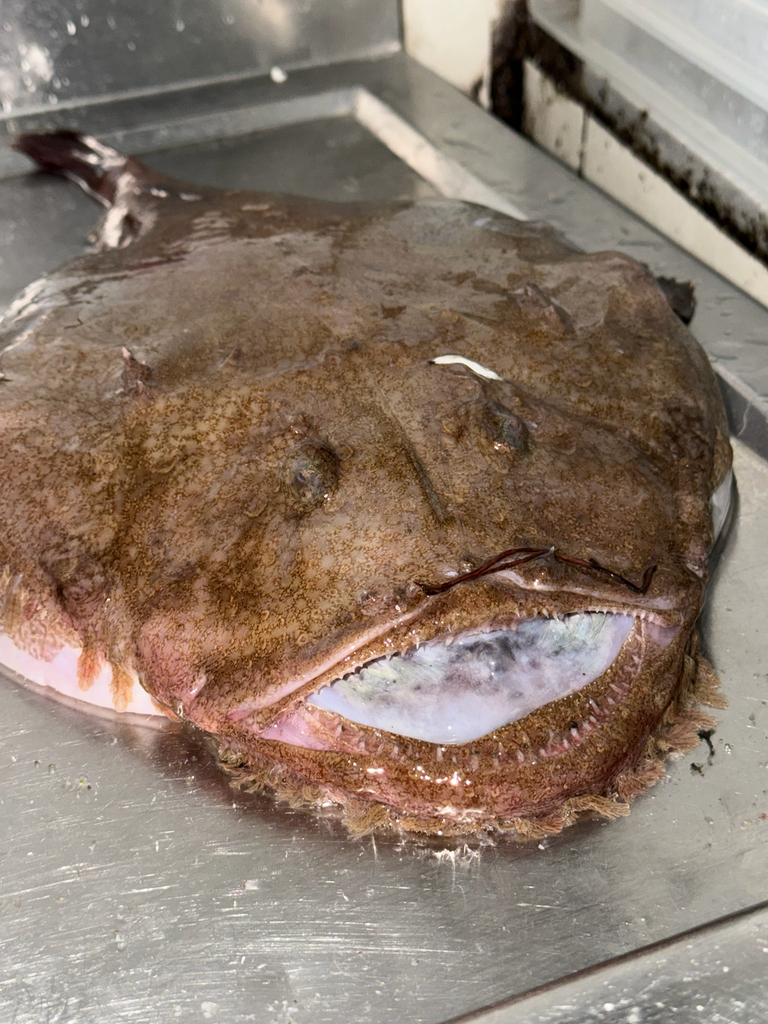
The Blackbellied angler (Lophius budegassa) is a saltwater fish of the family Lophiidae that grows up to 100 cm.
Description
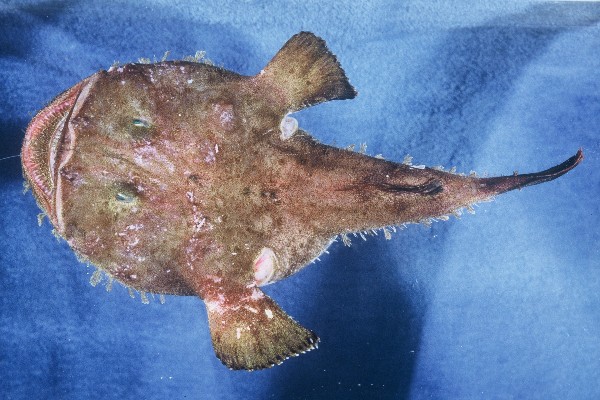
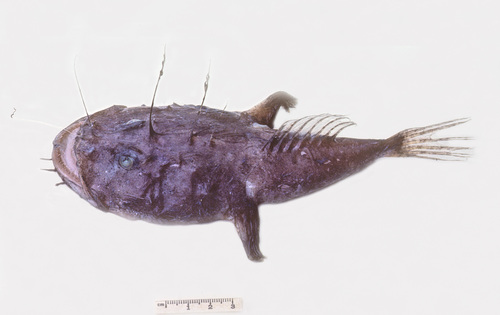
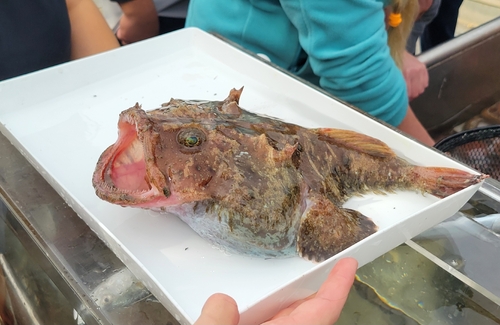
The blackbellied angler is a strongly flattened bottom predator of the family Lophiidae reaching about 1 metre. The broad, brownish mottled body blends almost completely into the bottom; the enormous, upturned mouth is set with needle-sharp teeth. On the head the fish carries a 'rod', a modified first dorsal-fin ray with a flap of skin at the tip, with which it lures prey right in front of the mouth and then swallows it whole. Unlike the common monkfish this species has a black peritoneum. It lives on sand and mud bottoms of the eastern Atlantic and the Mediterranean. Its tender tail flesh, known in the kitchen as monkfish, makes it a highly valued commercial fish.
Frequently asked questions
How do you recognise the Blackbellied angler?
The Blackbellied angler has a flattened, disc-shaped body, is mainly brown and shows a marbled pattern.
Where does the Blackbellied angler live?
The Blackbellied angler lives in the sea (marine waters) and is mostly found around sand or mud bottom.
How big does the Blackbellied angler get?
The Blackbellied angler grows to a maximum of about 100 cm. On average the species is around 50 cm.
Is the Blackbellied angler dangerous to humans?
No, the Blackbellied angler is harmless to humans.
Is the Blackbellied angler edible?
Yes, the Blackbellied angler is a highly prized food fish.
Download Fin's Fish Guide
Identify fish in seconds, log your catches and dives. Join the TestFlight beta.
All data
Identification
Appearance
Habitat & distribution
Behaviour & biology
For anglers
Safety
Status & sources
Same genus Lophius
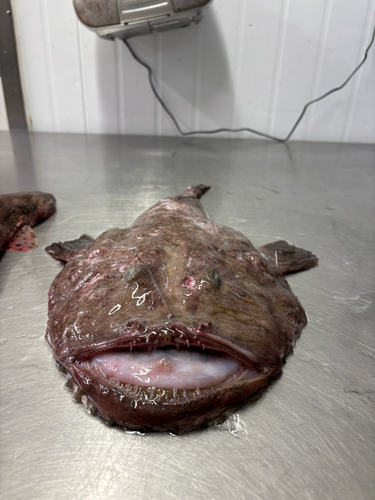
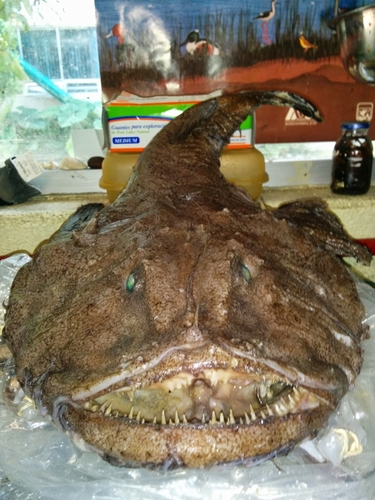
More from the family Lophiidae


Download Fin's Fish Guide
Identify fish in seconds, log your catches and dives. Join the TestFlight beta.