 Fin's Fish Guide
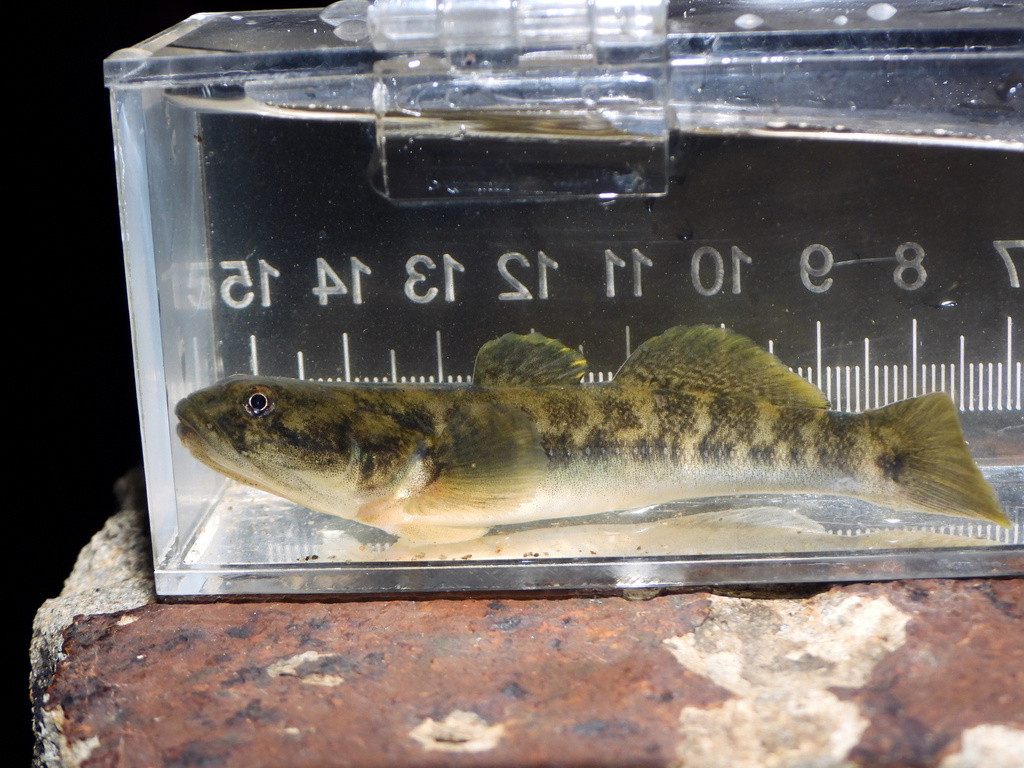
The Longjaw mudsucker (Gillichthys mirabilis) is a brackish-water fish of the family Gobiidae that grows up to 21 cm.
Eastern Pacific, on tidal flats, in bays and coastal creeks, on muddy bottoms in shallow water.
Description
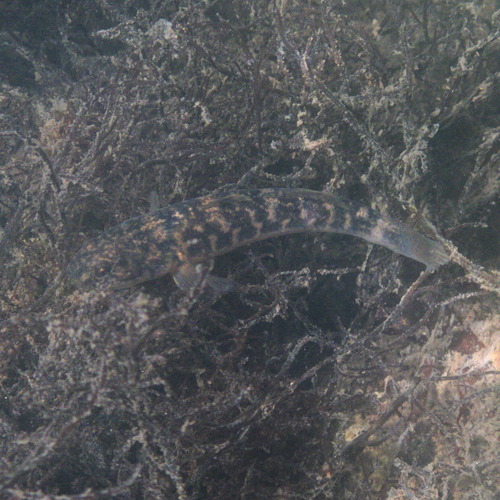
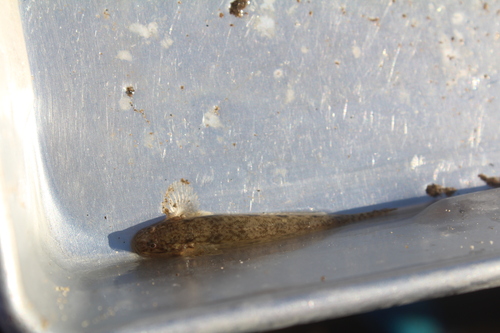
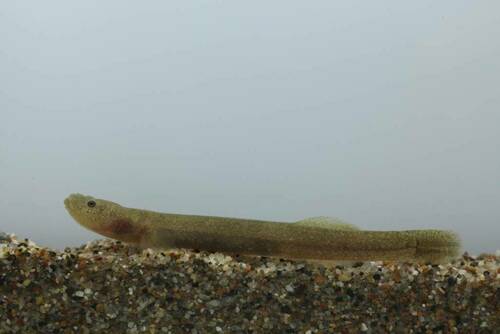
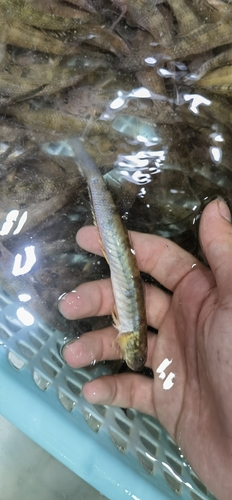
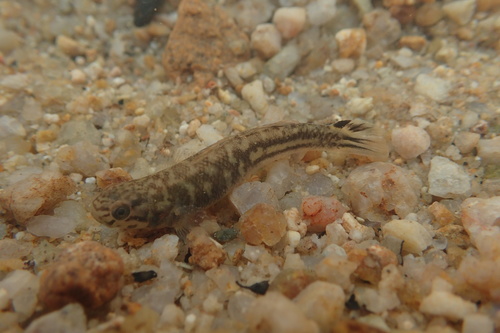
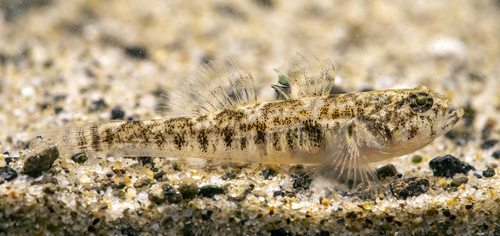
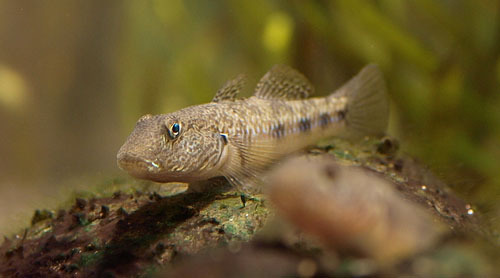
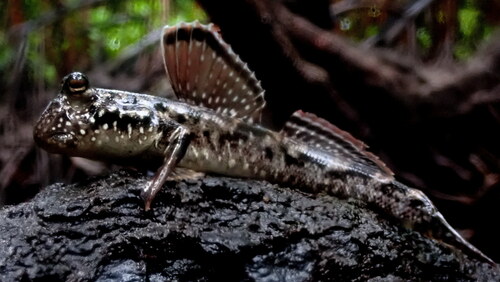
The longjaw mudsucker is a goby (family Gobiidae) of the eastern Pacific. The species reaches about 21 cm and has an elongate, olive-brown body with a strikingly long lower jaw. It inhabits tidal flats, bays and coastal sloughs and prefers mud bottoms in shallow water. The species can breathe air and so survive drying tidal zones. Its diet consists of small invertebrates, algae and detritus. Males guard the eggs attached to the bottom. The fish is widely used as a live bait fish and is harmless to humans.
Frequently asked questions
How do you recognise the Longjaw mudsucker?
The Longjaw mudsucker has an elongate, eel-like body, is mainly brown and shows a plain pattern. Very long lower jaw; can breathe air and survive on tidal flats that fall dry; much used as a bait fish.
Where does the Longjaw mudsucker live?
The Longjaw mudsucker lives in brackish water and is mostly found around sand or mud bottom. Eastern Pacific, on tidal flats, in bays and coastal creeks, on muddy bottoms in shallow water.
How big does the Longjaw mudsucker get?
The Longjaw mudsucker grows to a maximum of about 21 cm. On average the species is around 13 cm.
Is the Longjaw mudsucker dangerous to humans?
No, the Longjaw mudsucker is harmless to humans. None required: this species is harmless to humans.
Is the Longjaw mudsucker edible?
The Longjaw mudsucker is not usually eaten.
More photos
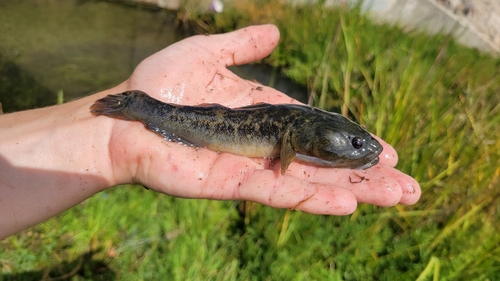
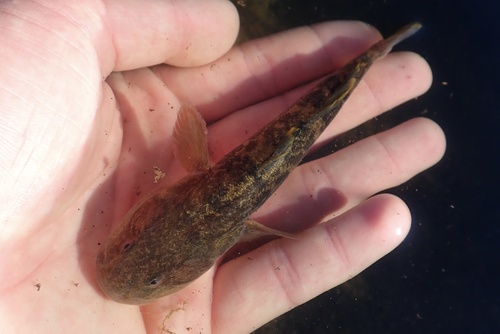
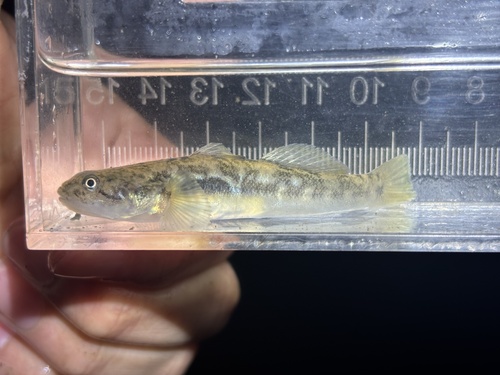

Want the complete picture on the Longjaw mudsucker?
Point your camera at the fish and Fin names the species in seconds. Free, and the Longjaw mudsucker is one of 12,519 species in the app.
All data
Identification
Appearance
Habitat & distribution
Behaviour & biology
For anglers
Safety
Status & sources
Same genus Gillichthys
More from the family Gobiidae

Want the complete picture on the Longjaw mudsucker?
Point your camera at the fish and Fin names the species in seconds. Free, and the Longjaw mudsucker is one of 12,519 species in the app.