 Fin's Fish Guide
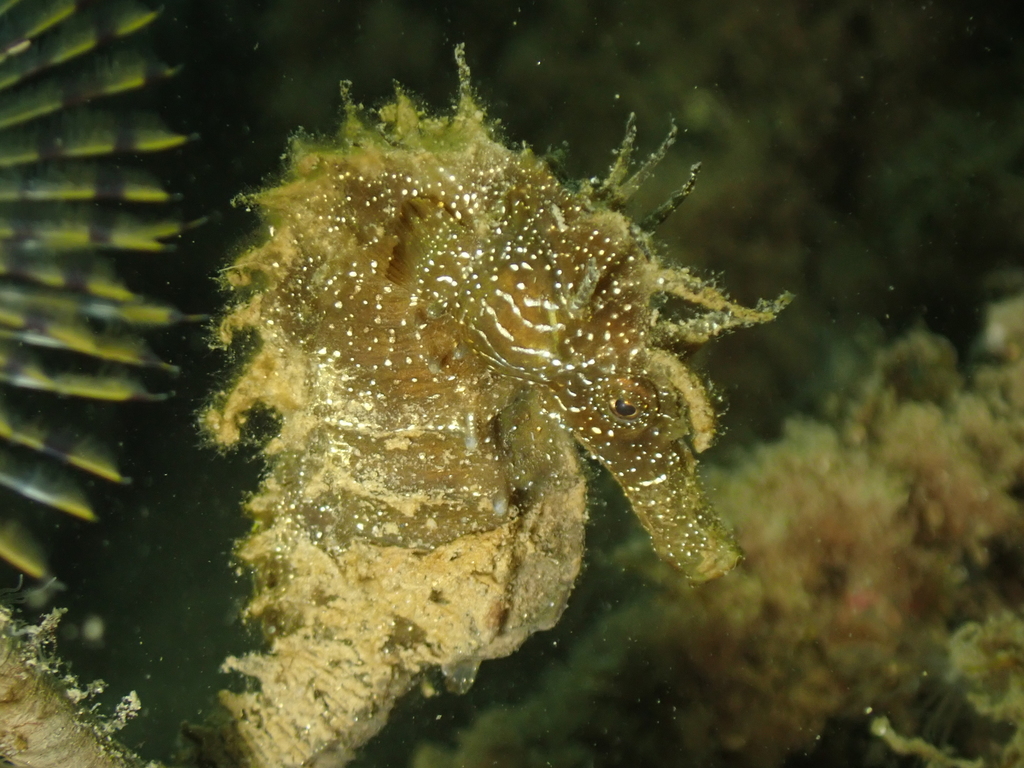
The Long-snouted seahorse (Hippocampus guttulatus) is a saltwater fish of the family Syngnathidae that grows up to 22 cm.
Eastern Atlantic and the Mediterranean Sea, in shallow seagrass beds, seaweeds and sheltered bays.
Description
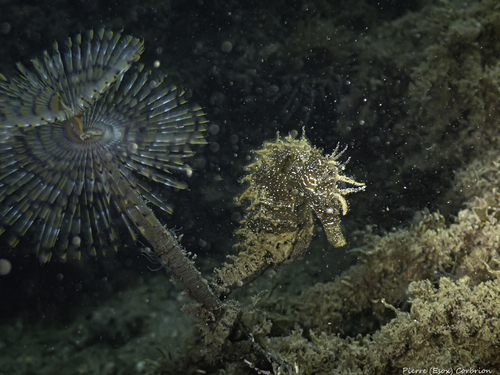
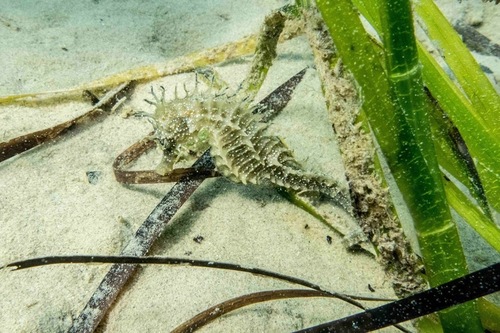
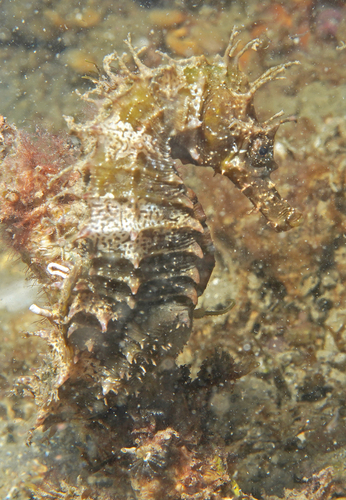
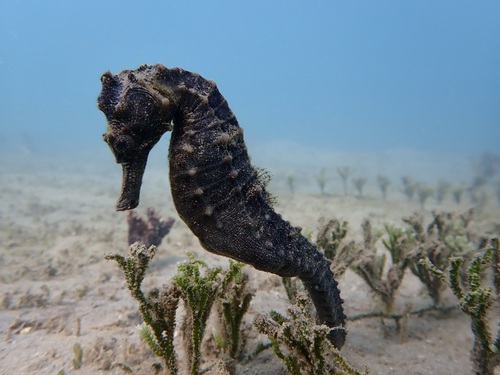
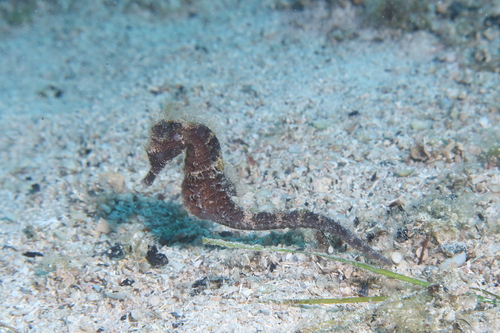
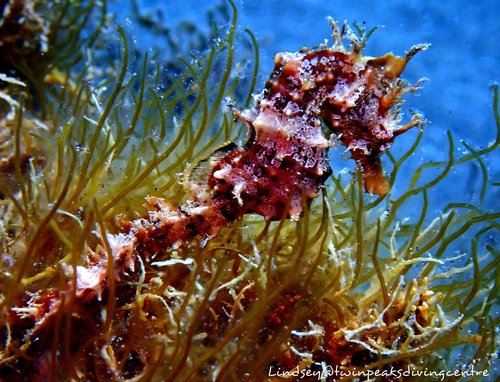
The long-snouted seahorse is a seahorse of the family Syngnathidae reaching about 21 cm. The upright-swimming body, encased in bony rings, has a long, tubular snout, a prehensile tail without a caudal fin and often fine skin filaments, with which it blends among seagrass. The colour is variable, from brown to yellow-green, often with pale spots. The species lives in shallow seagrass beds, weeds and sheltered bays of the eastern Atlantic and the Mediterranean, clasping plants with its tail. With its tube snout it sucks up small zooplankton and crustaceans. Like other seahorses the male carries the eggs in a brood pouch and 'gives birth' to the young. All seahorses are protected (CITES); the species is assessed as Data Deficient (DD).
Frequently asked questions
How do you recognise the Long-snouted seahorse?
The Long-snouted seahorse has an irregular in shape body, is mainly brown and shows a spots pattern. Seahorse with a long snout, a prehensile tail without a caudal fin and often skin filaments; the male carries the juveniles in a brood pouch.
Where does the Long-snouted seahorse live?
The Long-snouted seahorse lives in the sea (marine waters) and is mostly found around sand or mud bottom. Eastern Atlantic and the Mediterranean Sea, in shallow seagrass beds, seaweeds and sheltered bays.
How big does the Long-snouted seahorse get?
The Long-snouted seahorse grows to a maximum of about 22 cm.
Is the Long-snouted seahorse dangerous to humans?
No, the Long-snouted seahorse is harmless to humans. None required: this species is harmless to humans.
Is the Long-snouted seahorse edible?
The Long-snouted seahorse is not usually eaten.
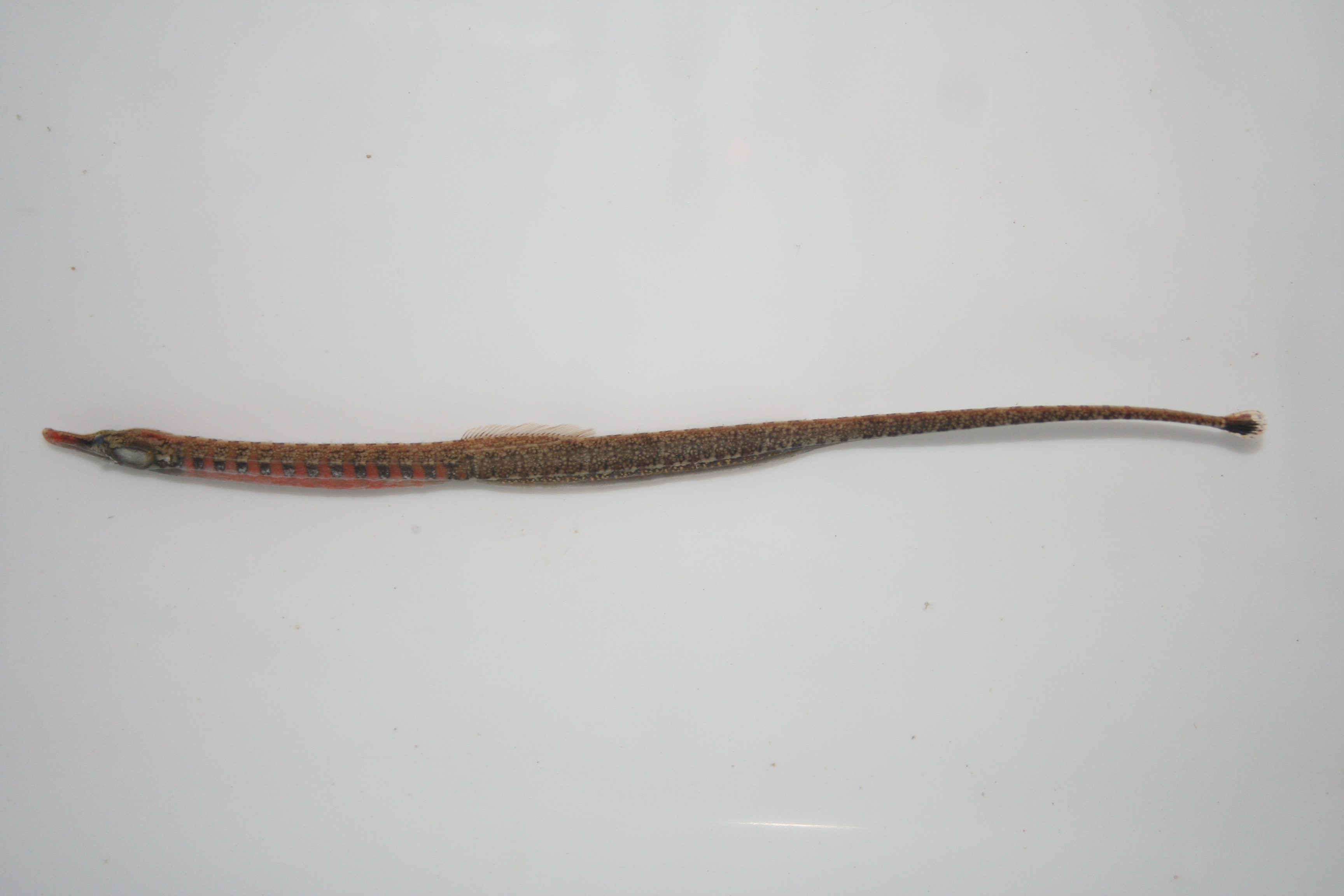
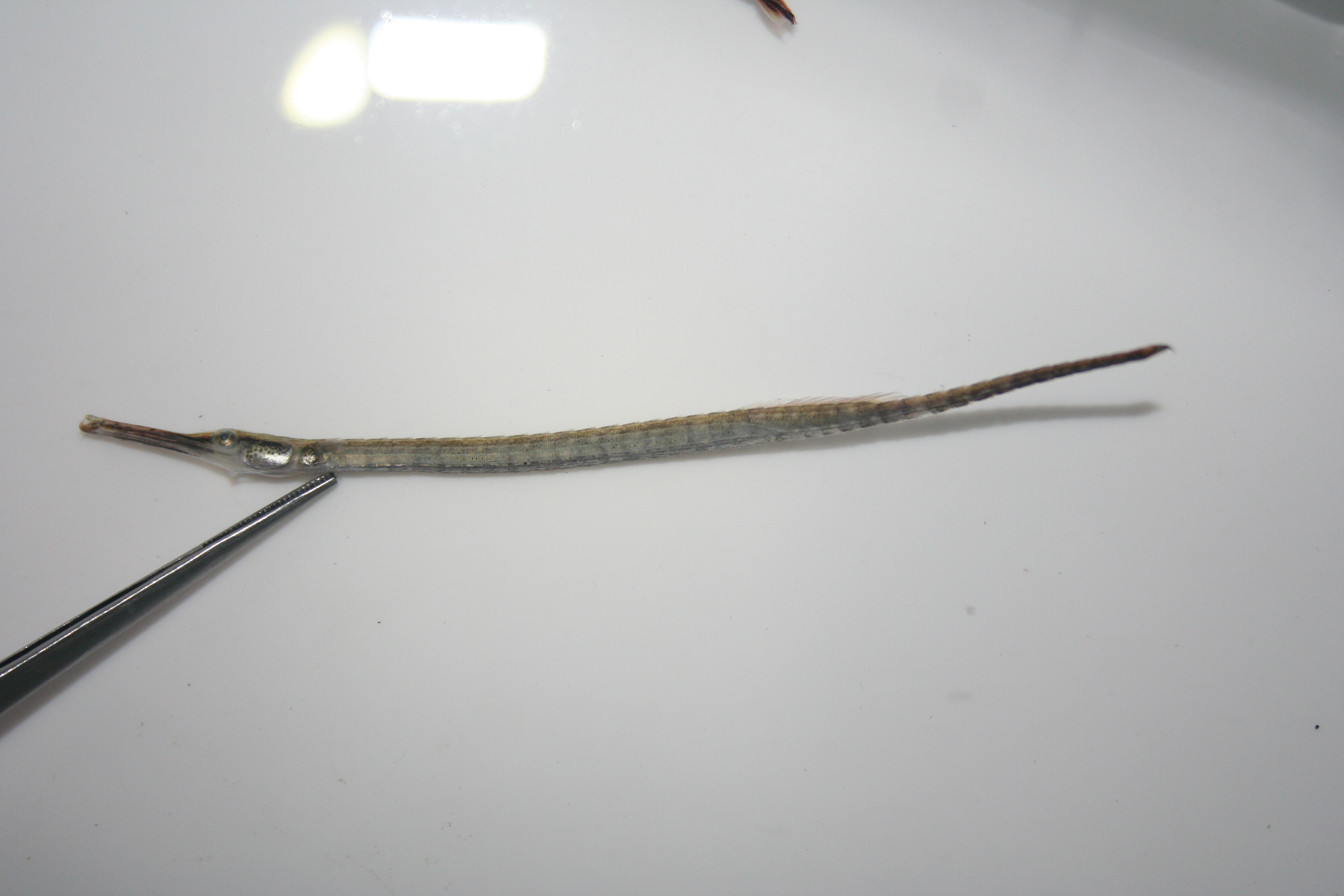
More photos
Easily confused with
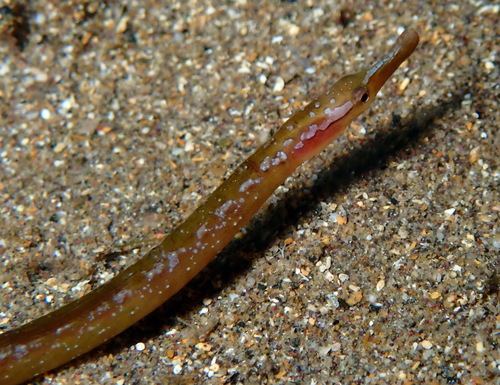
These species look like the Long-snouted seahorse and live in the same waters.

Want the complete picture on the Long-snouted seahorse?
Point your camera at the fish and Fin names the species in seconds. Free, and the Long-snouted seahorse is one of 12,519 species in the app.
All data
Identification
Appearance
Habitat & distribution
Behaviour & biology
For anglers
Safety
Status & sources
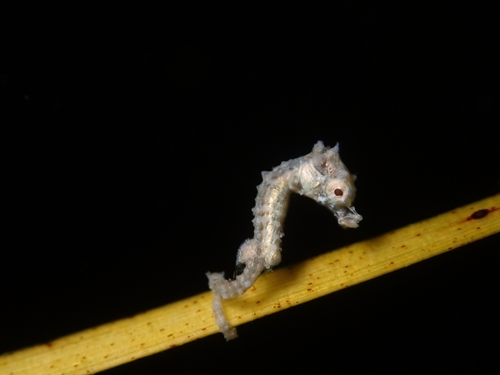
Same genus Hippocampus

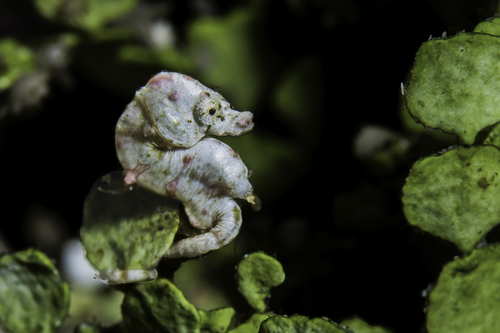
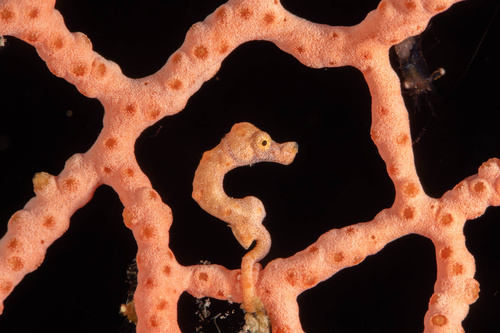
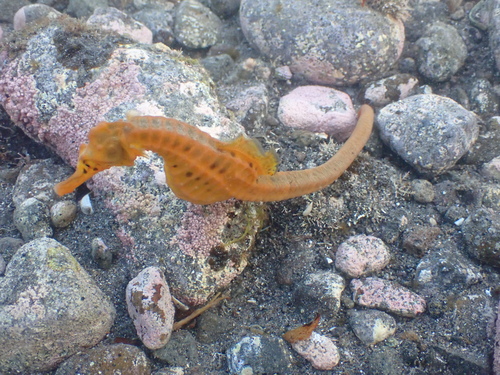
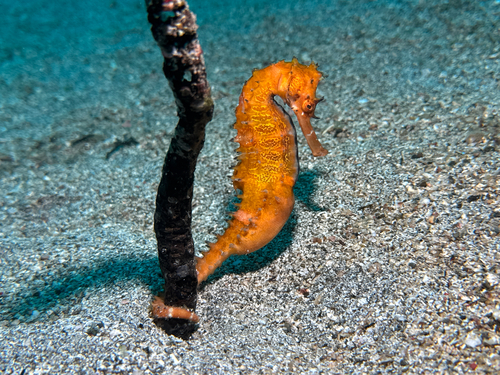
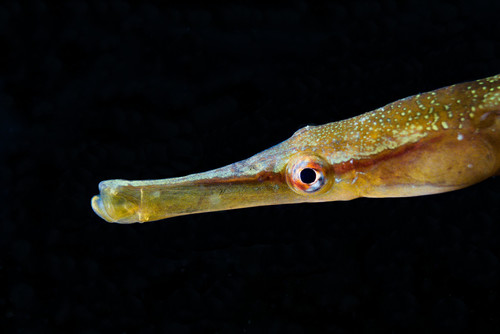
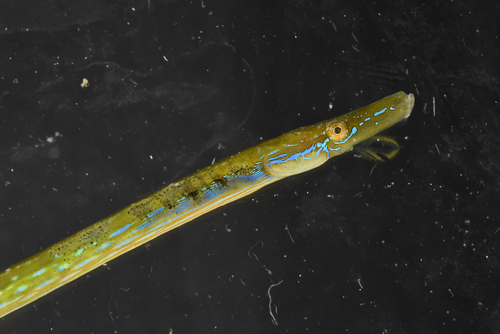
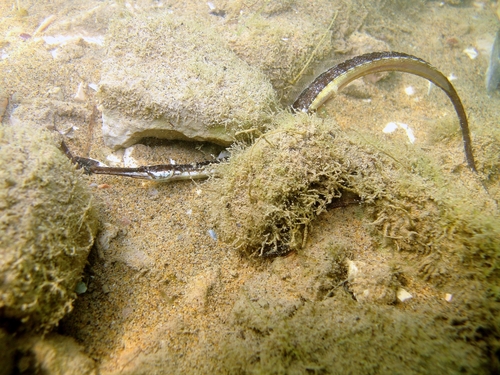
More from the family Syngnathidae


Want the complete picture on the Long-snouted seahorse?
Point your camera at the fish and Fin names the species in seconds. Free, and the Long-snouted seahorse is one of 12,519 species in the app.