
The Adonis characin (Lepidarchus adonis) is a freshwater fish of the family Alestidae that grows up to 2 cm.
Description
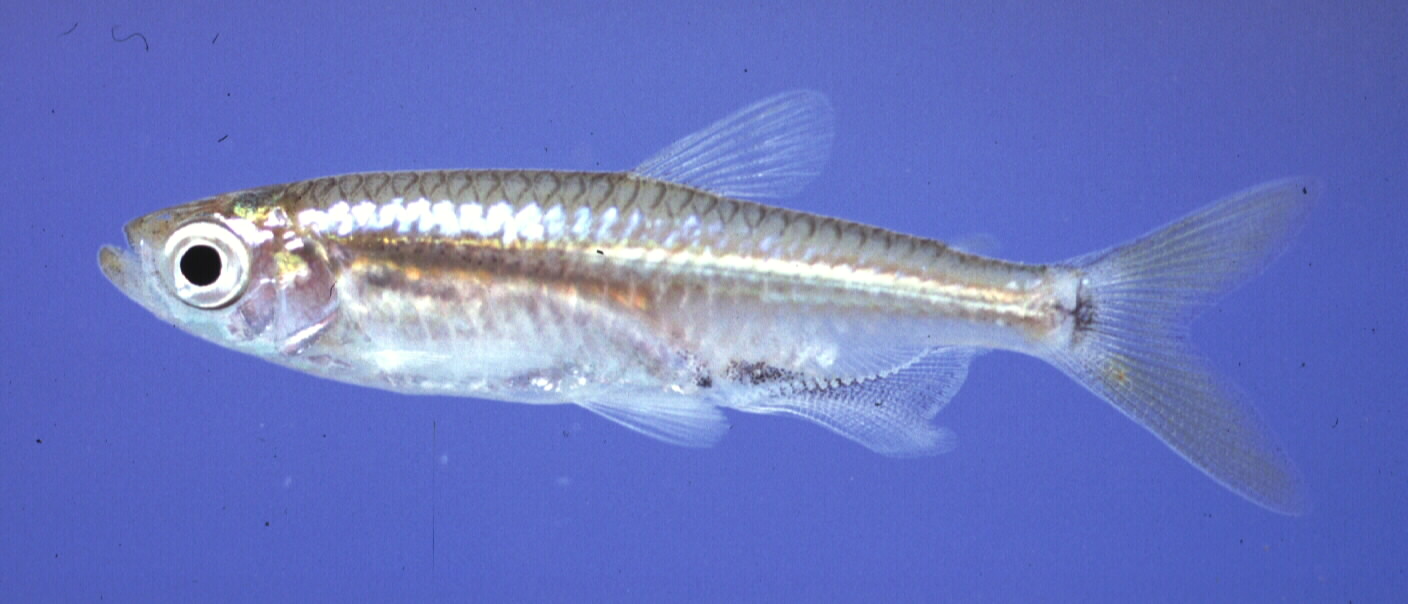
The Adonis characin is a tiny African characin (Alestidae) from the forest streams of Ghana and Ivory Coast in West Africa. The species reaches only about 2 cm and has an almost transparent, very slender body. It lives in schools in clear, shaded forest streams. The diet consists of small zooplankton and small invertebrates. Through its extremely restricted range and degradation of forest habitat the species is assessed by the IUCN as vulnerable (VU). It is prized by hobbyists but, owing to its small size and sensitivity, difficult to keep in the aquarium.
Frequently asked questions
How do you recognise the Adonis characin?
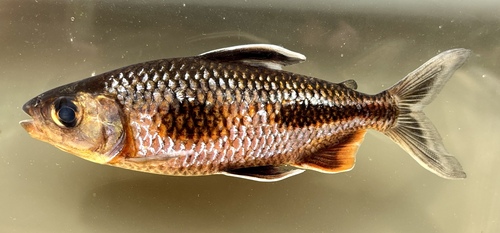
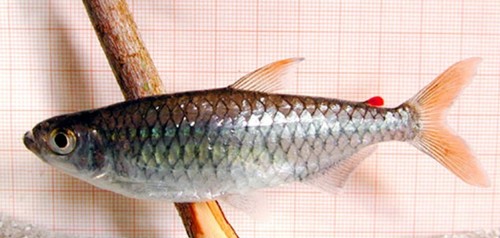
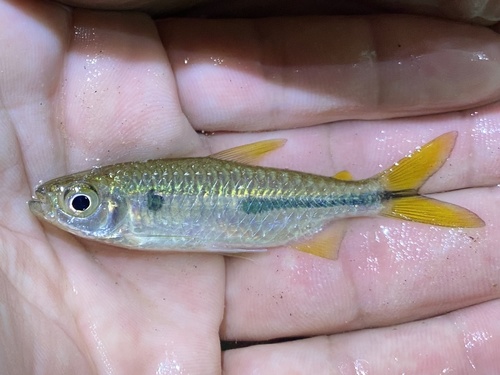
The Adonis characin has a torpedo-shaped body, is mainly silver-grey and shows a plain pattern.
Where does the Adonis characin live?
The Adonis characin lives in fresh water and is mostly found around open water.
How big does the Adonis characin get?
The Adonis characin grows to a maximum of about 2 cm. On average the species is around 2 cm.
Is the Adonis characin dangerous to humans?
No, the Adonis characin is harmless to humans.
Is the Adonis characin edible?
The Adonis characin is not usually eaten.
Download Fin's Fish Guide
Identify fish in seconds, log your catches and dives. Join the TestFlight beta.
All data
Identification
Appearance
Habitat & distribution
Behaviour & biology
For anglers
Safety
Status & sources
More from the family Alestidae

Download Fin's Fish Guide
Identify fish in seconds, log your catches and dives. Join the TestFlight beta.