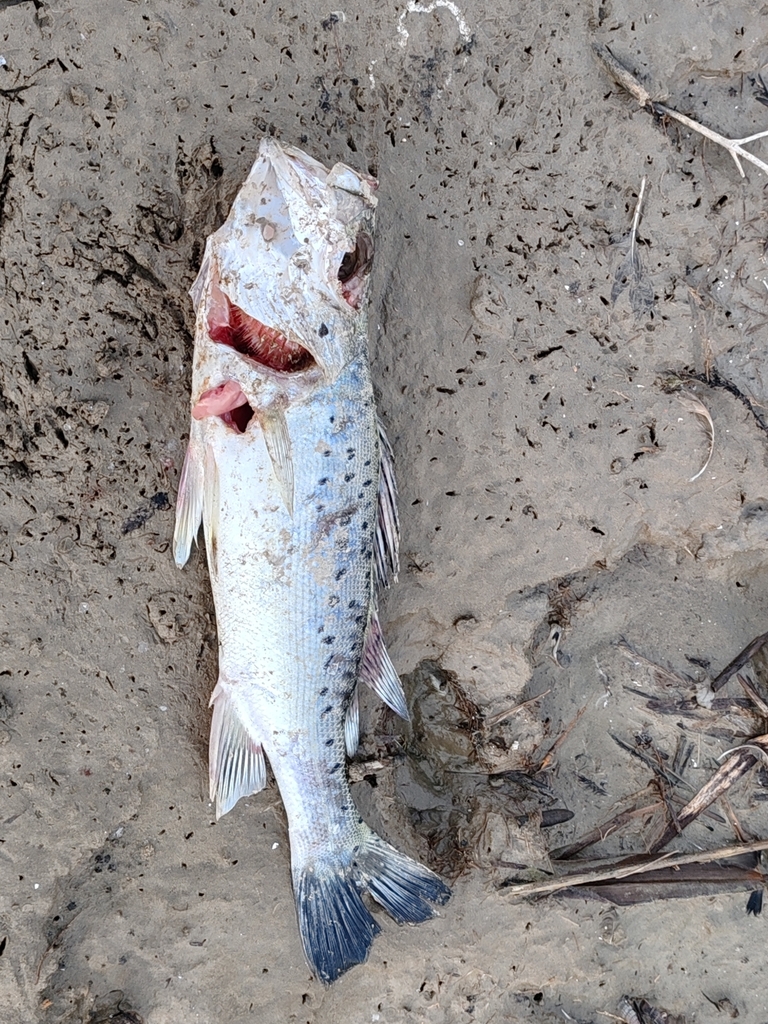
The Japanese seabass (Lateolabrax japonicus) is a fish that lives in both fresh and salt water of the family Lateolabracidae that grows up to 102 cm.
Description
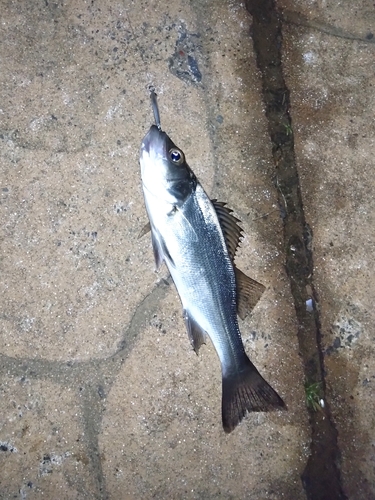
The Japanese seabass (suzuki) is a slender, silvery bass of the family Lateolabracidae reaching about 1 metre. The streamlined body has a large mouth and strong spines in the first dorsal fin; young fish bear small black speckles on the back and dorsal fin. The species comes from East Asia and lives in coastal water, estuaries and the lower reaches of rivers; it tolerates strongly varying salinities and runs far into fresh water. As a predator it hunts, mainly at dusk, schooling fish, shrimps and crustaceans. It is one of the most popular saltwater sport fish of Japan, is farmed and regarded as an excellent food fish eaten raw (sashimi) and cooked.
Frequently asked questions
How do you recognise the Japanese seabass?
The Japanese seabass has a torpedo-shaped body, is mainly silver-grey and shows a spots pattern.
Where does the Japanese seabass live?
The Japanese seabass lives in both fresh and salt water and is mostly found around open water.
How big does the Japanese seabass get?
The Japanese seabass grows to a maximum of about 102 cm. On average the species is around 16 cm.
Is the Japanese seabass dangerous to humans?
No, the Japanese seabass is harmless to humans.
Is the Japanese seabass edible?
Yes, the Japanese seabass is a highly prized food fish.
Download Fin's Fish Guide
Identify fish in seconds, log your catches and dives. Join the TestFlight beta.
All data
Identification
Appearance
Habitat & distribution
Behaviour & biology
For anglers
Safety
Status & sources
Same genus Lateolabrax
More from the family Lateolabracidae
Download Fin's Fish Guide
Identify fish in seconds, log your catches and dives. Join the TestFlight beta.