 Fin's Fish Guide

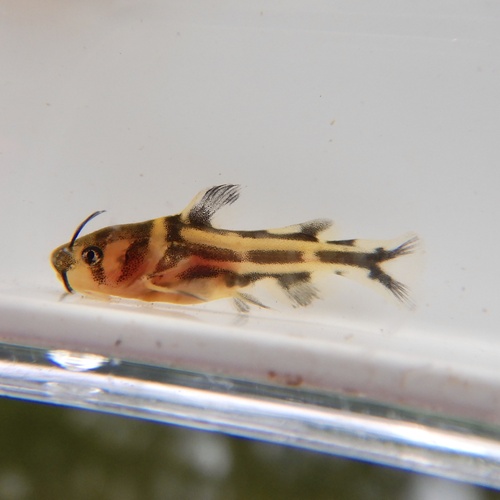
The Kampoyo (Bagrus meridionalis) is a freshwater fish of the family Bagridae that grows up to 150 cm.
Description
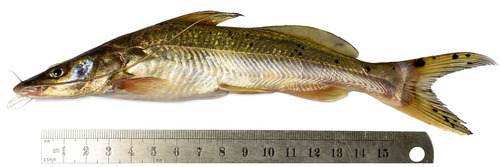
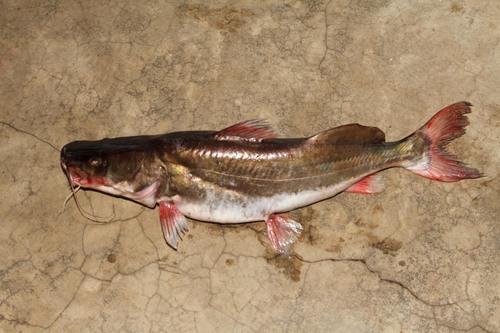
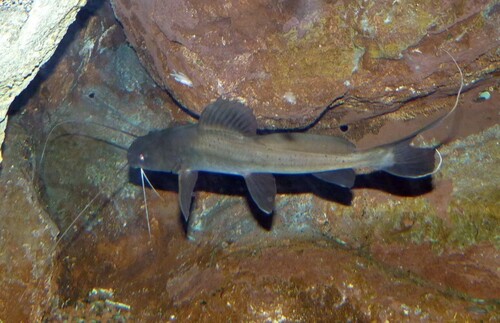
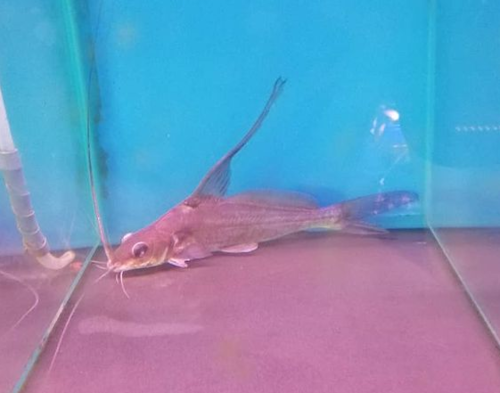
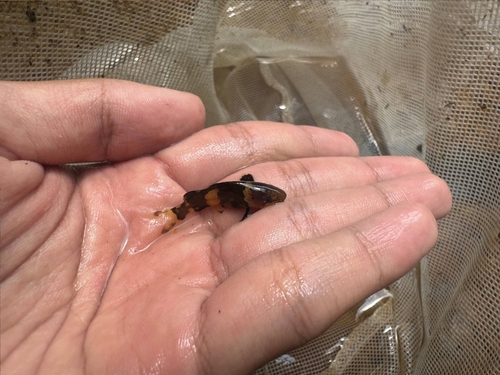
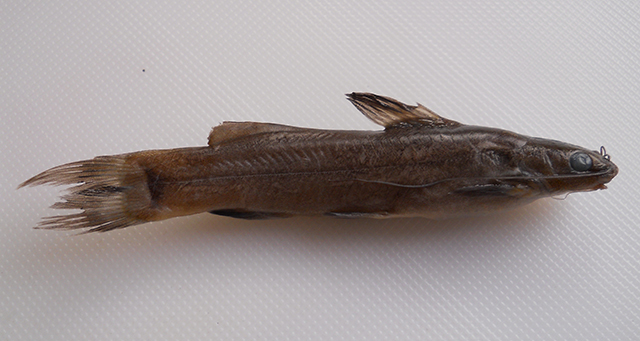
The kampango is a large catfish (Bagridae) endemic to Lake Malawi in East Africa. The species reaches about 150 cm and occurs from the lower reaches of inflowing rivers to the deepest habitable parts of the lake. It is active at night and preys mainly on small demersal cichlids. Remarkable is its extensive parental care: both parents guard the nest, the female feeds the young with special trophic eggs and the male helps them search for invertebrates. In front of the pectoral and dorsal fins it bears sharp spines. Through overfishing the species is critically endangered (CR).
Frequently asked questions
How do you recognise the Kampoyo?
The Kampoyo has an elongate, eel-like body, is mainly brown and shows a plain pattern. Extensive biparental parental care (the female feeds the juveniles with food eggs); critically endangered (CR).
Where does the Kampoyo live?
The Kampoyo lives in fresh water and is mostly found around sand or mud bottom. Endemic to Lake Malawi in East Africa.
How big does the Kampoyo get?
The Kampoyo grows to a maximum of about 150 cm. On average the species is around 42 cm.
Is the Kampoyo dangerous to humans?
The Kampoyo can cause injury; handle it with care. Not venomous, but the stout, lockable pectoral and dorsal fin spines are sharp and can cause painful punctures and cuts when handled. Hold the fish carefully and clean and disinfect any wound.
Is the Kampoyo edible?
Yes, the Kampoyo is commonly eaten.
More photos



Want the complete picture on the Kampoyo?
Point your camera at the fish and Fin names the species in seconds. Free, and the Kampoyo is one of 12,519 species in the app.
All data
Identification
Appearance
Habitat & distribution
Behaviour & biology
For anglers
Safety
Status & sources
Same genus Bagrus


More from the family Bagridae


Want the complete picture on the Kampoyo?
Point your camera at the fish and Fin names the species in seconds. Free, and the Kampoyo is one of 12,519 species in the app.