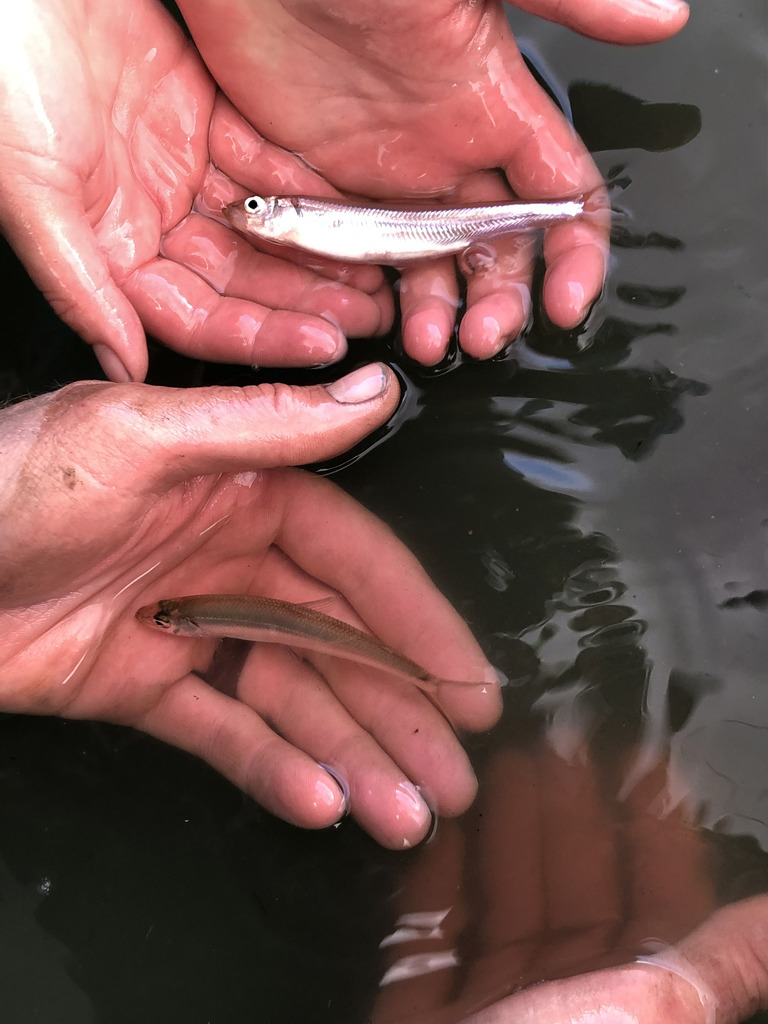
Home · Osmeridae · Japanese smelt
Japanese smelt (Hypomesus nipponensis) — Osmeridae

Japanese smelt

Hypomesus nipponensis
Family: Osmeridae
LC · Least Concern
NativeIntroduced

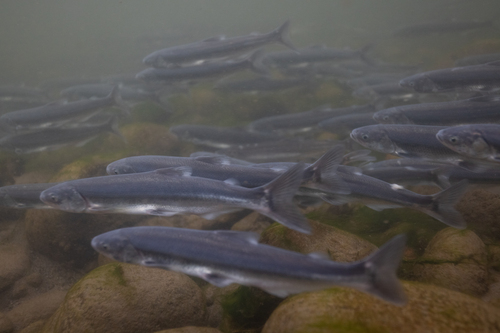
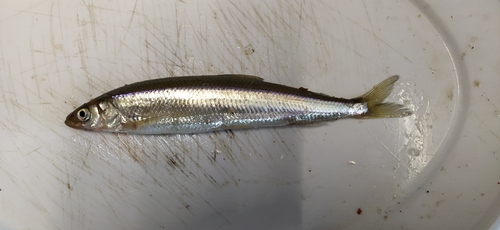
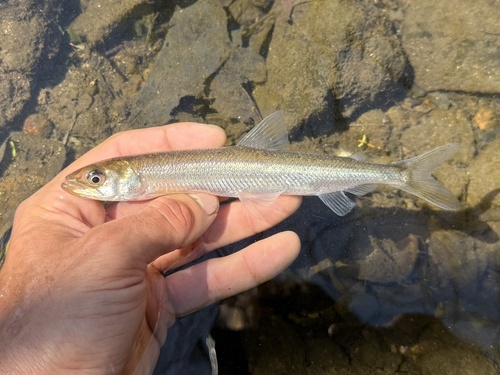
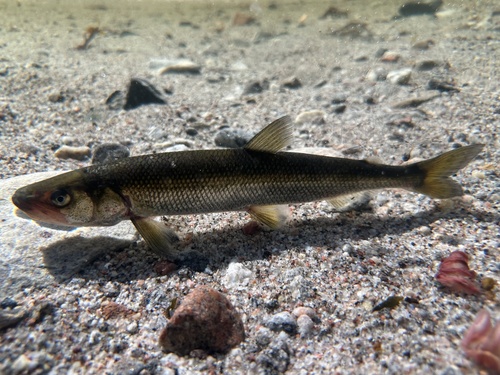
The Japanese smelt (Hypomesus nipponensis) is a fish that lives in both fresh and salt water of the family Osmeridae that grows up to 17 cm.

Length
17 cm
Water
Euryhaline
Depth
0.0–? m
Diet
Carnivore
Behaviour
Schooling
Activity
Diurnal
Body shape
Elongated (eel-like)
Substrate
Open water
Danger
Harmless
Range
East Asia: northern Honshu and Hokkaido (Japan), Korea, Sakhalin and the Russian Far East.
Edibility
Commonly eaten

Want the complete picture on the Japanese smelt?

Get the app

Description

The Japanese smelt or wakasagi is a small, slender smelt of the family Osmeridae, usually around 10 cm. The silvery body carries a small adipose fin behind the dorsal fin, typical of smelts. The species lives in freshwater lakes and brackish estuaries across East Asia, including Japan, Korea and the Russian Far East, and has been introduced into Californian reservoirs since 1959, where it can hybridise with the endangered delta smelt. It is a schooling fish that feeds on plankton and spawns in shallow water in spring. In Japan it is regularly eaten and supports local fisheries.

Frequently asked questions

How do you recognise the Japanese smelt?

The Japanese smelt has an elongate, eel-like body, is mainly silver-grey and shows a plain pattern. Small, slender smelt with an adipose fin; lives in fresh and brackish water and can hybridise with the delta smelt.

Where does the Japanese smelt live?

The Japanese smelt lives in both fresh and salt water and is mostly found around open water. East Asia: northern Honshu and Hokkaido (Japan), Korea, Sakhalin and the Russian Far East.

How big does the Japanese smelt get?

The Japanese smelt grows to a maximum of about 17 cm. On average the species is around 10 cm.

Is the Japanese smelt dangerous to humans?

No, the Japanese smelt is harmless to humans. None required: this species is harmless to humans.

Is the Japanese smelt edible?

Yes, the Japanese smelt is commonly eaten.

More photos
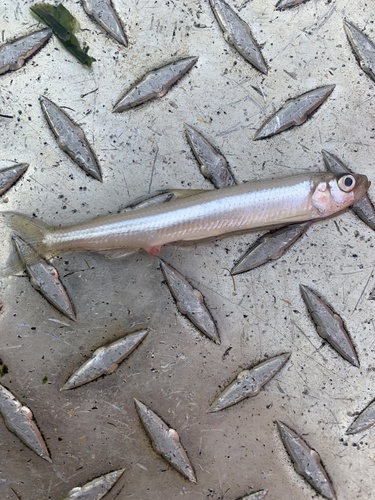
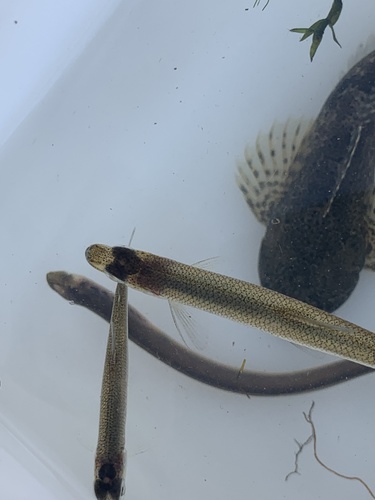
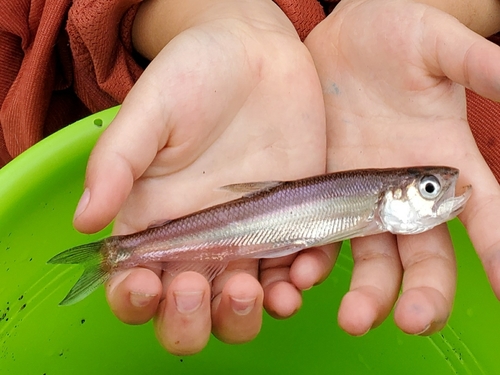
Japanese smelt (Hypomesus nipponensis) — Osmeridae — 2
iNaturalist ((c) Stephen Clifford, some rights reserved (CC BY-NC))
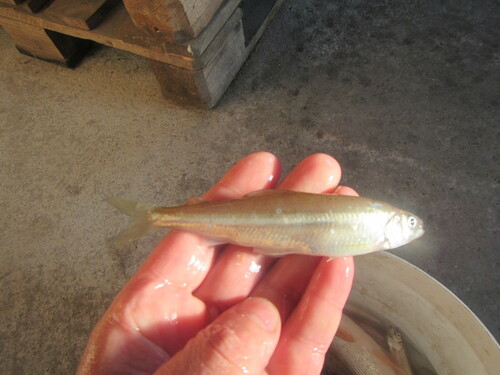
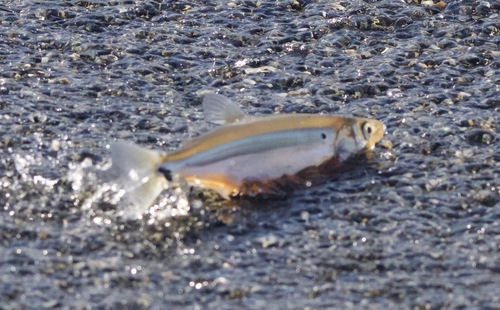
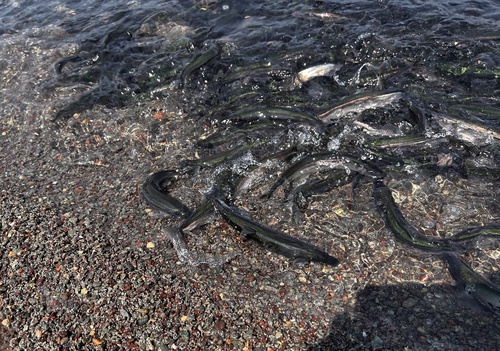
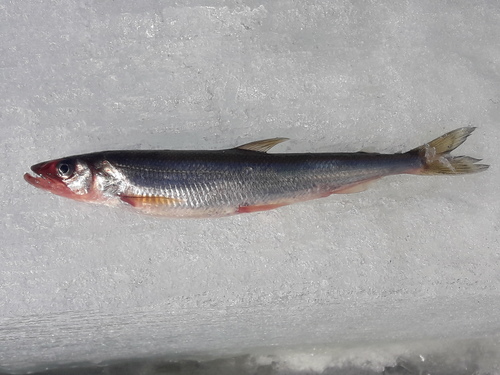
Japanese smelt (Hypomesus nipponensis) — Osmeridae — 3
iNaturalist ((c) Stephen Clifford, some rights reserved (CC BY-NC))
Fin

Want the complete picture on the Japanese smelt?

Point your camera at the fish and Fin names the species in seconds. Free, and the Japanese smelt is one of 12,519 species in the app.

Get the app →

All data

Identification

English name
Japanese smelt verified
Scientific name
Hypomesus nipponensis
Family
Osmeridae
Other names
Kunashir smelt; Wakasagi verified

Appearance

Size class
Medium verified
Max length (cm)
17.0 verified
Average length (cm)
10.0 verified
Body shape
Elongated (eel-like) sourced
Dominant colour
Silver / grey sourced
Pattern
Plain sourced
Tail shape
Forked sourced
Mouth position
Terminal inferred
Lips
Thin inferred
Barbels
No verified
Dorsal fins
Two separate sourced
Dorsal spines
No verified

Habitat & distribution

Water type
Euryhaline sourced
Substrate
Open water sourced
Min depth (m)
0.0 verified
Natural range
East Asia: northern Honshu and Hokkaido (Japan), Korea, Sakhalin and the Russian Far East. verified
Origin
Native verified

Behaviour & biology

Diet
Carnivore verified
Diet (detail)
Small fishes, crustaceans and zooplankton inferred
Social behaviour
Schooling verified
Territorial
No verified
Activity
Diurnal sourced
Reproduction
Separate sexes verified
Sexual dimorphism
No verified
Seasonality
Anadromous/freshwater smelt that spawns in shoals in shallow water in spring. sourced
Special features
Small, slender smelt with an adipose fin; lives in fresh and brackish water and can hybridise with the delta smelt. sourced

For anglers

Edibility
Commonly eaten verified
Fishing method
Angling with lures or (dead/live) baitfish by trolling, casting or drift fishing in open water. inferred
Regulations source
FishBase ↗ inferred

Safety

Danger to humans
Harmless verified
First aid
None required: this species is harmless to humans. sourced

Status & sources

Sources
FishBase via GBIF (DwC-A), CC-BY-NC 4.0

Same genus Hypomesus

More from the family Osmeridae
Fin

Want the complete picture on the Japanese smelt?

Point your camera at the fish and Fin names the species in seconds. Free, and the Japanese smelt is one of 12,519 species in the app.

Get the app →
Is this the Japanese smelt? Get the app