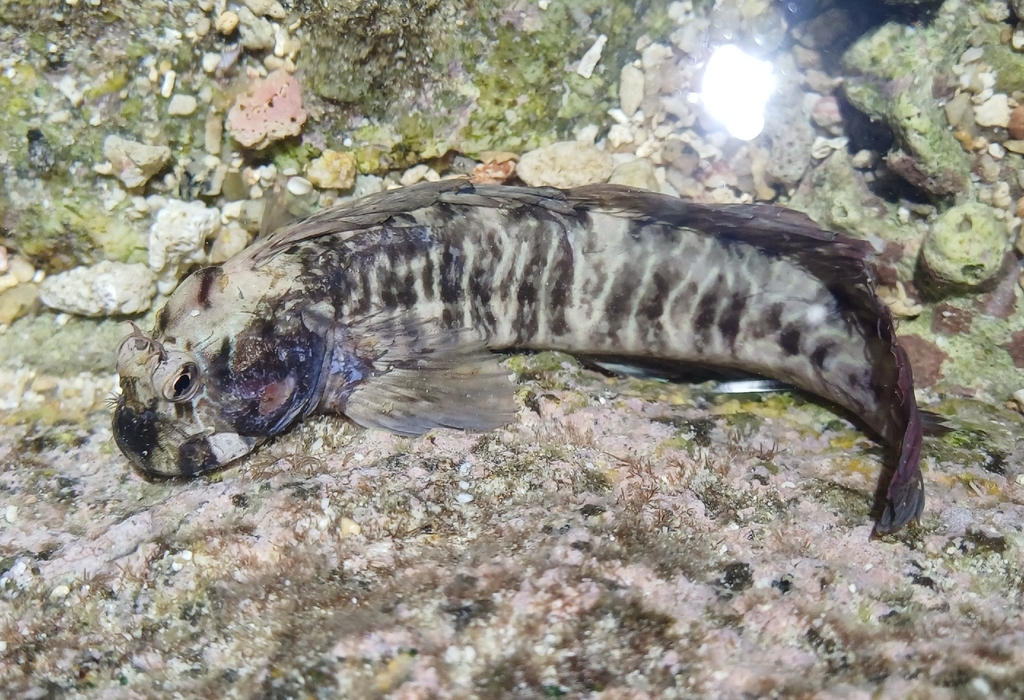
The Coral blenny (Istiblennius edentulus) is a brackish-water fish of the family Blenniidae that grows up to 16 cm.
Description
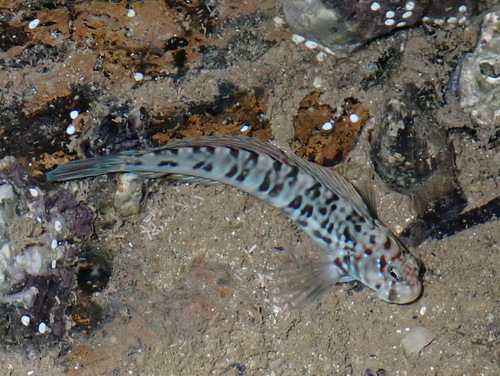
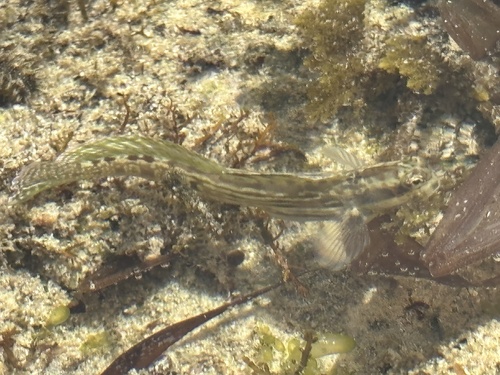
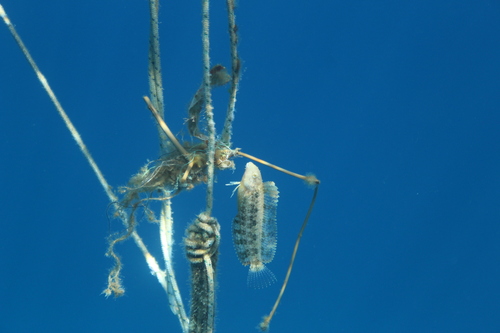
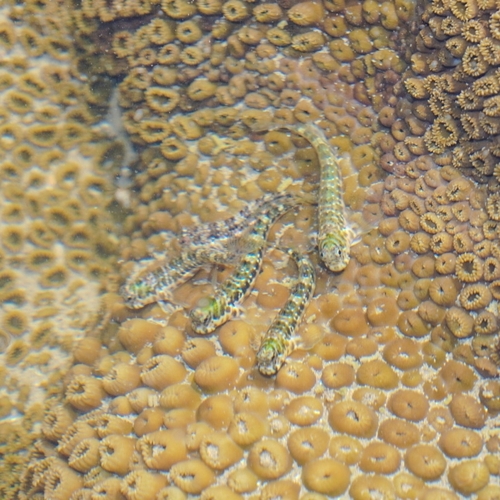
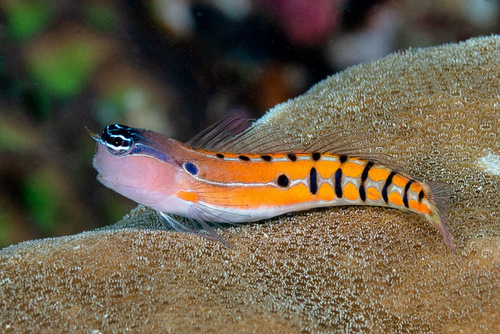
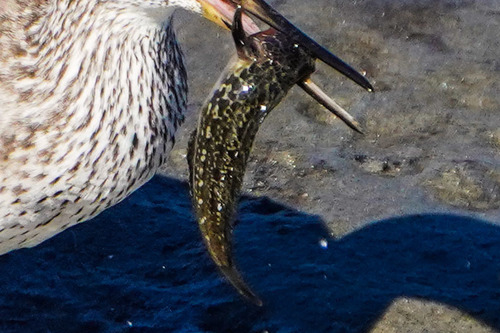
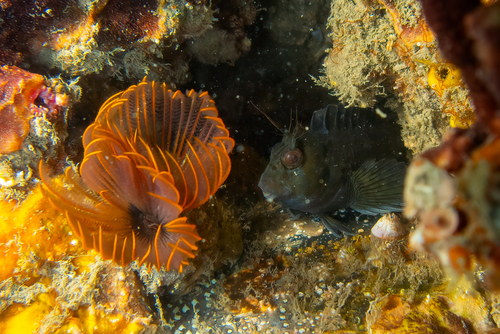
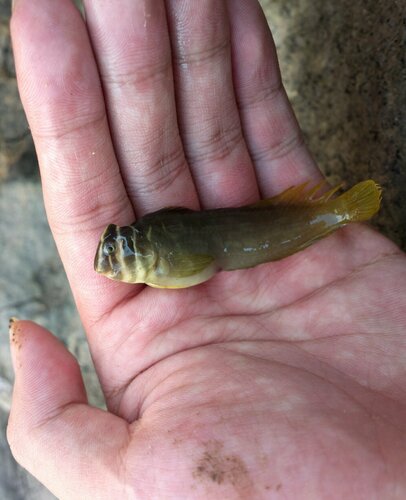
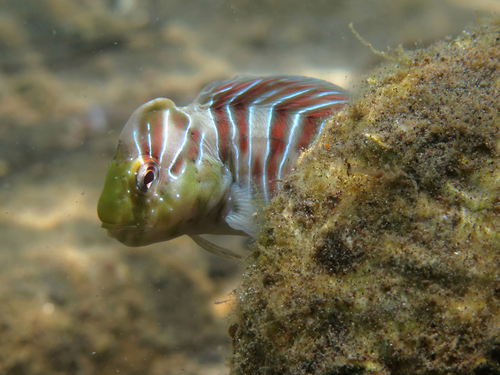
The rippled rockskipper is a blenny of the family Blenniidae from the Indo-Pacific. The species grows to about 16 cm and has a scaleless body with fine wavy crossbars and small skin flaps above the eyes. It inhabits the intertidal zone of rocky shores, often among large rubble pieces that provide shelter at low tide. At low water it can move among rock crevices and pools and even survive briefly out of water, 'skipping' over the rocks with its pectoral fins. With its rasping mouth it grazes benthic algae and growth. The species is harmless to humans.
Frequently asked questions
How do you recognise the Coral blenny?
The Coral blenny has an elongate, eel-like body, is mainly brown and shows a vertical stripes pattern.
Where does the Coral blenny live?
The Coral blenny lives in brackish water and is mostly found around stony or rocky ground.
How big does the Coral blenny get?
The Coral blenny grows to a maximum of about 16 cm.
Is the Coral blenny dangerous to humans?
No, the Coral blenny is harmless to humans.
Is the Coral blenny edible?
The Coral blenny is not usually eaten.
Download Fin's Fish Guide
Identify fish in seconds, log your catches and dives. Join the TestFlight beta.
All data
Identification
Appearance
Habitat & distribution
Behaviour & biology
For anglers
Safety
Status & sources
Same genus Istiblennius
More from the family Blenniidae
Download Fin's Fish Guide
Identify fish in seconds, log your catches and dives. Join the TestFlight beta.