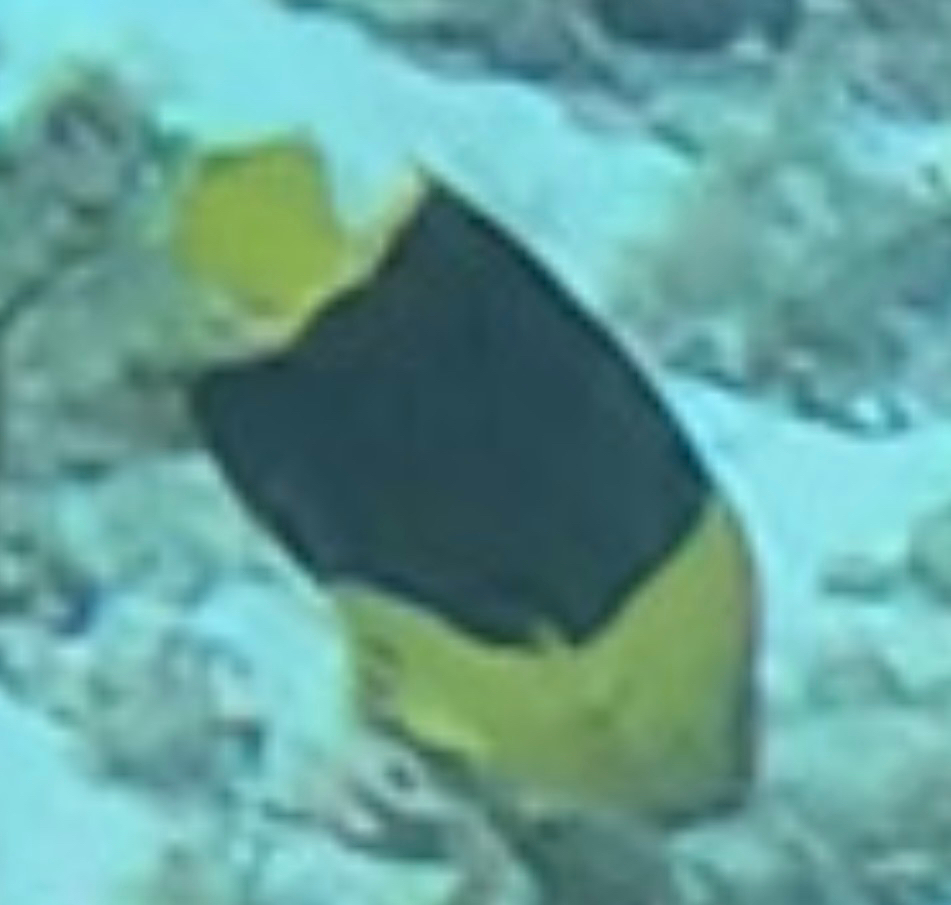
The Angelfish (Holacanthus tricolor) is a saltwater fish of the family Pomacanthidae that grows up to 35 cm.
Description
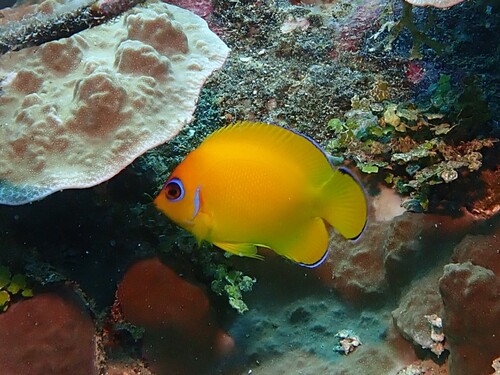
The rock beauty is a strikingly coloured angelfish (family Pomacanthidae) of the western Atlantic and Caribbean. Adults have a bright yellow head and tail with a large black mid-body, while juveniles are almost entirely yellow with a blue-ringed eyespot. The species grows to about 35 cm and lives on rocky and coral-rich reefs, where it feeds on sponges, tunicates, zoanthids and algae. Juveniles often associate with fire coral. The species is collected for the aquarium trade. There are reports of ciguatera poisoning after consumption.
Frequently asked questions
How do you recognise the Angelfish?
The Angelfish has a flattened, disc-shaped body and is mainly yellow-gold.
Where does the Angelfish live?
The Angelfish lives in the sea (marine waters) and is mostly found around stony or rocky ground.
How big does the Angelfish get?
The Angelfish grows to a maximum of about 35 cm. On average the species is around 30 cm.
Is the Angelfish dangerous to humans?
The Angelfish is venomous — handle spines with care and seek medical help after a sting if needed.
Is the Angelfish edible?
The Angelfish is rarely eaten.
Download Fin's Fish Guide
Identify fish in seconds, log your catches and dives. Join the TestFlight beta.
All data
Identification
Appearance
Habitat & distribution
Behaviour & biology
For anglers
Safety
Status & sources
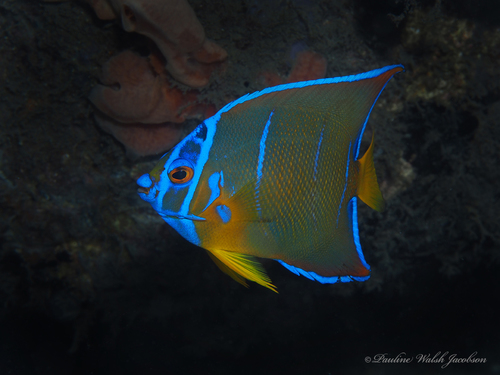
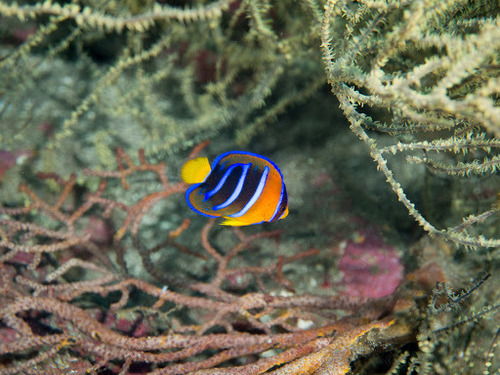
Same genus Holacanthus
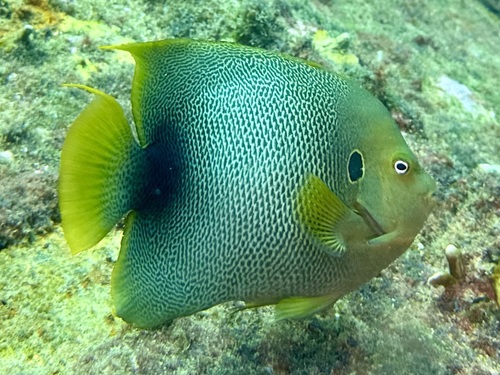
More from the family Pomacanthidae
Download Fin's Fish Guide
Identify fish in seconds, log your catches and dives. Join the TestFlight beta.