
The Venezuelan candiru (Haemomaster venezuelae) is a freshwater fish of the family Trichomycteridae that grows up to 7 cm.
Description
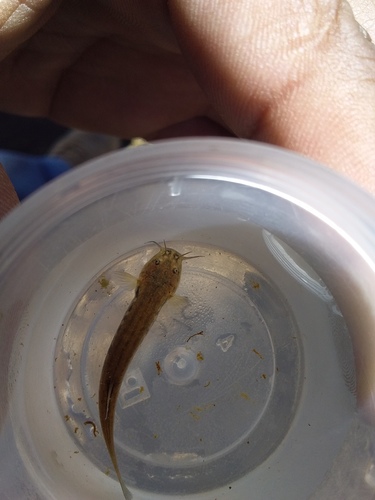
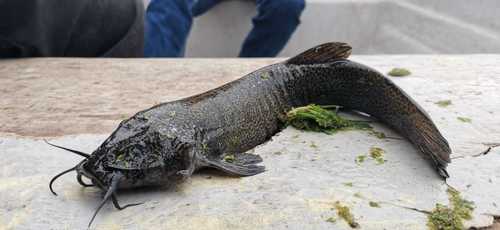
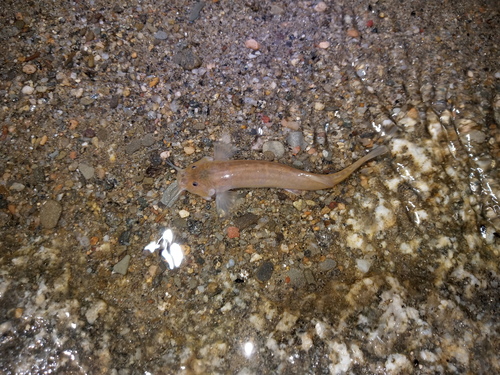
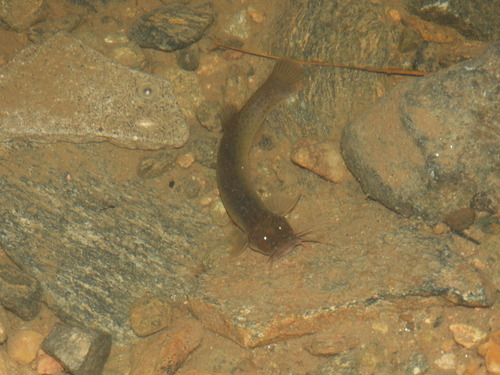
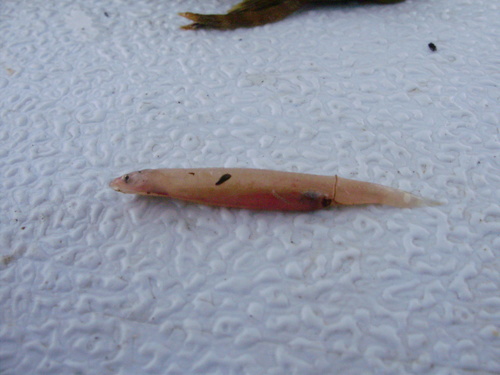
The Venezuelan candiru is a minute, parasitic catfish from fresh water of the Orinoco and Amazon basins of South America. The species reaches only about 7 cm and has a slender, almost translucent, eel-shaped body. Like other candirus it lives as a blood-feeding parasite: it enters the gill cavity of larger fish and sucks blood. As a nocturnal fish it keeps hidden in the bottom by day. Owing to its lifestyle it is rarely seen. The fish is largely harmless to humans. The IUCN has not evaluated the species.
Frequently asked questions
How do you recognise the Venezuelan candiru?
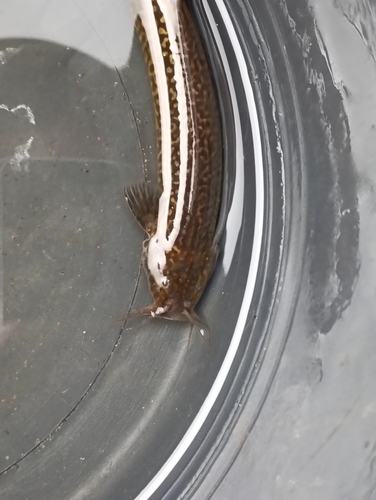
The Venezuelan candiru has an elongate, eel-like body, is mainly white and shows a plain pattern.
Where does the Venezuelan candiru live?
The Venezuelan candiru lives in fresh water and is mostly found around sand or mud bottom.
How big does the Venezuelan candiru get?
The Venezuelan candiru grows to a maximum of about 7 cm.
Is the Venezuelan candiru dangerous to humans?
No, the Venezuelan candiru is harmless to humans.
Is the Venezuelan candiru edible?
The Venezuelan candiru is not usually eaten.
Download Fin's Fish Guide
Identify fish in seconds, log your catches and dives. Join the TestFlight beta.
All data
Identification
Appearance
Habitat & distribution
Behaviour & biology
For anglers
Safety
Status & sources
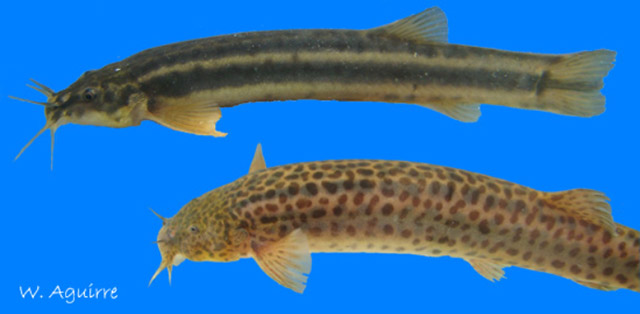
More from the family Trichomycteridae

Download Fin's Fish Guide
Identify fish in seconds, log your catches and dives. Join the TestFlight beta.