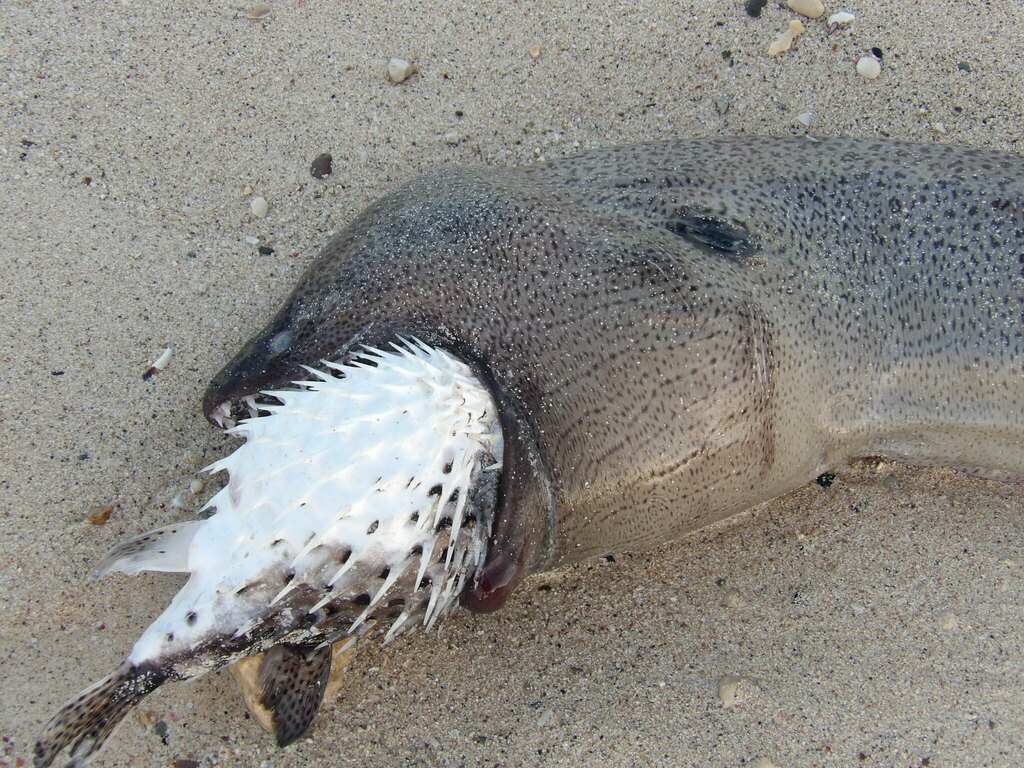
The Giant moray (Gymnothorax javanicus) is a saltwater fish of the family Muraenidae that grows up to 300 cm.
Description
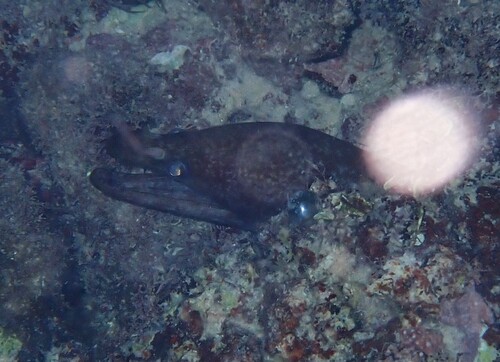
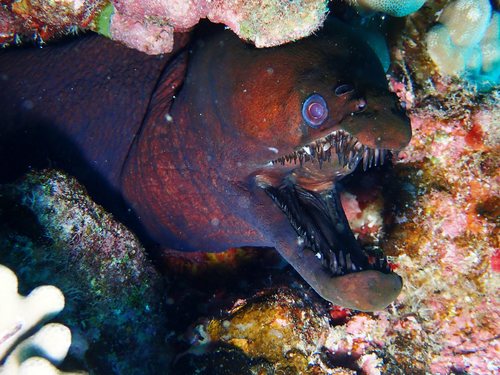
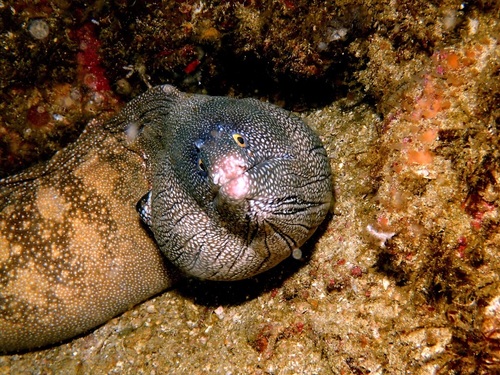
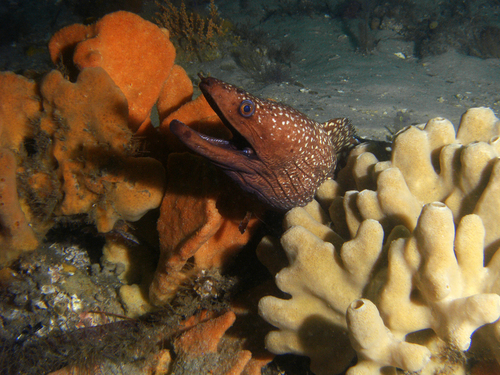
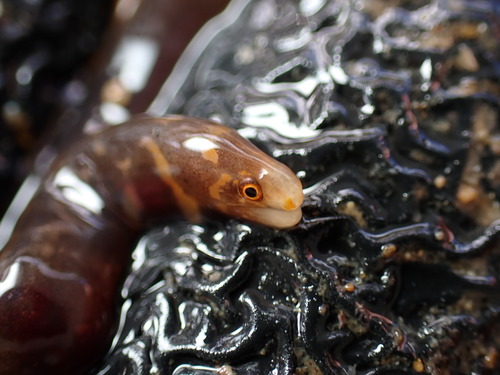
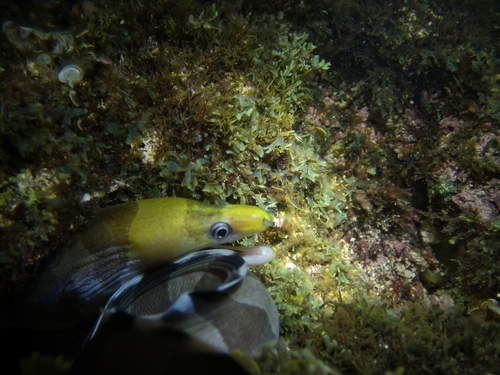
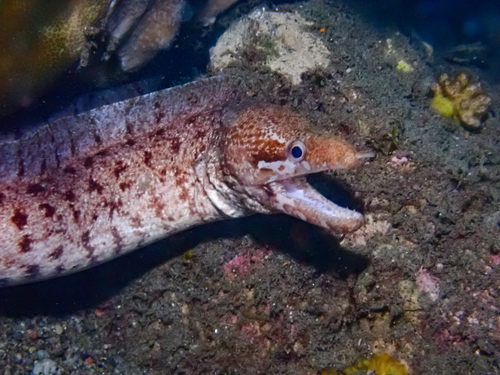
The giant moray is the largest moray (Muraenidae) of the Indo-Pacific. The species grows to about 3 metres and has a heavy, elongate, snake-shaped, scaleless body that in adults is dark and mottled with black spots. As a nocturnal top reef predator it hides by day in caves and crevices and seizes fish and octopus at night. Large specimens are among the most important ciguatera carriers and must not be eaten; it also bites fiercely when disturbed. Caution is advised.
Frequently asked questions
How do you recognise the Giant moray?
The Giant moray has a snake-like body, is mainly brown and shows a spots pattern.
Where does the Giant moray live?
The Giant moray lives in the sea (marine waters) and is mostly found around stony or rocky ground.
How big does the Giant moray get?
The Giant moray grows to a maximum of about 300 cm.
Is the Giant moray dangerous to humans?
The Giant moray is venomous — handle spines with care and seek medical help after a sting if needed.
Is the Giant moray edible?
The Giant moray is not usually eaten.
Download Fin's Fish Guide
Identify fish in seconds, log your catches and dives. Join the TestFlight beta.
All data
Identification
Appearance
Habitat & distribution
Behaviour & biology
For anglers
Safety
Status & sources
Same genus Gymnothorax
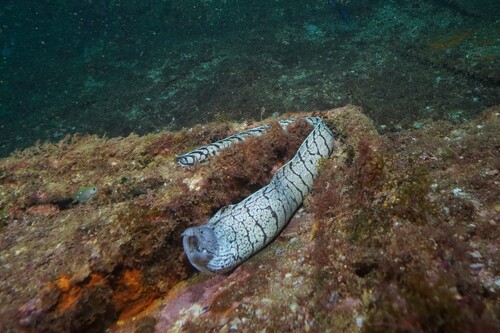
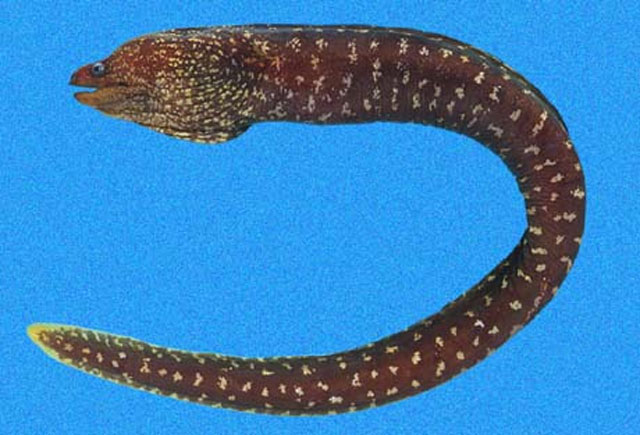
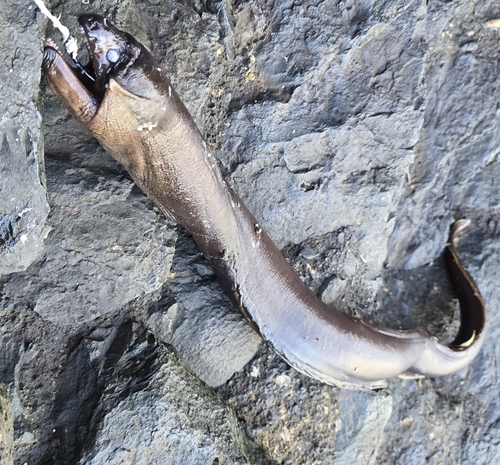
More from the family Muraenidae

Download Fin's Fish Guide
Identify fish in seconds, log your catches and dives. Join the TestFlight beta.