 Fin's Fish Guide
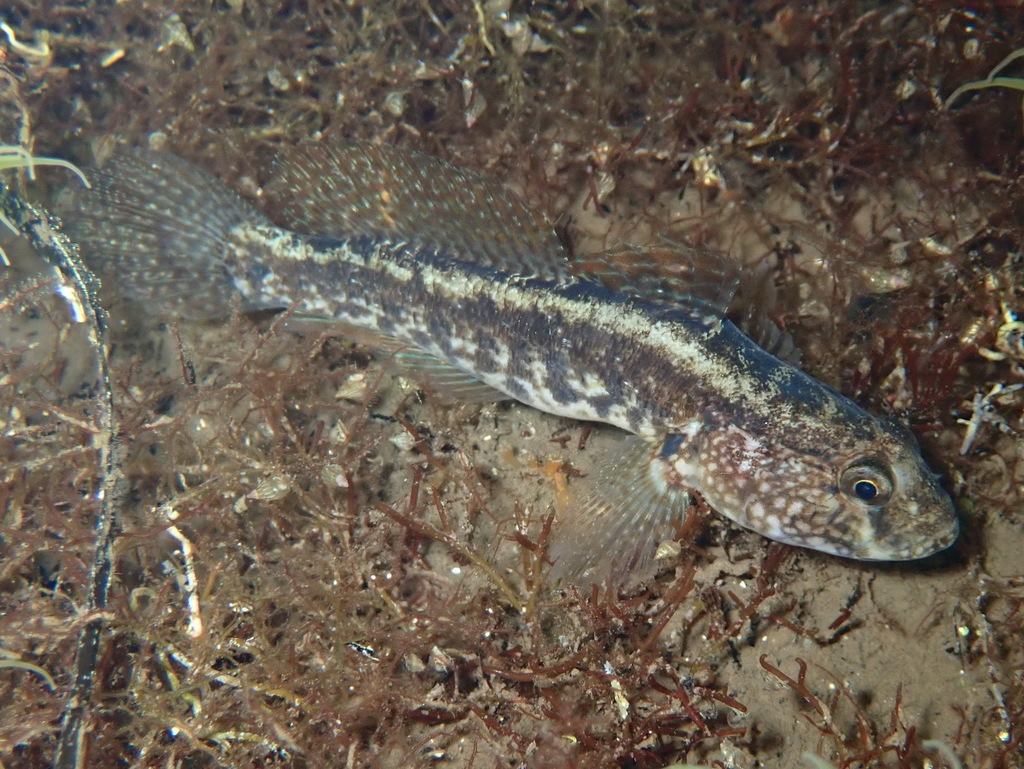
The Grass goby (Zosterisessor ophiocephalus) is a brackish-water fish of the family Gobiidae that grows up to 25 cm.
Mediterranean Sea, Black Sea and the Sea of Azov, in seagrass beds of brackish coastal lagoons and shallow coastal water.
Description
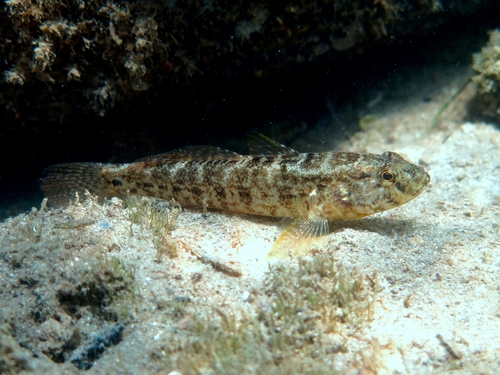
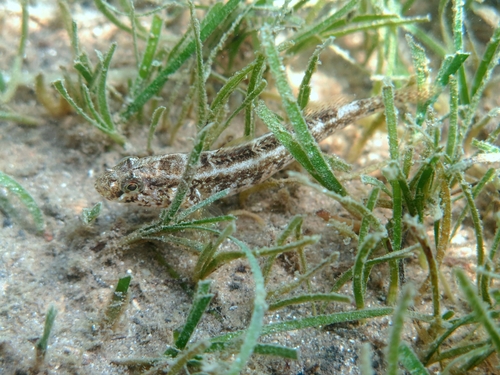
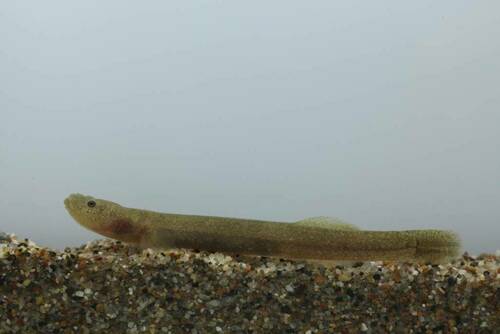
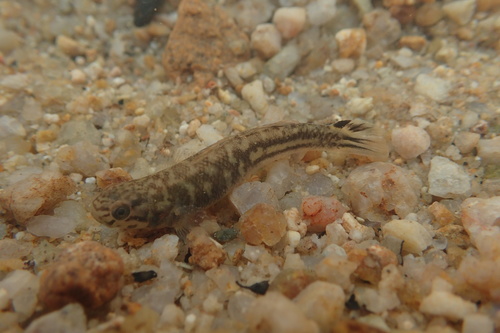
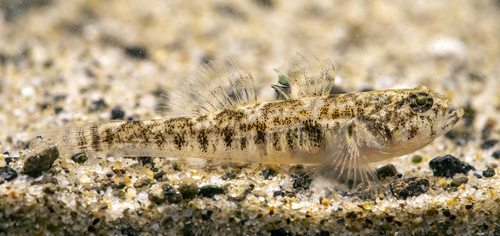
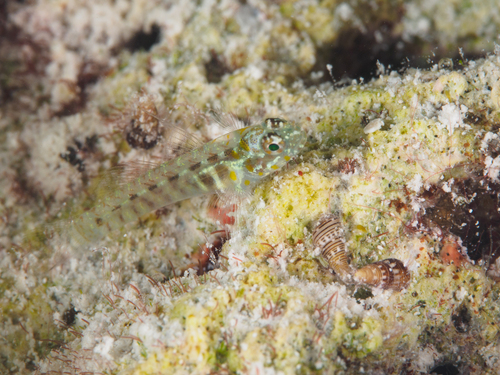
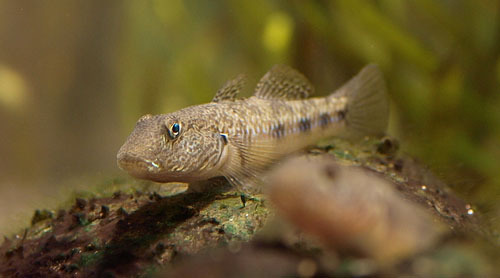
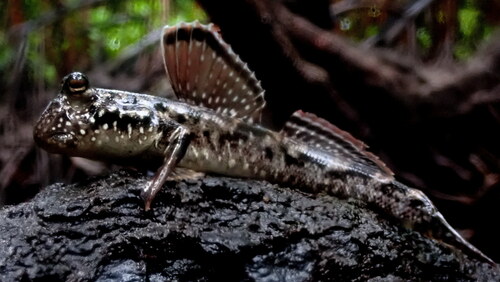
The grass goby is a robust goby of the family Gobiidae reaching about 25 cm, one of the largest gobies of the Mediterranean region. The green-brown mottled body blends perfectly among seagrass; the head is broad and somewhat snake-like, to which the species name ophiocephalus refers. Like other gobies the pelvic fins are fused into a sucking disc. The species lives in seagrass beds of brackish coastal lagoons and shallow coastal water of the Mediterranean, the Black Sea and the Sea of Azov. Among the plants it hunts crustaceans, worms and small fish. In spring the male builds a nest among the seagrass roots and guards the eggs. Locally, especially in lagoons, it is a valued commercial and sport fish.
Frequently asked questions
How do you recognise the Grass goby?
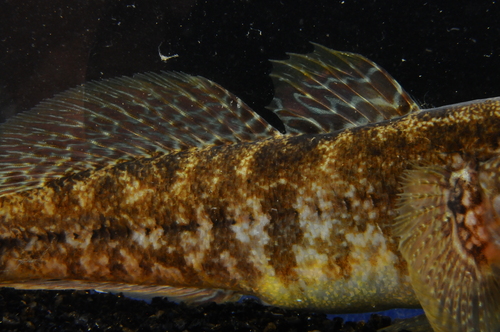
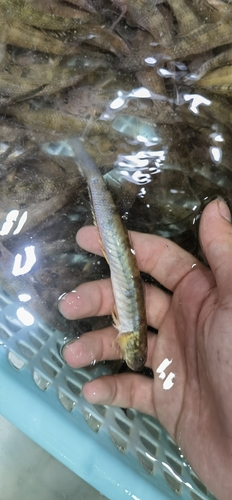
The Grass goby is mainly green and shows a marbled pattern. Large, green-brown marbled goby of seagrass beds, with a snake-like head; one of the largest gobies of the Mediterranean region.
Where does the Grass goby live?
The Grass goby lives in brackish water and is mostly found around algae or seagrass beds. Mediterranean Sea, Black Sea and the Sea of Azov, in seagrass beds of brackish coastal lagoons and shallow coastal water.
How big does the Grass goby get?
The Grass goby grows to a maximum of about 25 cm.
Is the Grass goby dangerous to humans?
No, the Grass goby is harmless to humans. None required: this species is harmless to humans.
Is the Grass goby edible?
Yes, the Grass goby is commonly eaten.
More photos

Want the complete picture on the Grass goby?
Point your camera at the fish and Fin names the species in seconds. Free, and the Grass goby is one of 12,519 species in the app.
All data
Identification
Appearance
Habitat & distribution
Behaviour & biology
For anglers
Safety
Status & sources
More from the family Gobiidae

Want the complete picture on the Grass goby?
Point your camera at the fish and Fin names the species in seconds. Free, and the Grass goby is one of 12,519 species in the app.