Home · Pseudopimelodidae · Frogmouth catfish
Frogmouth catfish (Batrochoglanis raninus) — Pseudopimelodidae

Frogmouth catfish

Batrochoglanis raninus
LC · Least Concern

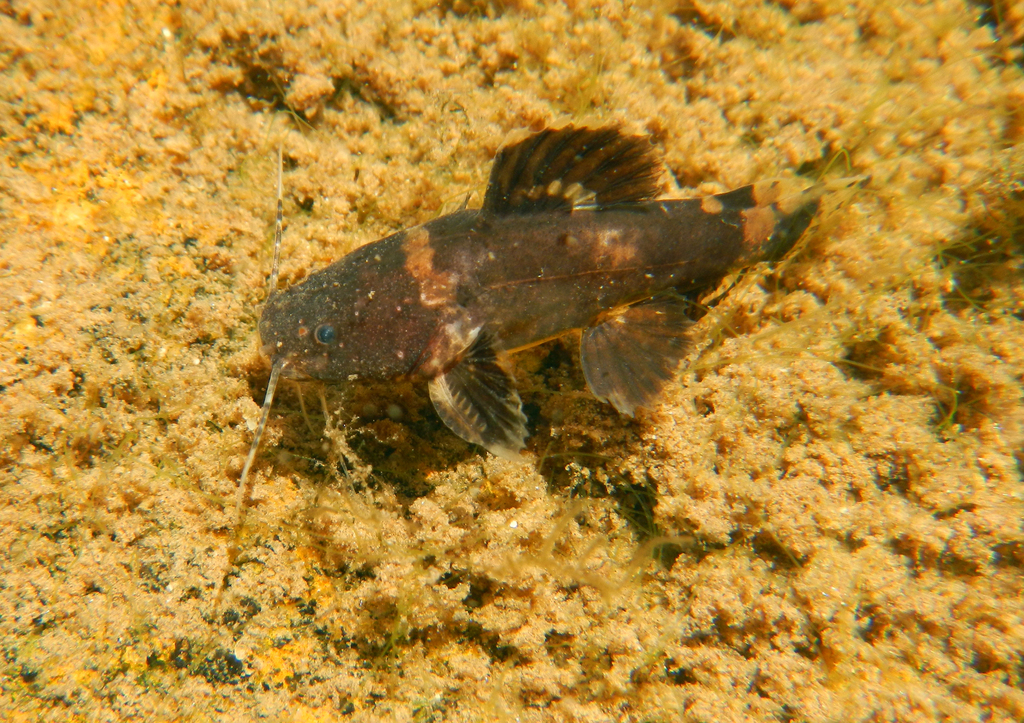
The Frogmouth catfish (Batrochoglanis raninus) is a freshwater fish of the family Pseudopimelodidae that grows up to 20 cm.

Length
20 cm
Water
Freshwater
Diet
Carnivore
Behaviour
Solitary
Activity
Nocturnal
Body shape
Elongated (eel-like)
Substrate
Sand / mud bottom
Danger
Can cause injury
Range
Fresh water of northern South America (the Amazon and Orinoco region), in calm rivers, creeks and bank vegetation.
Edibility
Not eaten

Want the complete picture on the Frogmouth catfish?

Get the app

Description

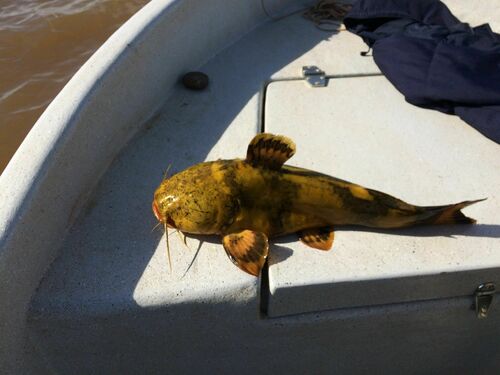
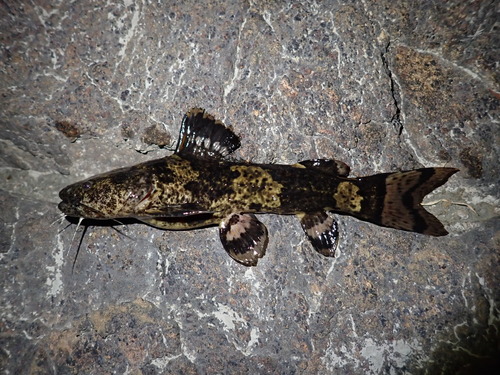
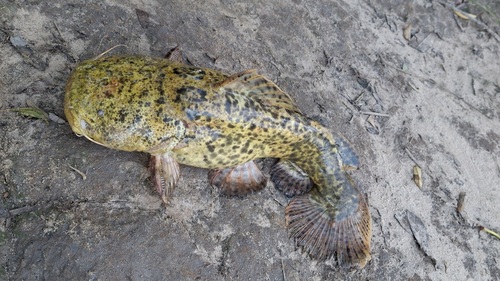
The frogmouth catfish is a stocky South American catfish of the family Pseudopimelodidae reaching about 20 cm. The brown, marbled body has a broad, flattened, frog-like head with a large mouth and barbels, and stout spines in the pectoral and dorsal fins that can cause painful puncture wounds. Its camouflage makes it nearly invisible on the bottom among leaf litter and roots. The species comes from the Amazon and Orinoco regions of northern South America and lives in quiet rivers, creeks and bankside growth. As a motionless ambush hunter it takes passing small fish, crustaceans and insect larvae at night. Because of its unusual look it is popular in the aquarium hobby.

Frequently asked questions

How do you recognise the Frogmouth catfish?

The Frogmouth catfish has an elongate, eel-like body, is mainly brown and shows a marbled pattern. Stocky South American catfish with a broad, frog-like head, barbels and sturdy spines; well camouflaged on the bottom.

Where does the Frogmouth catfish live?

The Frogmouth catfish lives in fresh water and is mostly found around sand or mud bottom. Fresh water of northern South America (the Amazon and Orinoco region), in calm rivers, creeks and bank vegetation.

How big does the Frogmouth catfish get?

The Frogmouth catfish grows to a maximum of about 20 cm.

Is the Frogmouth catfish dangerous to humans?

The Frogmouth catfish can cause injury; handle it with care. The pectoral and dorsal fins bear stout, serrated spines that can cause painful puncture or cut wounds; handle a caught animal carefully and clean any wound.

Is the Frogmouth catfish edible?

The Frogmouth catfish is not usually eaten.

More photos

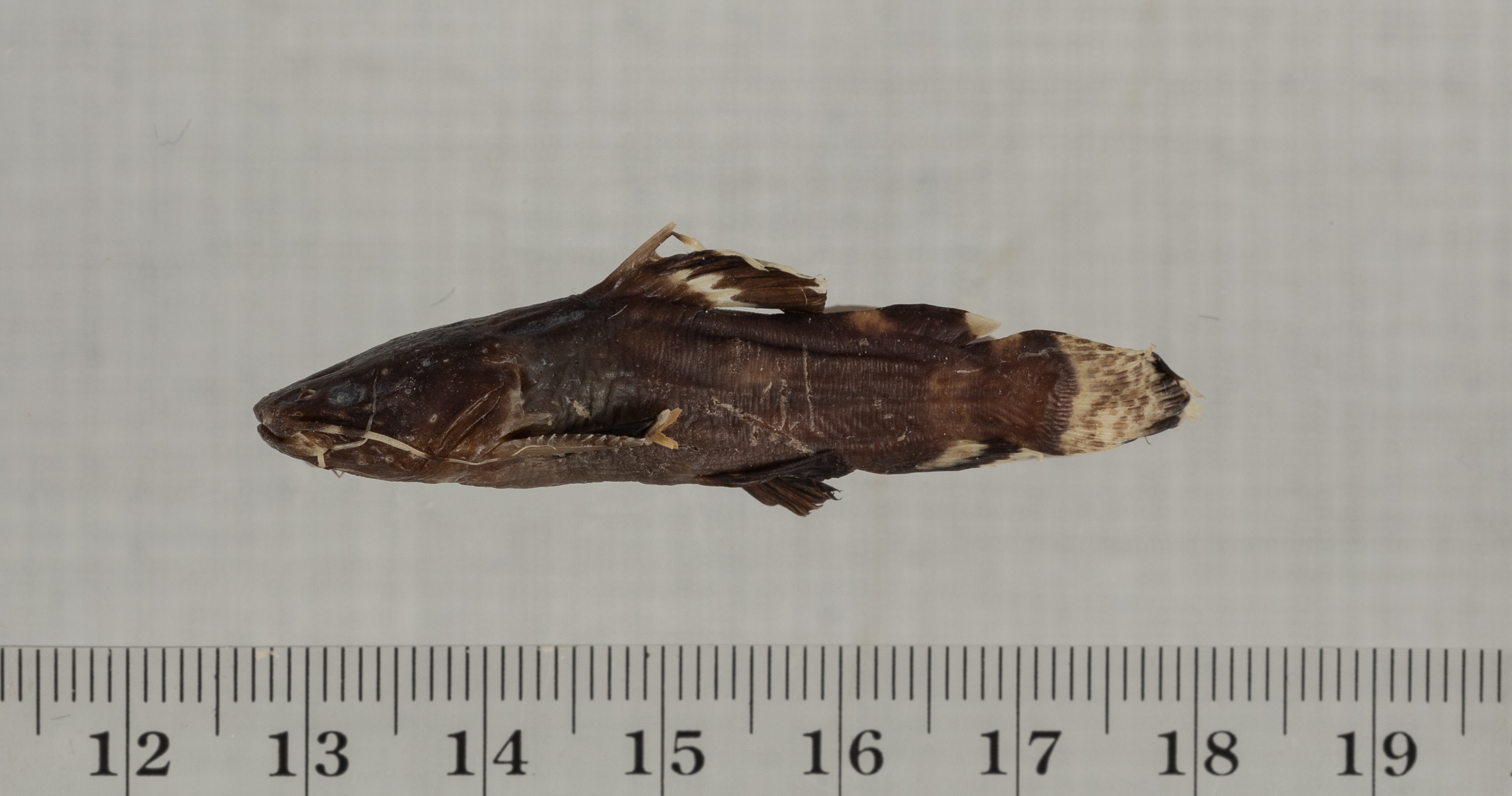
Frogmouth catfish (Batrochoglanis raninus) — Pseudopimelodidae — 2
© President and Fellows of Harvard College (CC BY-NC 4.0) via GBIF — MCZ
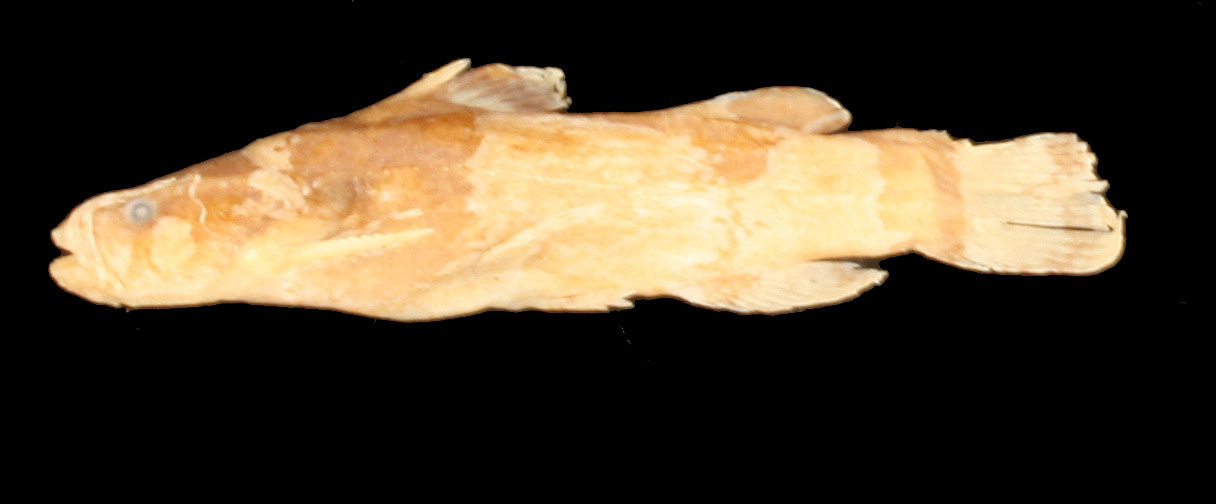
Frogmouth catfish (Batrochoglanis raninus) — Pseudopimelodidae — 3
Wikimedia Commons — Dihon Leone Zdradek, Universidade Federal de Rondônia; Fabíola Silva Tomaz, Universidade Federal de Rondônia; Willian Massaharu Ohara, Universidade Federal do Amazonas. Instituto de Ciências Biológicas (CC BY 4.0)
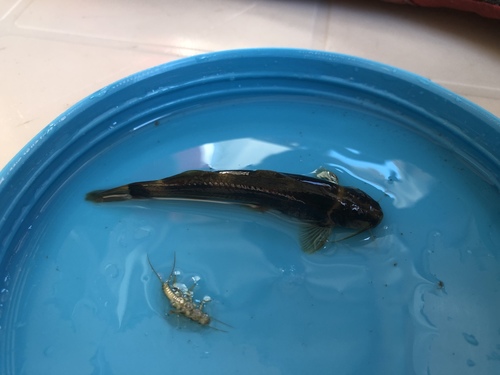
Frogmouth catfish (Batrochoglanis raninus) — Pseudopimelodidae — 4
Florida Museum of Natural History Ichthyology (CC BY-NC 4.0) via GBIF — UF
Fin

Want the complete picture on the Frogmouth catfish?

Point your camera at the fish and Fin names the species in seconds. Free, and the Frogmouth catfish is one of 12,519 species in the app.

Get the app →

All data

Identification

English name
Frogmouth catfish verified
Scientific name
Batrochoglanis raninus
Family
Pseudopimelodidae

Appearance

Size class
Medium verified
Max length (cm)
20.0 verified
Body shape
Elongated (eel-like) sourced
Dominant colour
Brown sourced
Pattern
Marbled sourced
Tail shape
Rounded inferred
Mouth position
Terminal inferred
Lips
Thick / fleshy inferred
Barbels
Yes verified
Dorsal fins
One continuous sourced
Dorsal spines
Yes verified

Habitat & distribution

Water type
Freshwater verified
Substrate
Sand / mud bottom verified
Natural range
Fresh water of northern South America (the Amazon and Orinoco region), in calm rivers, creeks and bank vegetation. verified
Origin
Native verified

Behaviour & biology

Diet
Carnivore verified
Diet (detail)
Small fishes, crustaceans and insect larvae, taken from ambush sourced
Social behaviour
Solitary verified
Territorial
No verified
Activity
Nocturnal inferred
Reproduction
Separate sexes verified
Sexual dimorphism
No verified
Seasonality
Spawns in the rainy season; eggs and larvae drift in open water. sourced
Special features
Stocky South American catfish with a broad, frog-like head, barbels and sturdy spines; well camouflaged on the bottom. sourced

For anglers

Edibility
Not eaten verified
Fishing method
Bottom fishing with natural bait (worm, shrimp or fish) on or just above the seabed. inferred
Regulations source
FishBase ↗ inferred

Safety

Danger to humans
Can cause injury verified
First aid
The pectoral and dorsal fins bear stout, serrated spines that can cause painful puncture or cut wounds; handle a caught animal carefully and clean any wound. sourced

Status & sources

Sources
FishBase via GBIF (DwC-A), CC-BY-NC 4.0

Same genus Batrochoglanis

More from the family Pseudopimelodidae
Fin

Want the complete picture on the Frogmouth catfish?

Point your camera at the fish and Fin names the species in seconds. Free, and the Frogmouth catfish is one of 12,519 species in the app.

Get the app →
Is this the Frogmouth catfish? Get the app