
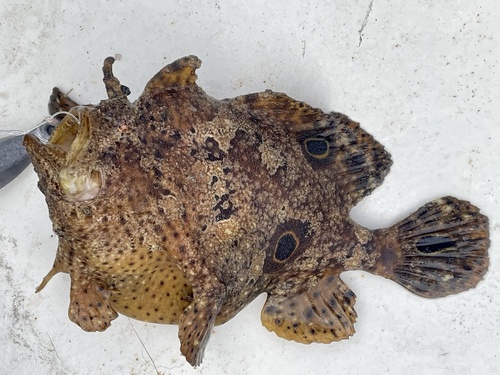
The Big-eyed frogfish (Fowlerichthys radiosus) is a saltwater fish of the family Antennariidae that grows up to 9 cm.
Description
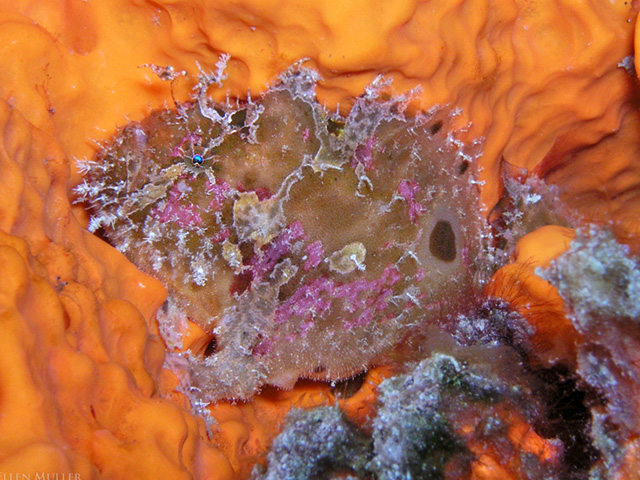
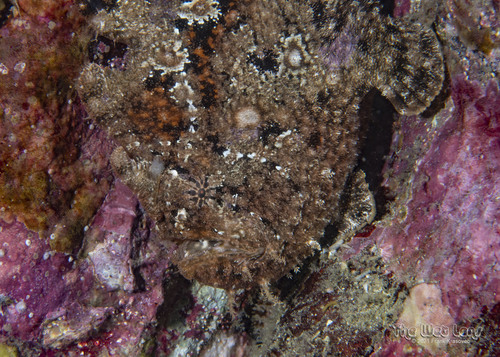
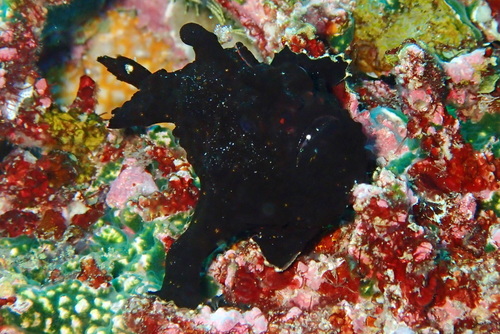
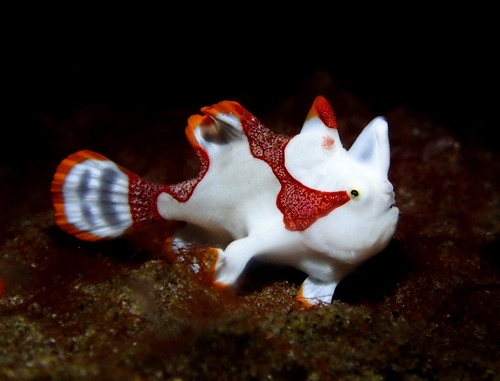
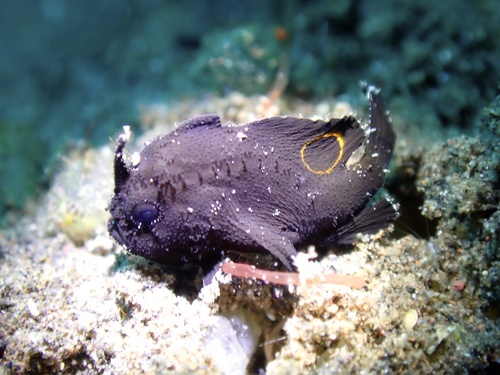
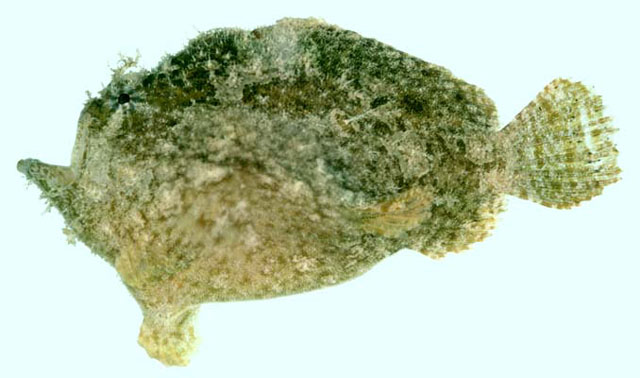
The singlespot frogfish is an anglerfish (family Antennariidae) of the western Atlantic. The species reaches about 9 cm and has a stocky, irregularly shaped, brownish body with rough skin and a large, upward-directed mouth. It inhabits offshore banks and deeper shelf waters. As an ambush predator it lures prey with a rod-like lure (illicium) derived from the first dorsal spine, then engulfs fishes and crustaceans in a fraction of a second. With its leg-like pectoral fins it can 'walk' over the bottom. The species is harmless to humans.
Frequently asked questions
How do you recognise the Big-eyed frogfish?
The Big-eyed frogfish has a flattened, disc-shaped body, is mainly brown and shows a spots pattern.
Where does the Big-eyed frogfish live?
The Big-eyed frogfish lives in the sea (marine waters) and is mostly found around sand or mud bottom.
How big does the Big-eyed frogfish get?
The Big-eyed frogfish grows to a maximum of about 9 cm.
Is the Big-eyed frogfish dangerous to humans?
No, the Big-eyed frogfish is harmless to humans.
Is the Big-eyed frogfish edible?
The Big-eyed frogfish is not usually eaten.
Download Fin's Fish Guide
Identify fish in seconds, log your catches and dives. Join the TestFlight beta.
All data
Identification
Appearance
Habitat & distribution
Behaviour & biology
For anglers
Safety
Status & sources
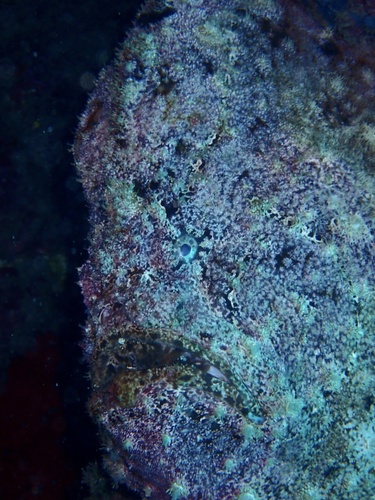
Same genus Fowlerichthys
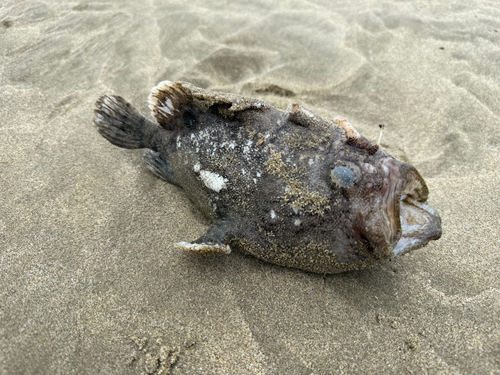
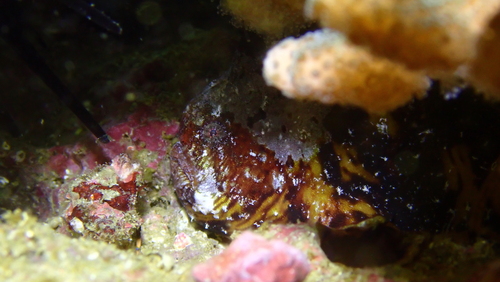
More from the family Antennariidae
Download Fin's Fish Guide
Identify fish in seconds, log your catches and dives. Join the TestFlight beta.