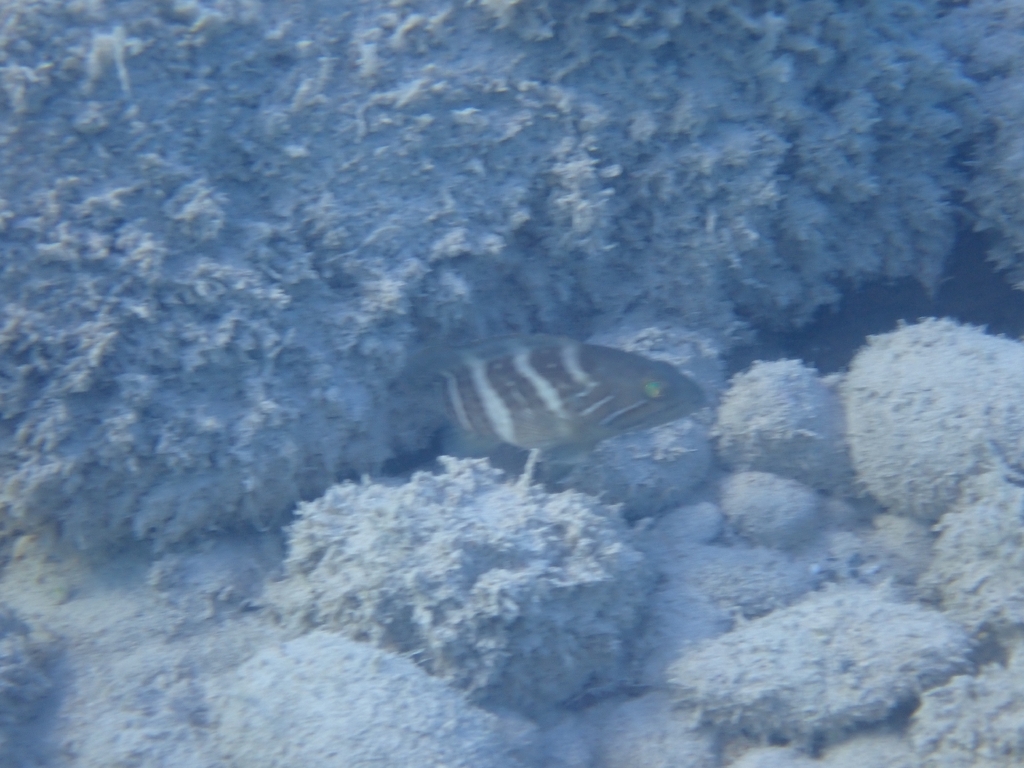
The Grouper (Epinephelus aeneus) is a brackish-water fish of the family Serranidae that grows up to 120 cm.
Description
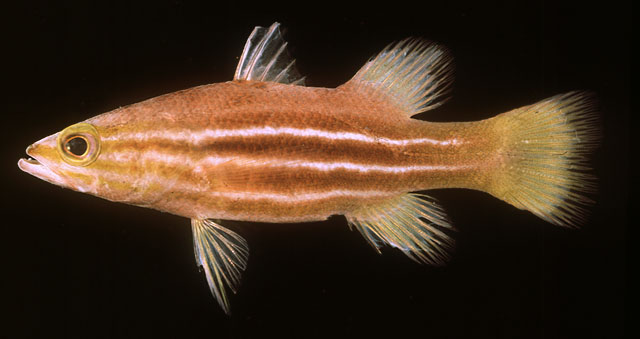
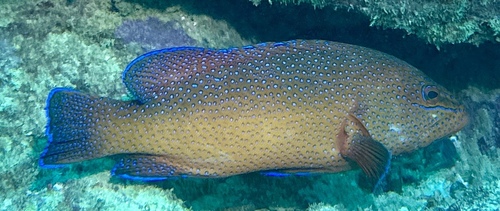
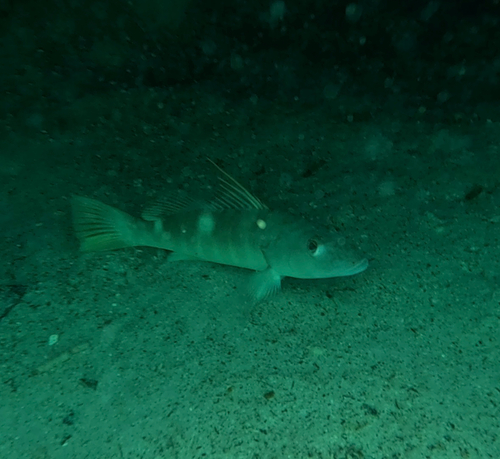
The white grouper is a large, robust grouper of the family Epinephelidae reaching about 120 cm. The body is greyish with a silvery sheen, and juveniles show oblique pale stripes on the head. The mouth is large, with the upper jaw reaching behind the eye. The species is a protogynous hermaphrodite, females later turning into males. It lives sedentarily on rock and mud-sand bottoms of the eastern Atlantic and southern Mediterranean, hunting mainly fish supplemented with crustaceans and cephalopods. Fishing pressure has left it assessed as Near Threatened, and it remains a highly valued food fish across its range.
Frequently asked questions
How do you recognise the Grouper?
The Grouper has a torpedo-shaped body, is mainly silver-grey and shows a plain pattern.
Where does the Grouper live?
The Grouper lives in brackish water and is mostly found around sand or mud bottom.
How big does the Grouper get?
The Grouper grows to a maximum of about 120 cm. On average the species is around 60 cm.
Is the Grouper dangerous to humans?
No, the Grouper is harmless to humans.
Is the Grouper edible?
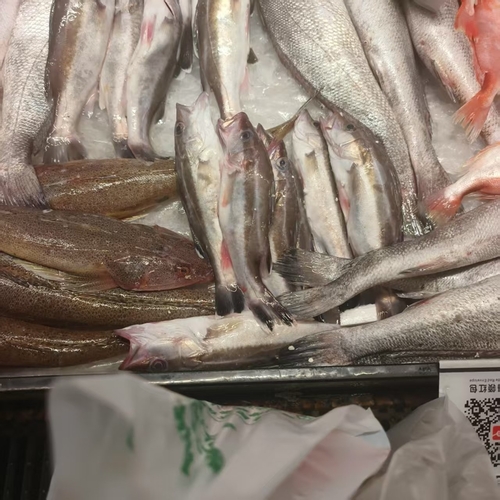
Yes, the Grouper is a highly prized food fish.
Download Fin's Fish Guide
Identify fish in seconds, log your catches and dives. Join the TestFlight beta.
All data
Identification
Appearance
Habitat & distribution
Behaviour & biology
For anglers
Safety
Status & sources
Same genus Epinephelus
More from the family Serranidae


Download Fin's Fish Guide
Identify fish in seconds, log your catches and dives. Join the TestFlight beta.