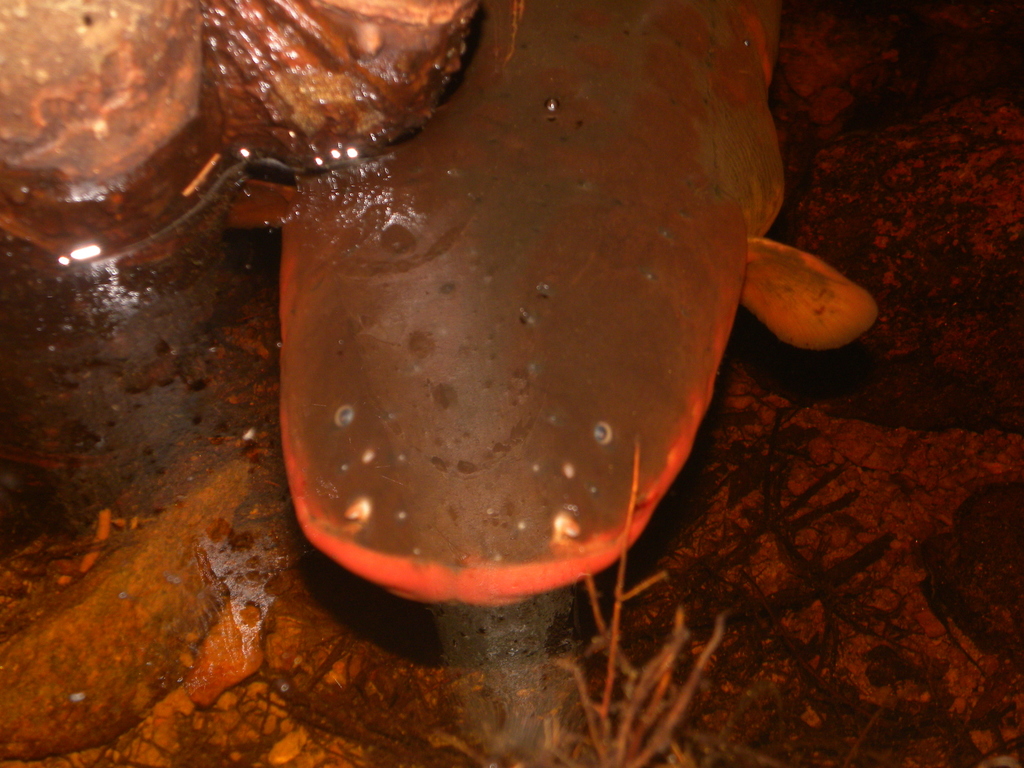
The Electric eel (Electrophorus electricus) is a freshwater fish of the family Gymnotidae that grows up to 250 cm.
Description
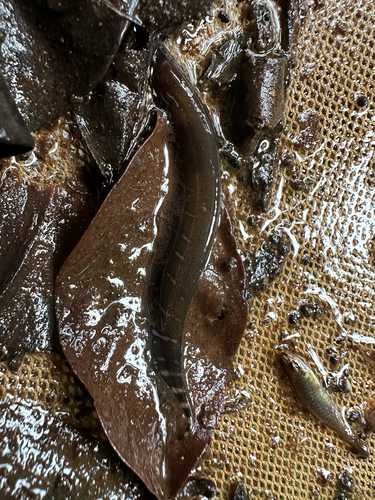
The electric eel (Electrophorus electricus) is an eel-like freshwater fish from South America, world-famous for its ability to generate powerful electric shocks. Despite the name it is not a true eel but a knifefish, related to the Gymnotidae. The strongly elongate body contains specialised electric organs with hundreds of thousands of electrocytes connected in series, with which the fish stuns prey, defends itself and orients itself. It inhabits muddy, calm waters, swamps and creeks and must regularly gulp air at the surface. Juveniles eat invertebrates; adults hunt fishes and small vertebrates. The species can exceed two metres.
Frequently asked questions
How do you recognise the Electric eel?
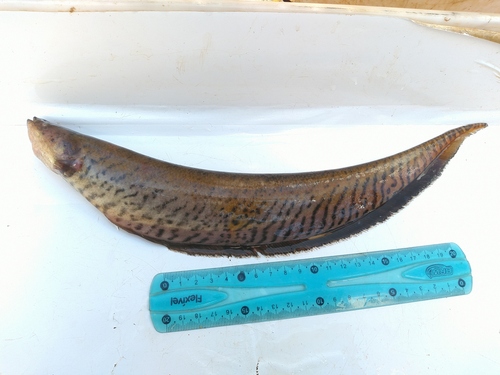
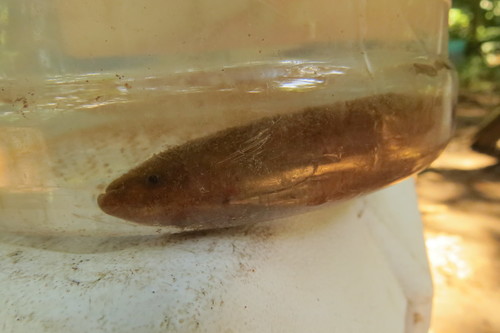
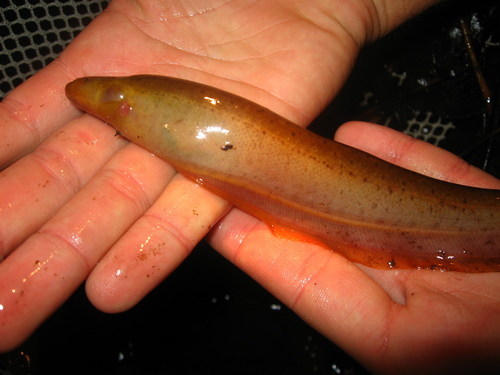
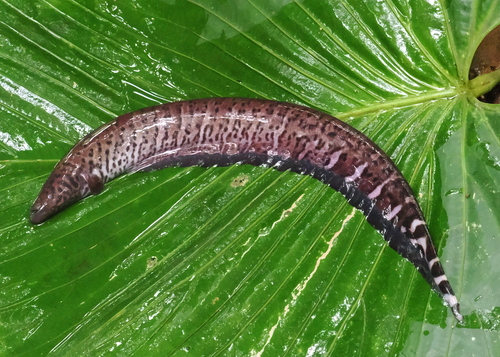
The Electric eel has an elongate, eel-like body, is mainly brown and shows a plain pattern.
Where does the Electric eel live?
The Electric eel lives in fresh water and is mostly found around mixed bottom.
How big does the Electric eel get?
The Electric eel grows to a maximum of about 250 cm.
Is the Electric eel dangerous to humans?
The Electric eel can cause injury; handle it with care.
Is the Electric eel edible?
Yes, the Electric eel is commonly eaten.
Download Fin's Fish Guide
Identify fish in seconds, log your catches and dives. Join the TestFlight beta.
All data
Identification
Appearance
Habitat & distribution
Behaviour & biology
For anglers
Safety
Status & sources
More from the family Gymnotidae
Download Fin's Fish Guide
Identify fish in seconds, log your catches and dives. Join the TestFlight beta.