 Fin's Fish Guide

The Discus ray (Paratrygon aiereba) is a freshwater fish of the family Potamotrygonidae that grows up to 80 cm.
Description
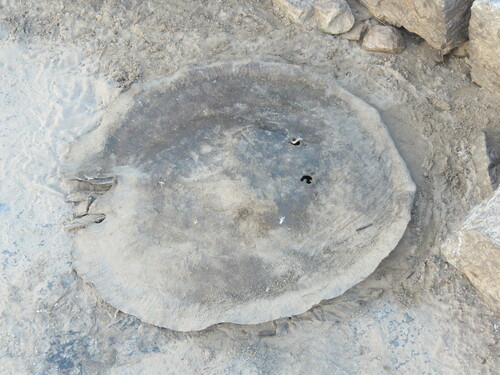
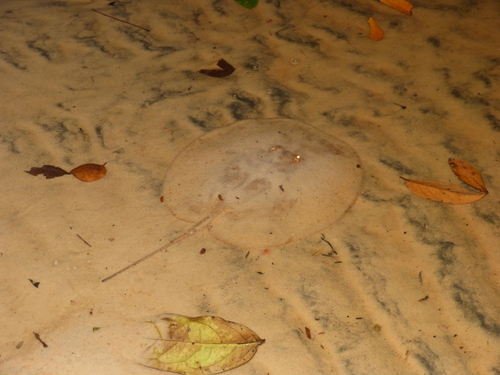
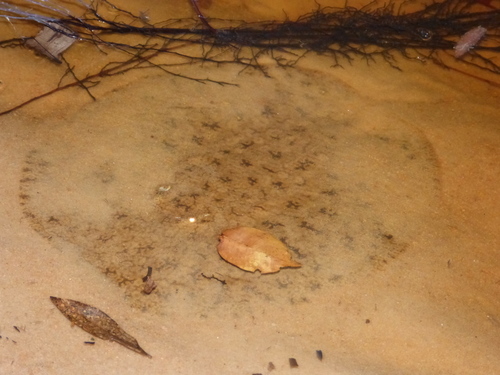
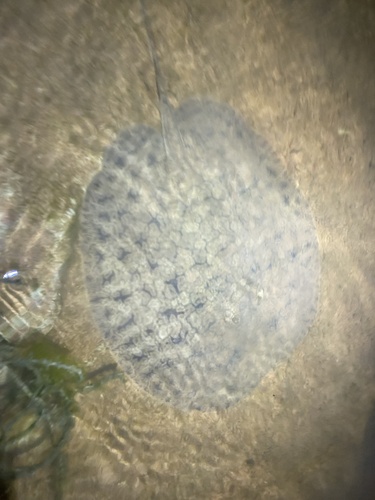
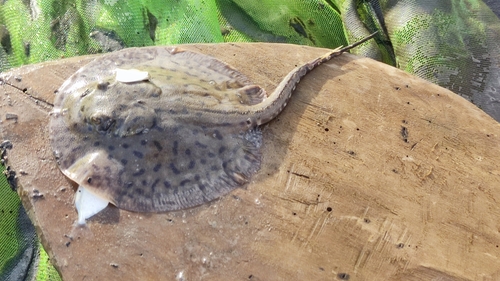
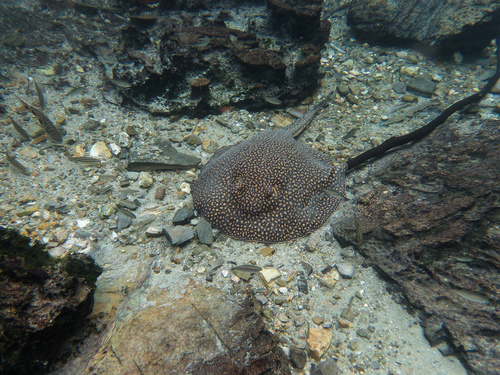
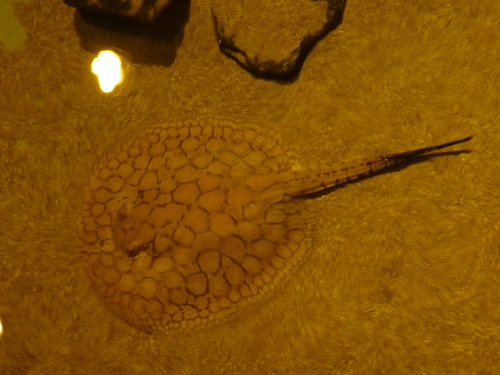
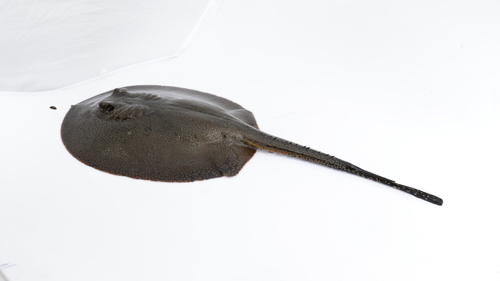
The ceja river stingray is a freshwater stingray (Potamotrygonidae) from South America. The species has an almost round, flat body disc and a relatively short tail with a serrated venomous spine. It lives on soft bottoms of large rivers, often in shallow parts and near the banks, where it half-buries itself. As a bottom hunter it feeds on fishes and bottom invertebrates. It gives birth to live young. The venomous spine can inflict deep, very painful wounds if stepped on.
Frequently asked questions
How do you recognise the Discus ray?
The Discus ray has an irregular in shape body, is mainly brown and shows a marbled pattern. Almost round body disc; ovoviviparous freshwater ray with a serrated venomous spine on the tail.
Where does the Discus ray live?
The Discus ray lives in fresh water and is mostly found around sand or mud bottom. South America; soft bottoms of large rivers.
How big does the Discus ray get?
The Discus ray grows to a maximum of about 80 cm.
Is the Discus ray dangerous to humans?
No, the Discus ray is harmless to humans. The tail bears a serrated venomous spine that can inflict deep, very painful puncture wounds. Shuffle through shallow water to avoid stepping on them. Immerse the wound in hot water (about 45 C) and seek medical care.
Is the Discus ray edible?
The Discus ray is rarely eaten.
More photos

Want the complete picture on the Discus ray?
Point your camera at the fish and Fin names the species in seconds. Free, and the Discus ray is one of 12,519 species in the app.
All data
Identification
Appearance
Habitat & distribution
Behaviour & biology
For anglers
Safety
Status & sources
More from the family Potamotrygonidae




Want the complete picture on the Discus ray?
Point your camera at the fish and Fin names the species in seconds. Free, and the Discus ray is one of 12,519 species in the app.