 Fin's Fish Guide
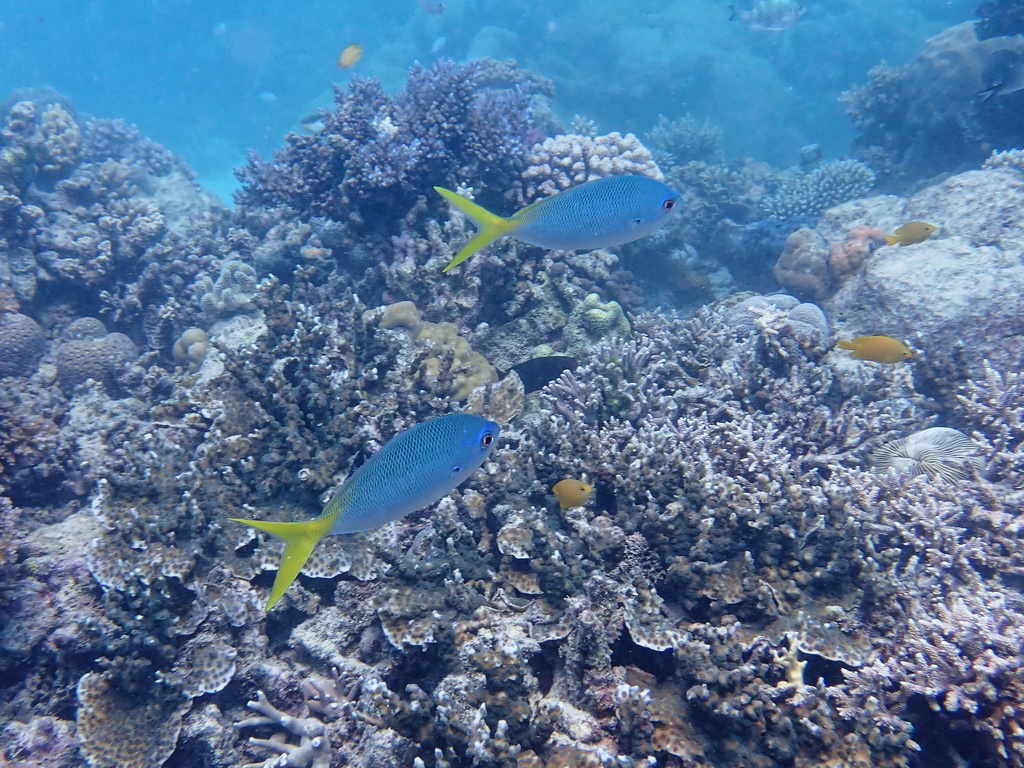
The Deep-bodied fusilier (Caesio cuning) is a saltwater fish of the family Caesionidae that grows up to 60 cm.
Description
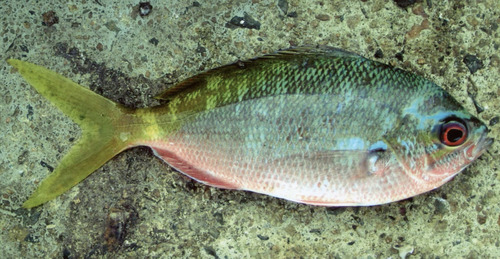
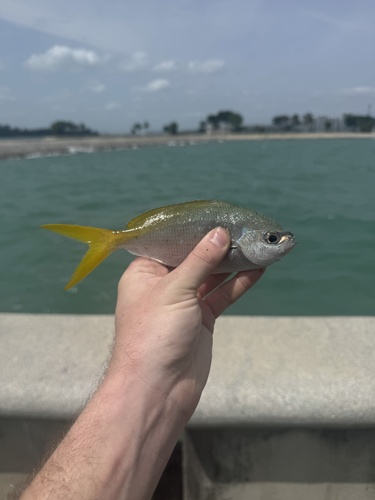
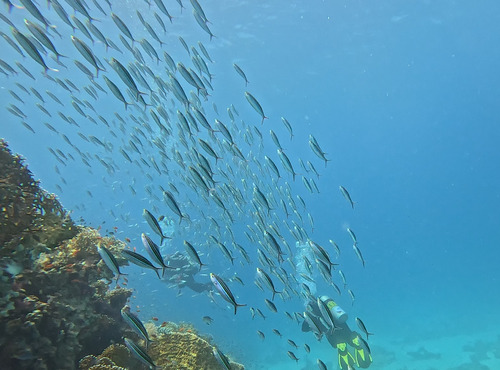
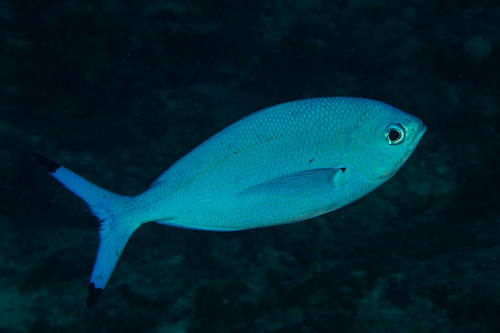
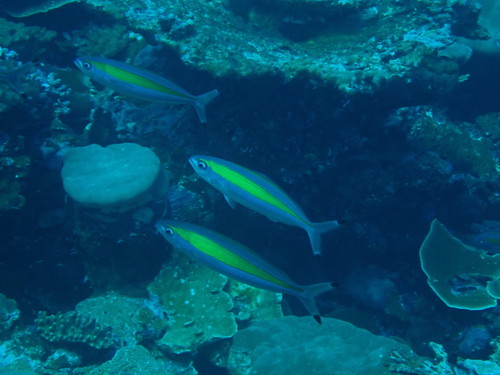
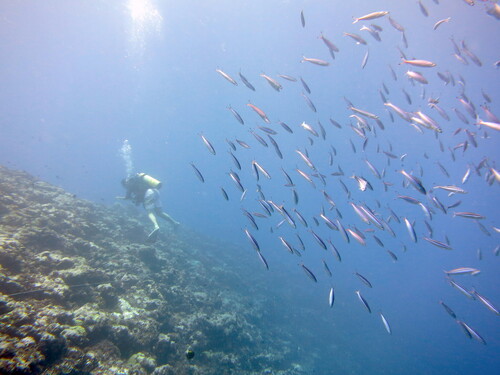
The redbelly yellowtail fusilier is a fusilier of the family Caesionidae from the Indo-West Pacific. The species grows to about 60 cm and has a streamlined body that is blue-grey with a yellow-pink back and a yellow to reddish tail. It forms schools above coral reefs, often in silty areas with low visibility at 1 to 30 metres. As a plankton feeder it feeds while swimming in open water on zooplankton. Fusiliers are closely related to the snappers but adapted to a plankton-feeding way of life. The redbelly yellowtail fusilier is a valued food fish and is harmless to humans.
Frequently asked questions
How do you recognise the Deep-bodied fusilier?
The Deep-bodied fusilier has a torpedo-shaped body, is mainly blue and shows a plain pattern. Blue-grey with a yellow-pink back and a yellow/reddish tail; plankton-eating shoaling fish related to snappers.
Where does the Deep-bodied fusilier live?
The Deep-bodied fusilier lives in the sea (marine waters) and is mostly found around stony or rocky ground. Indo-West Pacific; shoals above coral reefs.
How big does the Deep-bodied fusilier get?
The Deep-bodied fusilier grows to a maximum of about 60 cm.
Is the Deep-bodied fusilier dangerous to humans?
No, the Deep-bodied fusilier is harmless to humans. None required: this species is harmless to humans.
Is the Deep-bodied fusilier edible?
Yes, the Deep-bodied fusilier is commonly eaten.
More photos



Want the complete picture on the Deep-bodied fusilier?
Point your camera at the fish and Fin names the species in seconds. Free, and the Deep-bodied fusilier is one of 12,519 species in the app.
All data
Identification
Appearance
Habitat & distribution
Behaviour & biology
For anglers
Safety
Status & sources
Same genus Caesio


More from the family Caesionidae





Want the complete picture on the Deep-bodied fusilier?
Point your camera at the fish and Fin names the species in seconds. Free, and the Deep-bodied fusilier is one of 12,519 species in the app.