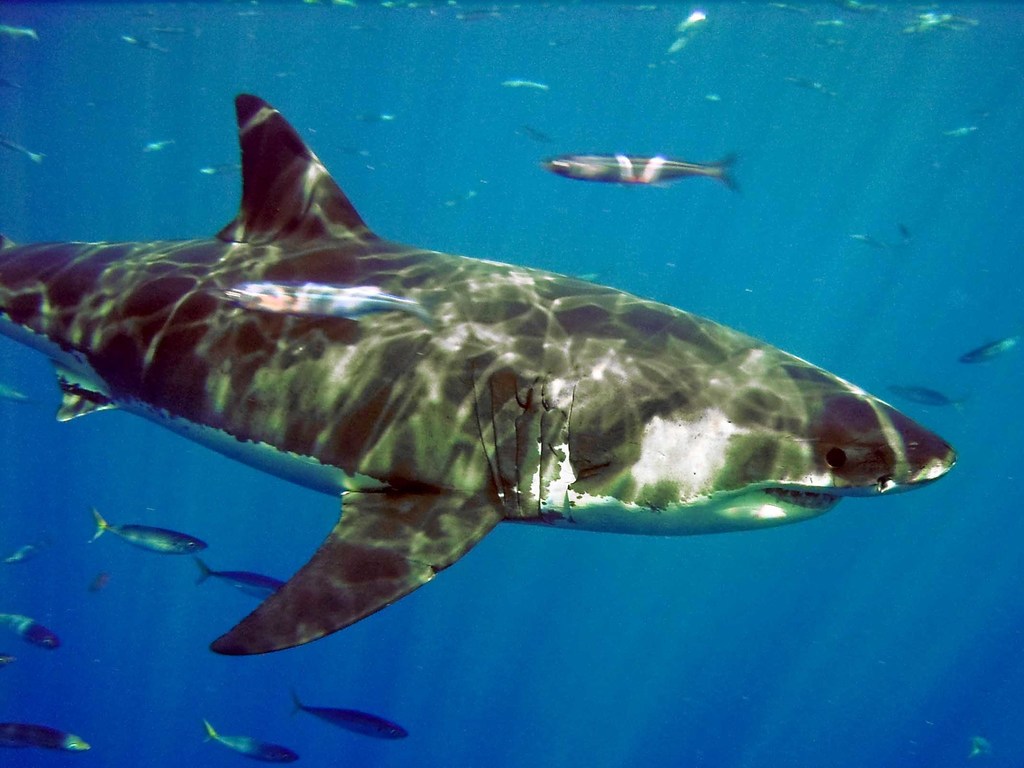
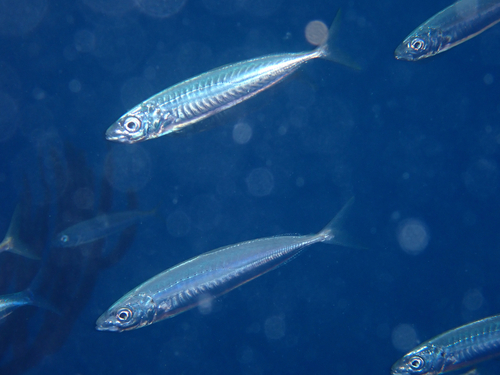
The Arumau (Decapterus macarellus) is a saltwater fish of the family Carangidae that grows up to 46 cm.
Description
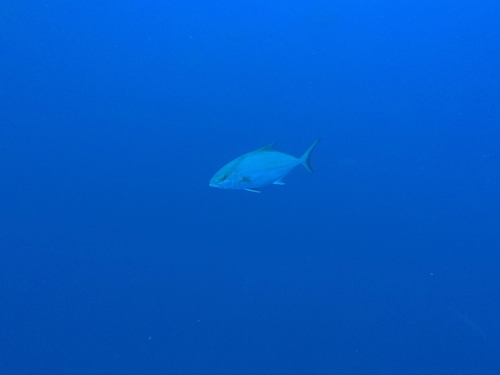
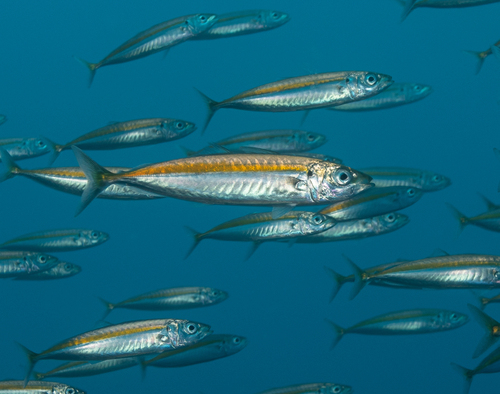
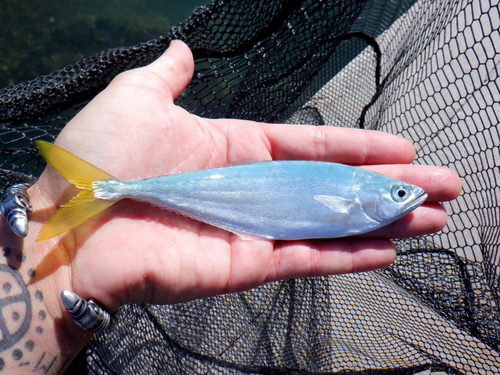
The mackerel scad is a slender, streamlined jack of the family Carangidae living in schools in tropical and subtropical oceans worldwide. The species has a fusiform, blue-green to silvery body with detached finlets behind the dorsal and anal fins and reaches about 46 cm. Adults prefer clear oceanic water, often around islands and along reef edges near deep water, and feed mainly on zooplankton. The species is of great fishery importance and is caught with purse seines and trawls and marketed fresh, salted or dried.
Frequently asked questions
How do you recognise the Arumau?
The Arumau has a torpedo-shaped body, is mainly blue and shows a plain pattern.
Where does the Arumau live?
The Arumau lives in the sea (marine waters) and is mostly found around open water.
How big does the Arumau get?
The Arumau grows to a maximum of about 46 cm. On average the species is around 30 cm.
Is the Arumau dangerous to humans?
The Arumau is venomous — handle spines with care and seek medical help after a sting if needed.
Is the Arumau edible?
Yes, the Arumau is commonly eaten.
Download Fin's Fish Guide
Identify fish in seconds, log your catches and dives. Join the TestFlight beta.
All data
Identification
Appearance
Habitat & distribution
Behaviour & biology
For anglers
Safety
Status & sources
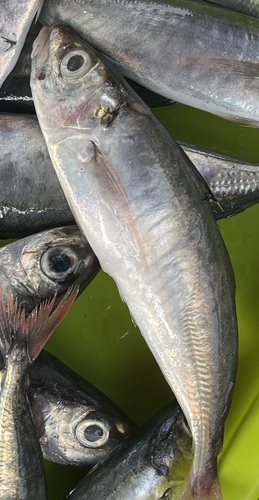
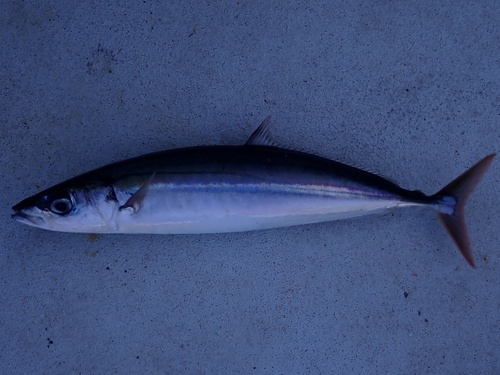
Same genus Decapterus
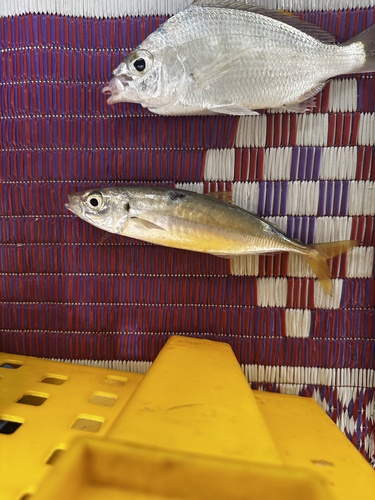
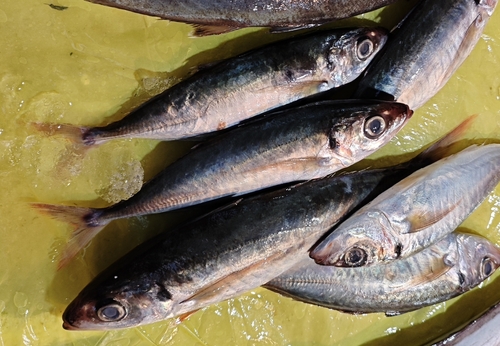
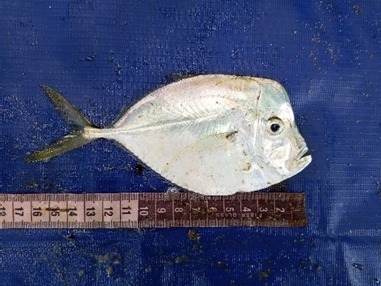
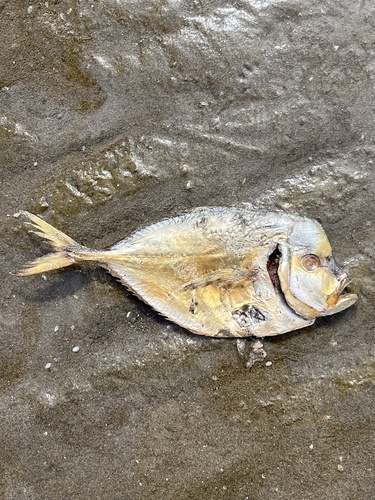
More from the family Carangidae

Download Fin's Fish Guide
Identify fish in seconds, log your catches and dives. Join the TestFlight beta.