
The Bigeye stargazer (Dactyloscopus crossotus) is a saltwater fish of the family Dactyloscopidae that grows up to 8 cm.
Description
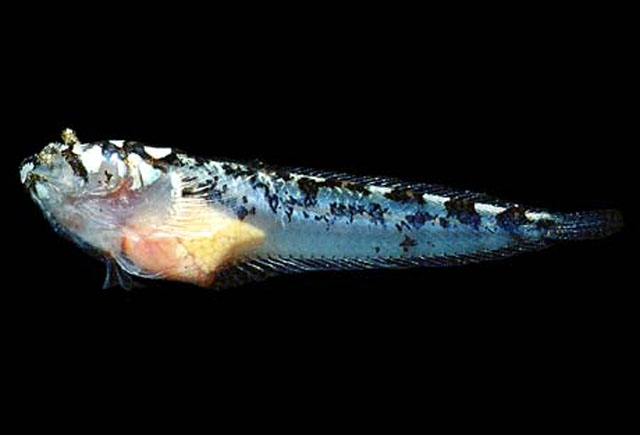
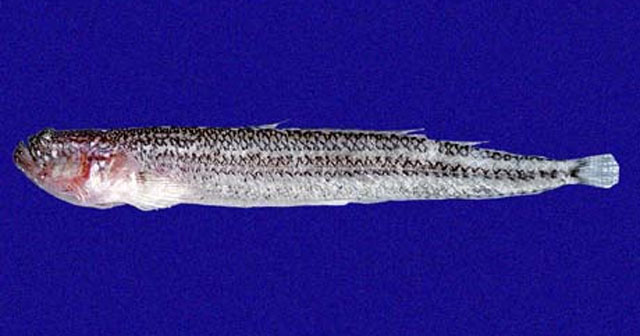
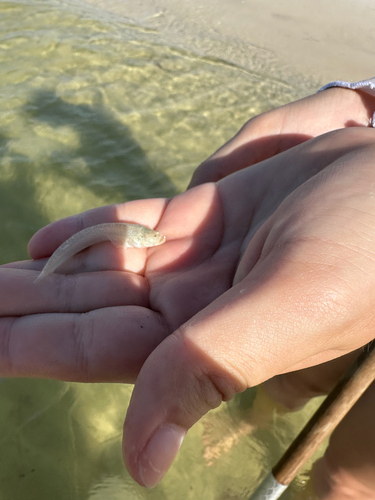
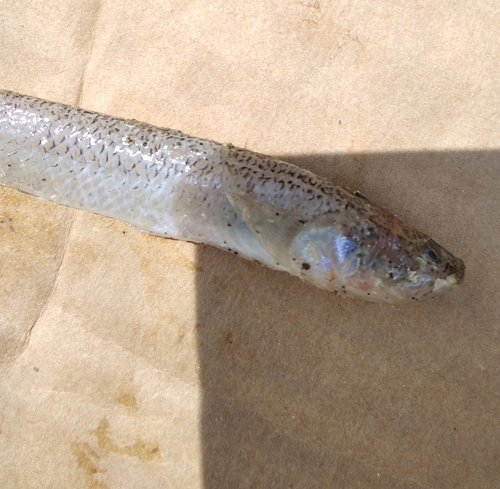
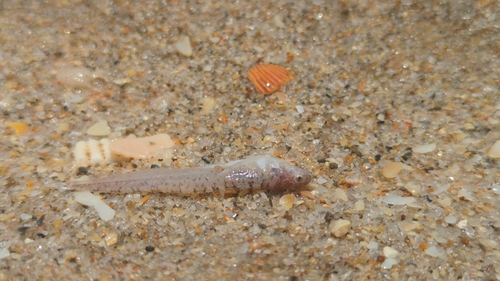
The bigeye stargazer is a sand stargazer (Dactyloscopidae) from the western Atlantic Ocean. The species is small and has eyes set high on the head, an upward-pointing mouth and fringed lips. It lives on surf beaches, usually in less than three metres of water, where it buries itself in the loose sand with only the eyes showing. As an ambush hunter it snaps passing small invertebrates. Unlike the true stargazers it has no venom or electric organ.
Frequently asked questions
How do you recognise the Bigeye stargazer?
The Bigeye stargazer has an elongate, eel-like body, is mainly white and shows a plain pattern.
Where does the Bigeye stargazer live?
The Bigeye stargazer lives in the sea (marine waters) and is mostly found around sand or mud bottom.
How big does the Bigeye stargazer get?
The Bigeye stargazer grows to a maximum of about 8 cm.
Is the Bigeye stargazer dangerous to humans?
No, the Bigeye stargazer is harmless to humans.
Is the Bigeye stargazer edible?
The Bigeye stargazer is not usually eaten.
Download Fin's Fish Guide
Identify fish in seconds, log your catches and dives. Join the TestFlight beta.
All data
Identification
Appearance
Habitat & distribution
Behaviour & biology
For anglers
Safety
Status & sources
Same genus Dactyloscopus


More from the family Dactyloscopidae


Download Fin's Fish Guide
Identify fish in seconds, log your catches and dives. Join the TestFlight beta.