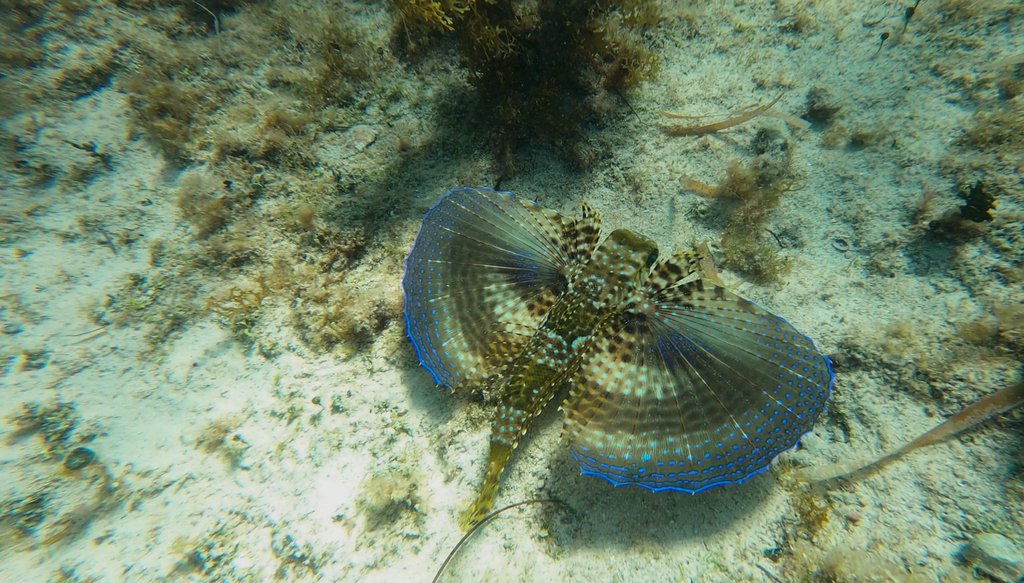
The Batfish (Dactylopterus volitans) is a brackish-water fish of the family Dactylopteridae that grows up to 50 cm.
Description
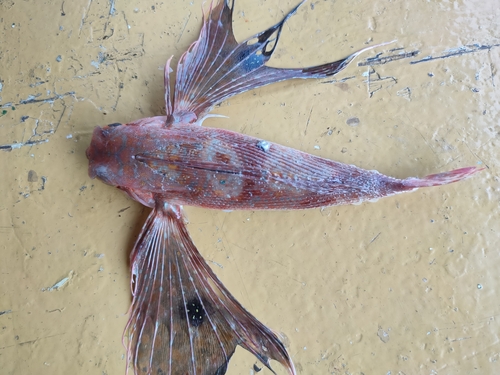
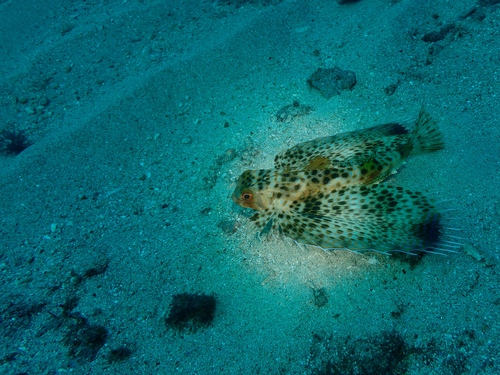
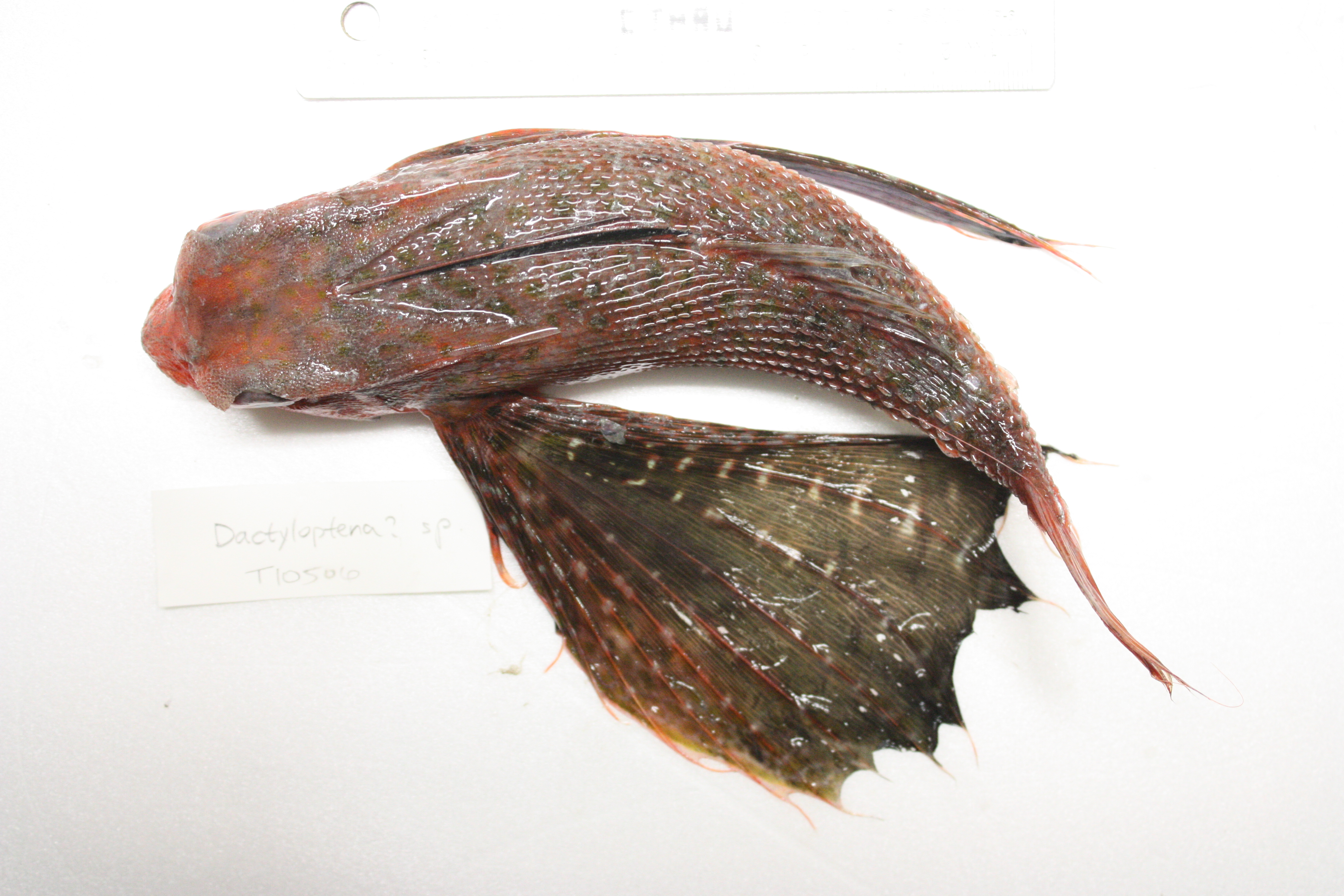
The flying gurnard is a striking bottom fish of the family Dactylopteridae reaching about 50 cm. It is named for its enormous, fan-like pectoral fins marked with blue spots, which can be spread like wings; the front rays form a separate lobe used to 'walk' over the seabed and detect food. Despite the name, it does not fly above water. The species lives on sand, mud and rocky bottoms of the eastern Atlantic and Mediterranean, usually shallower than 100 m, feeding mainly on benthic crustaceans, shellfish and small fishes. The flying gurnard is of little commercial value, taken only as occasional bycatch.
Frequently asked questions
How do you recognise the Batfish?
The Batfish has a torpedo-shaped body, is mainly brown and shows a spots pattern.
Where does the Batfish live?
The Batfish lives in brackish water and is mostly found around stony or rocky ground.
How big does the Batfish get?
The Batfish grows to a maximum of about 50 cm. On average the species is around 38 cm.
Is the Batfish dangerous to humans?
No, the Batfish is harmless to humans.
Is the Batfish edible?
The Batfish is rarely eaten.
Download Fin's Fish Guide
Identify fish in seconds, log your catches and dives. Join the TestFlight beta.
All data
Identification
Appearance
Habitat & distribution
Behaviour & biology
For anglers
Safety
Status & sources
More from the family Dactylopteridae
Download Fin's Fish Guide
Identify fish in seconds, log your catches and dives. Join the TestFlight beta.