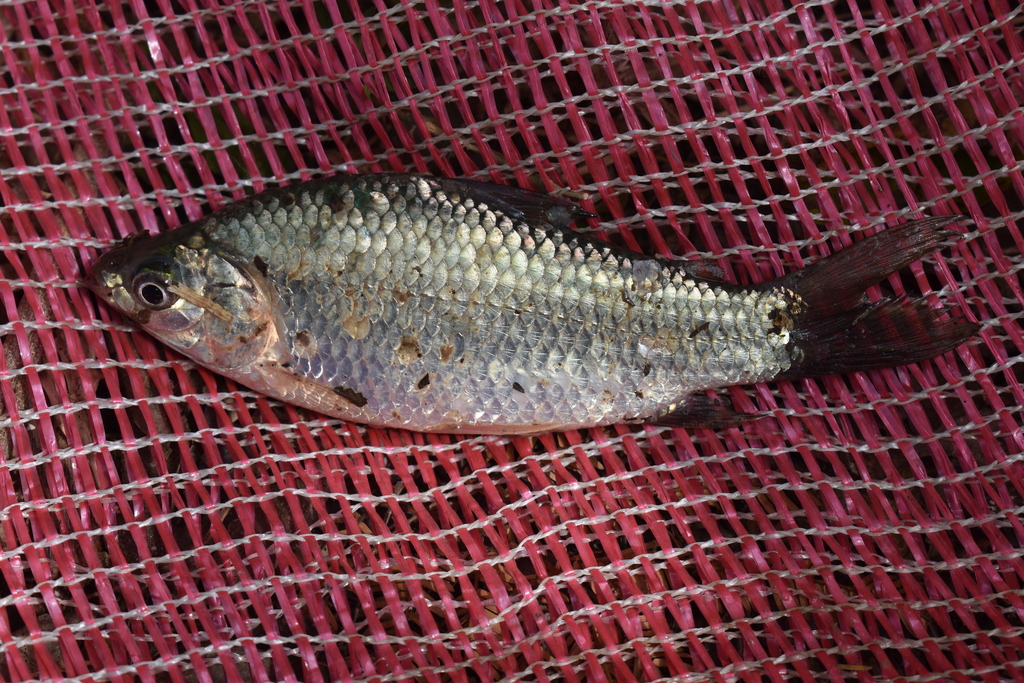
The Carp headstander (Cyphocharax magdalenae) is a freshwater fish of the family Curimatidae that grows up to 27 cm.
Description
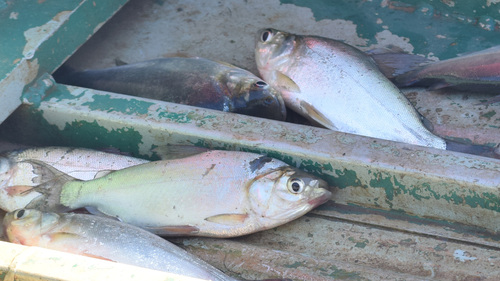
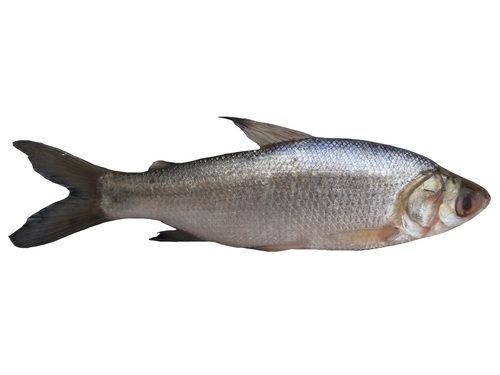
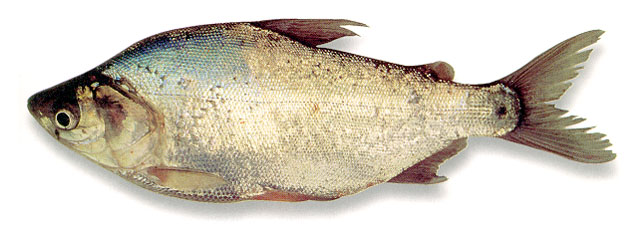
The Magdalena curimatid is a characin of the detritivore family (Curimatidae) from the Magdalena basin in Colombia. The species has a stocky, silvery body and lacks teeth in the mouth; instead it has a muscular stomach to process bottom silt. It inhabits rivers and streams of moderate current at low elevation, and is abundant in shallow waters over sand or mud bottoms. As a detritivore it feeds on organic bottom material, diatoms and algae. The species is a local food fish and is harmless to humans.
Frequently asked questions
How do you recognise the Carp headstander?
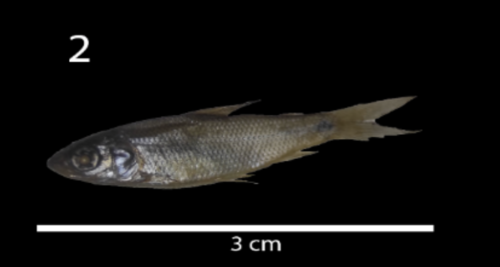
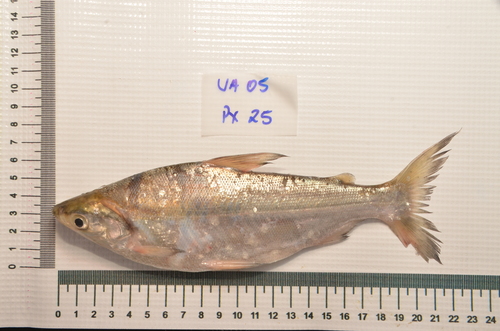
The Carp headstander has a torpedo-shaped body, is mainly silver-grey and shows a plain pattern.
Where does the Carp headstander live?
The Carp headstander lives in fresh water and is mostly found around mixed bottom.
How big does the Carp headstander get?
The Carp headstander grows to a maximum of about 27 cm.
Is the Carp headstander dangerous to humans?
No, the Carp headstander is harmless to humans.
Is the Carp headstander edible?
Yes, the Carp headstander is commonly eaten.
Download Fin's Fish Guide
Identify fish in seconds, log your catches and dives. Join the TestFlight beta.
All data
Identification
Appearance
Habitat & distribution
Behaviour & biology
For anglers
Safety
Status & sources
Same genus Cyphocharax



More from the family Curimatidae



Download Fin's Fish Guide
Identify fish in seconds, log your catches and dives. Join the TestFlight beta.