 Fin's Fish Guide
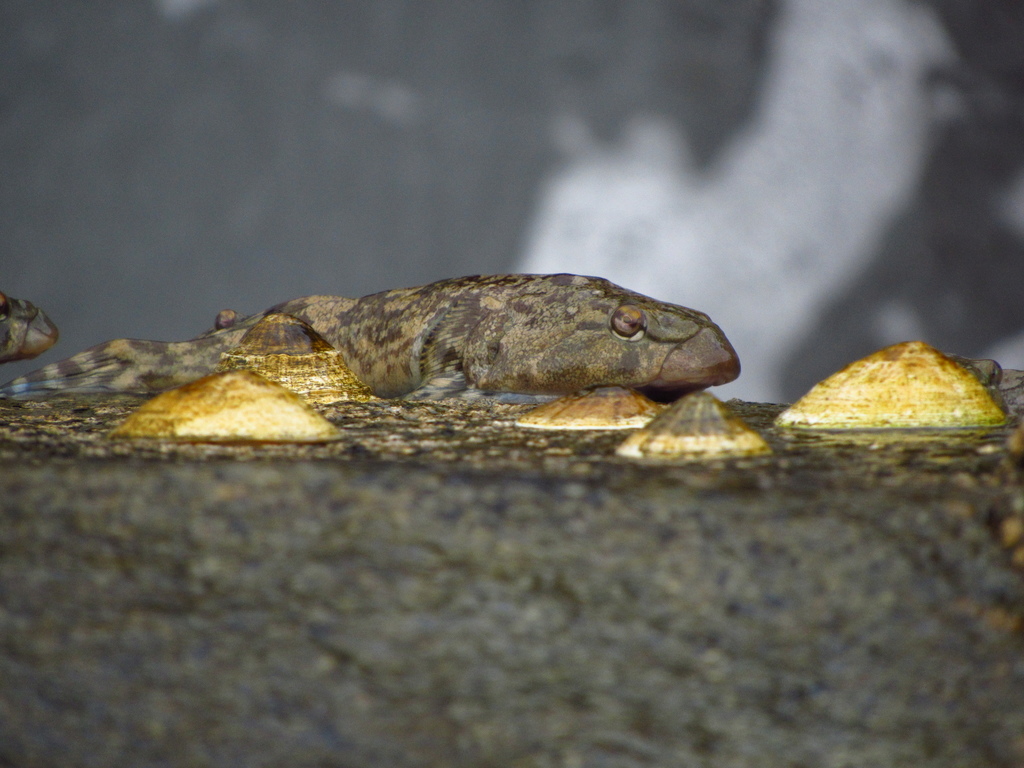
The Chilean clingfish (Sicyases sanguineus) is a saltwater fish of the family Gobiesocidae that grows up to 8 cm.
Description
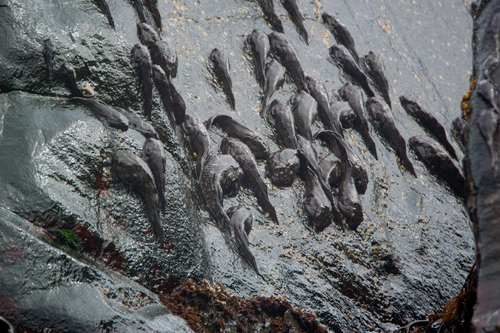
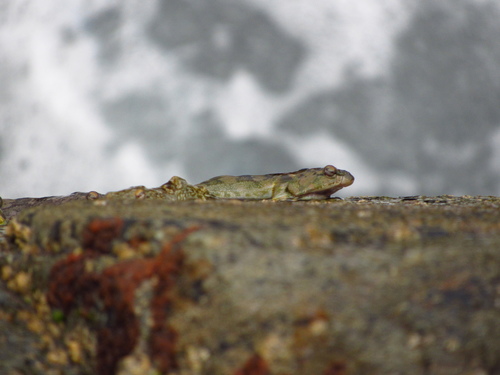
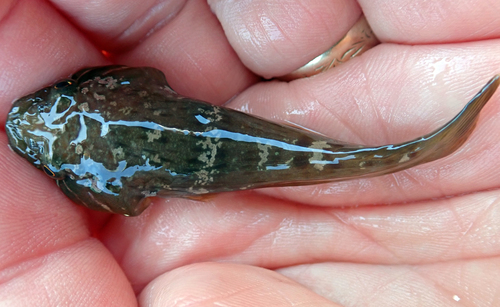
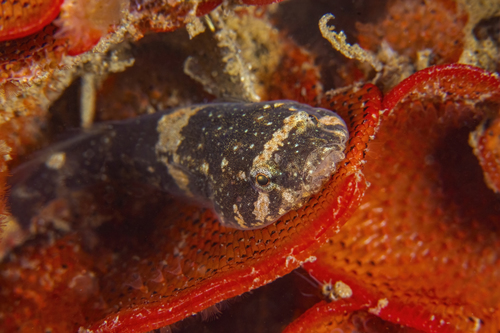
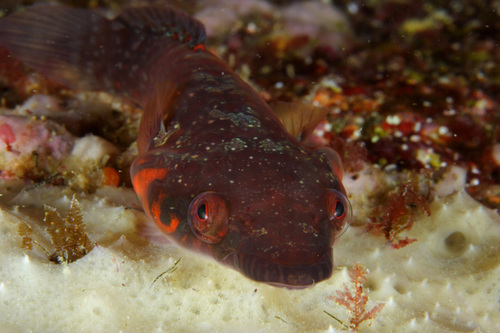
The Chilean clingfish is a large clingfish (Gobiesocidae) from the southeastern Pacific off the coast of Chile and Peru. The species has a flattened head and body with a powerful belly sucking disc of fused pelvic fins, with which it clings firmly to rocks in the surf. It lives in the intertidal zone and, by skin breathing, can survive 17 to 40 hours out of water under rocks or seaweed. It grazes algae and picks small invertebrates such as snails and barnacles from the rocks. The species is harmless to humans.
Frequently asked questions
How do you recognise the Chilean clingfish?
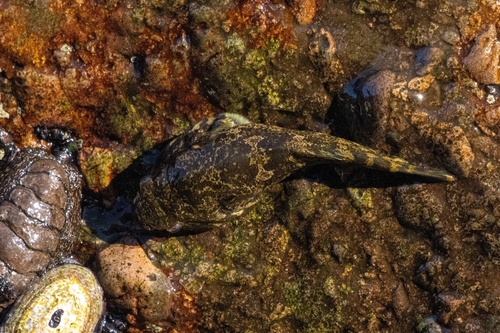
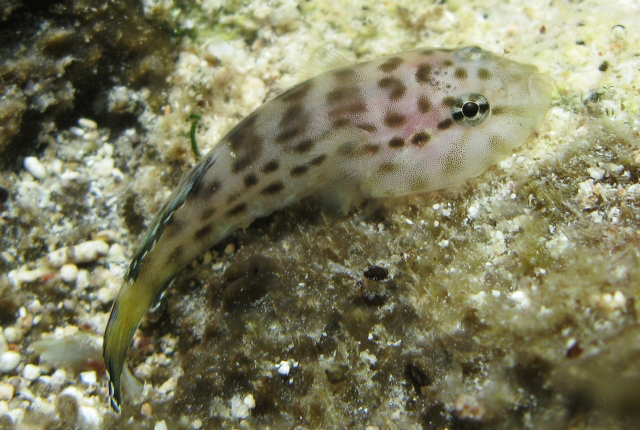
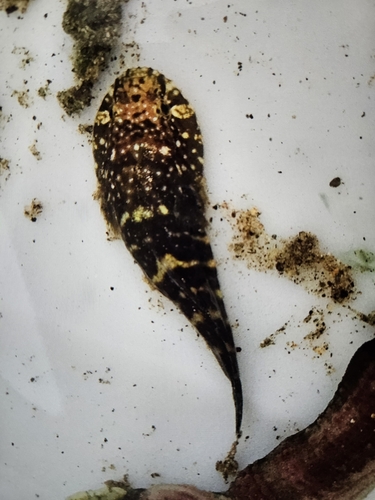
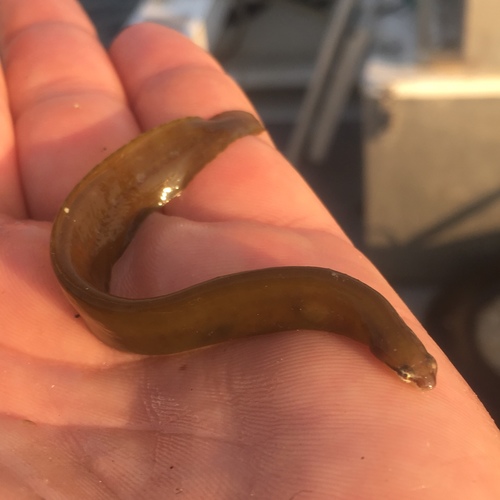
The Chilean clingfish has an elongate, eel-like body, is mainly brown and shows a spots pattern. Powerful ventral sucker; can survive up to 40 hours out of the water by breathing through its skin.
Where does the Chilean clingfish live?
The Chilean clingfish lives in the sea (marine waters) and is mostly found around sand or mud bottom. Southeast Pacific off Chile and Peru; rocky intertidal zone.
How big does the Chilean clingfish get?
The Chilean clingfish grows to a maximum of about 8 cm.
Is the Chilean clingfish dangerous to humans?
No, the Chilean clingfish is harmless to humans. None required: this species is harmless to humans.
Is the Chilean clingfish edible?
The Chilean clingfish is rarely eaten.
More photos


Want the complete picture on the Chilean clingfish?
Point your camera at the fish and Fin names the species in seconds. Free, and the Chilean clingfish is one of 12,519 species in the app.
All data
Identification
Appearance
Habitat & distribution
Behaviour & biology
For anglers
Safety
Status & sources
More from the family Gobiesocidae


Want the complete picture on the Chilean clingfish?
Point your camera at the fish and Fin names the species in seconds. Free, and the Chilean clingfish is one of 12,519 species in the app.