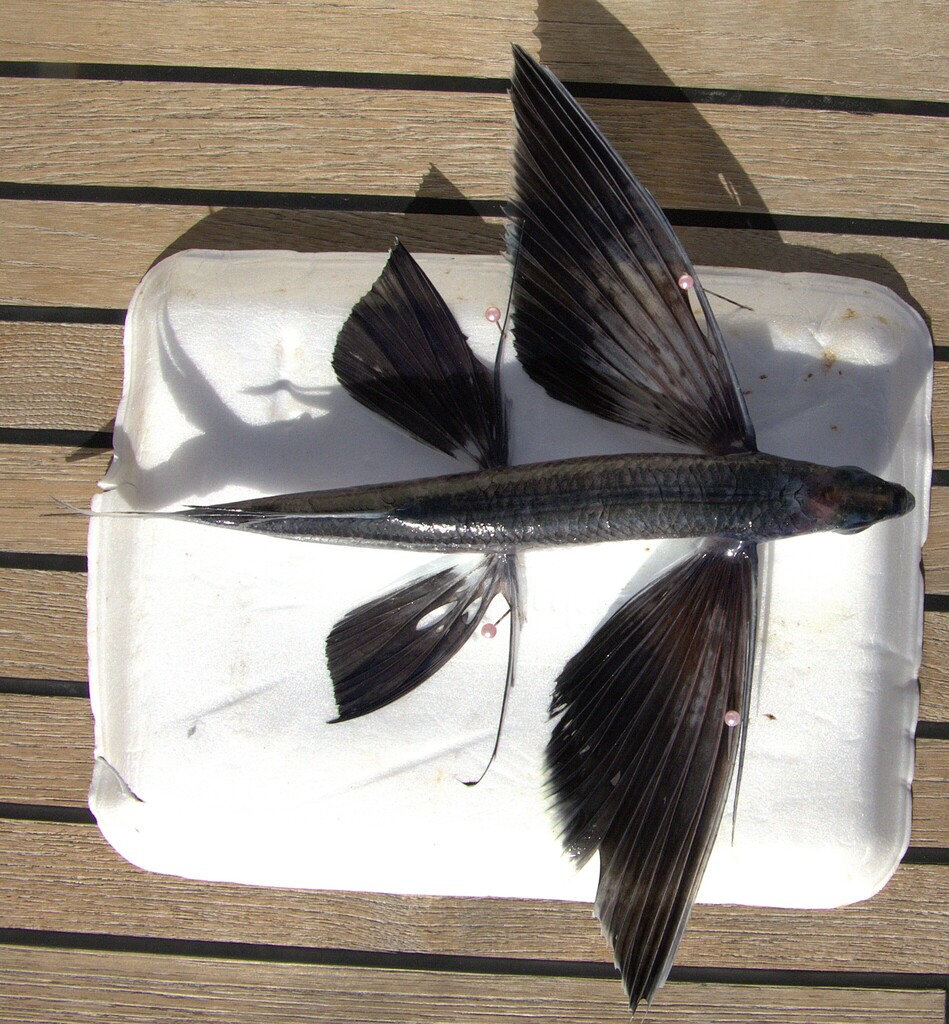
The African flyingfish (Cheilopogon nigricans) is a saltwater fish of the family Exocoetidae that grows up to 28 cm.
Description
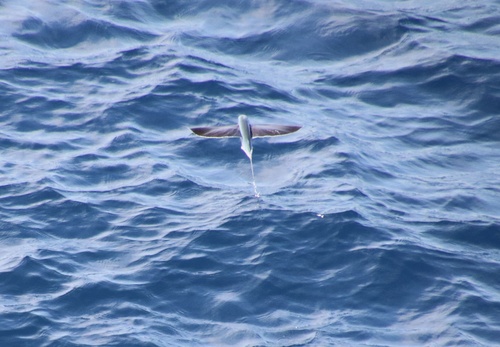
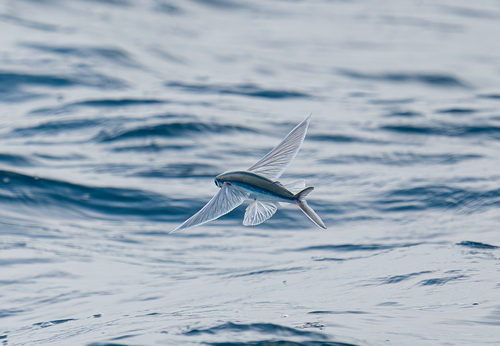
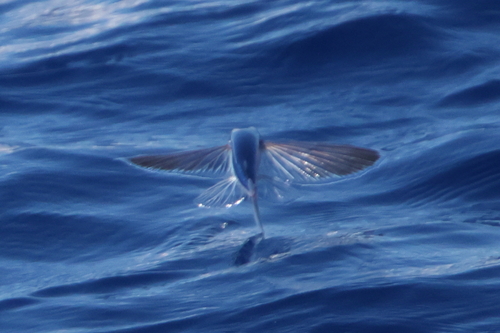
The blacksail flyingfish is a flyingfish (Exocoetidae) from the warm parts of the world ocean. The species has a slender, silvery body with greatly enlarged, wing-like pectoral fins that are partly dark. It lives at the surface of the open ocean and when threatened can shoot out of the water and glide long distances above the surface to escape predators. As a planktivore it feeds on small zooplankton. The species is harmless to humans.
Frequently asked questions
How do you recognise the African flyingfish?
The African flyingfish has an elongate, eel-like body, is mainly silver-grey and shows a plain pattern.
Where does the African flyingfish live?
The African flyingfish lives in the sea (marine waters) and is mostly found around open water.
How big does the African flyingfish get?
The African flyingfish grows to a maximum of about 28 cm.
Is the African flyingfish dangerous to humans?
No, the African flyingfish is harmless to humans.
Is the African flyingfish edible?
The African flyingfish is rarely eaten.
Download Fin's Fish Guide
Identify fish in seconds, log your catches and dives. Join the TestFlight beta.
All data
Identification
Appearance
Habitat & distribution
Behaviour & biology
For anglers
Safety
Status & sources
Same genus Cheilopogon
More from the family Exocoetidae
Download Fin's Fish Guide
Identify fish in seconds, log your catches and dives. Join the TestFlight beta.