
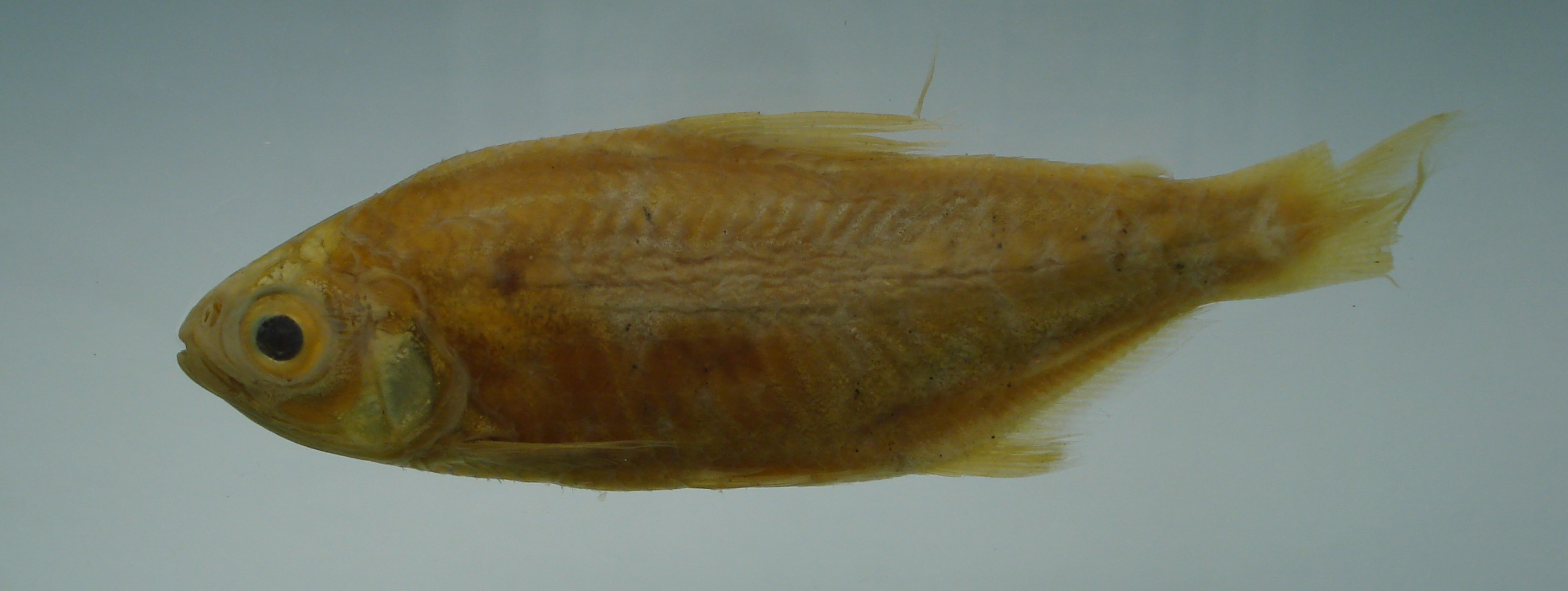
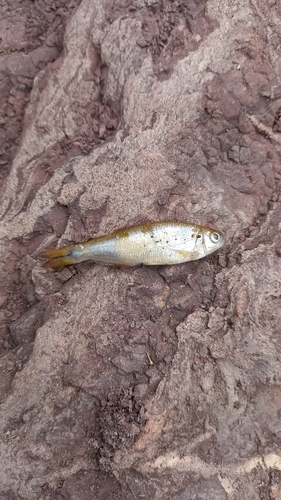
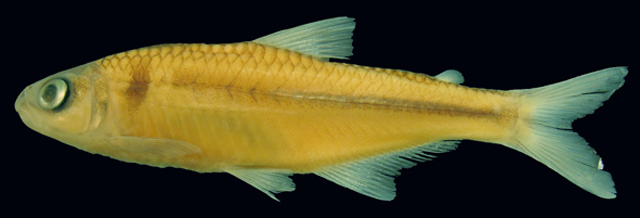
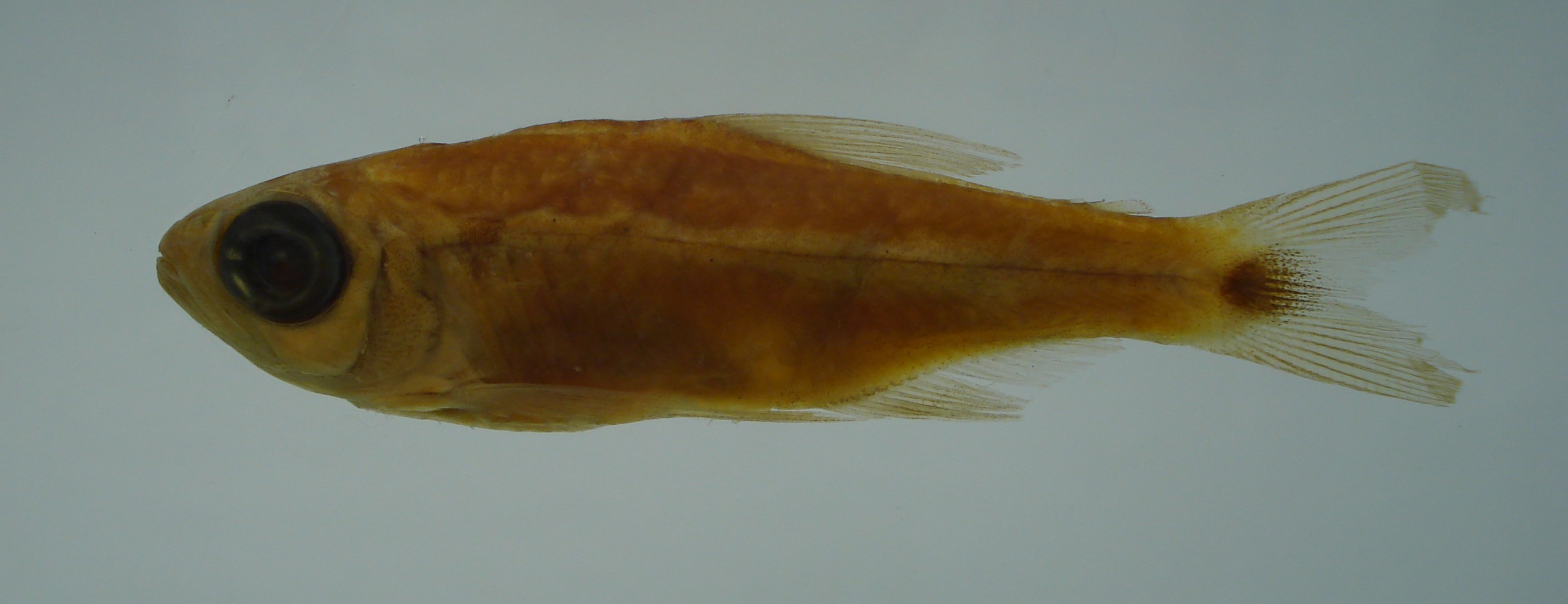
The Glass headstander (Charax pauciradiatus) is a freshwater fish of the family Characidae that grows up to 10 cm.
Description
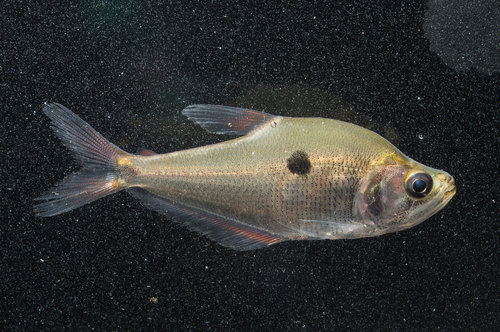
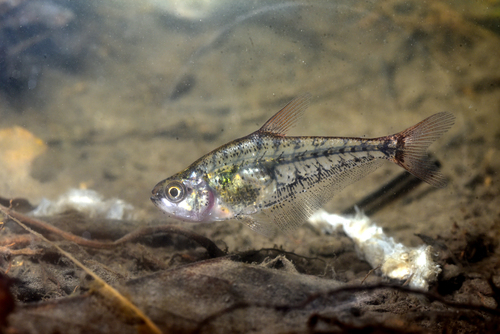
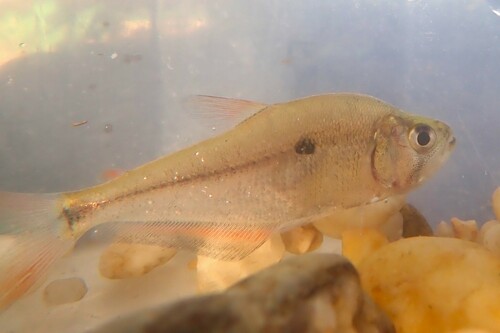
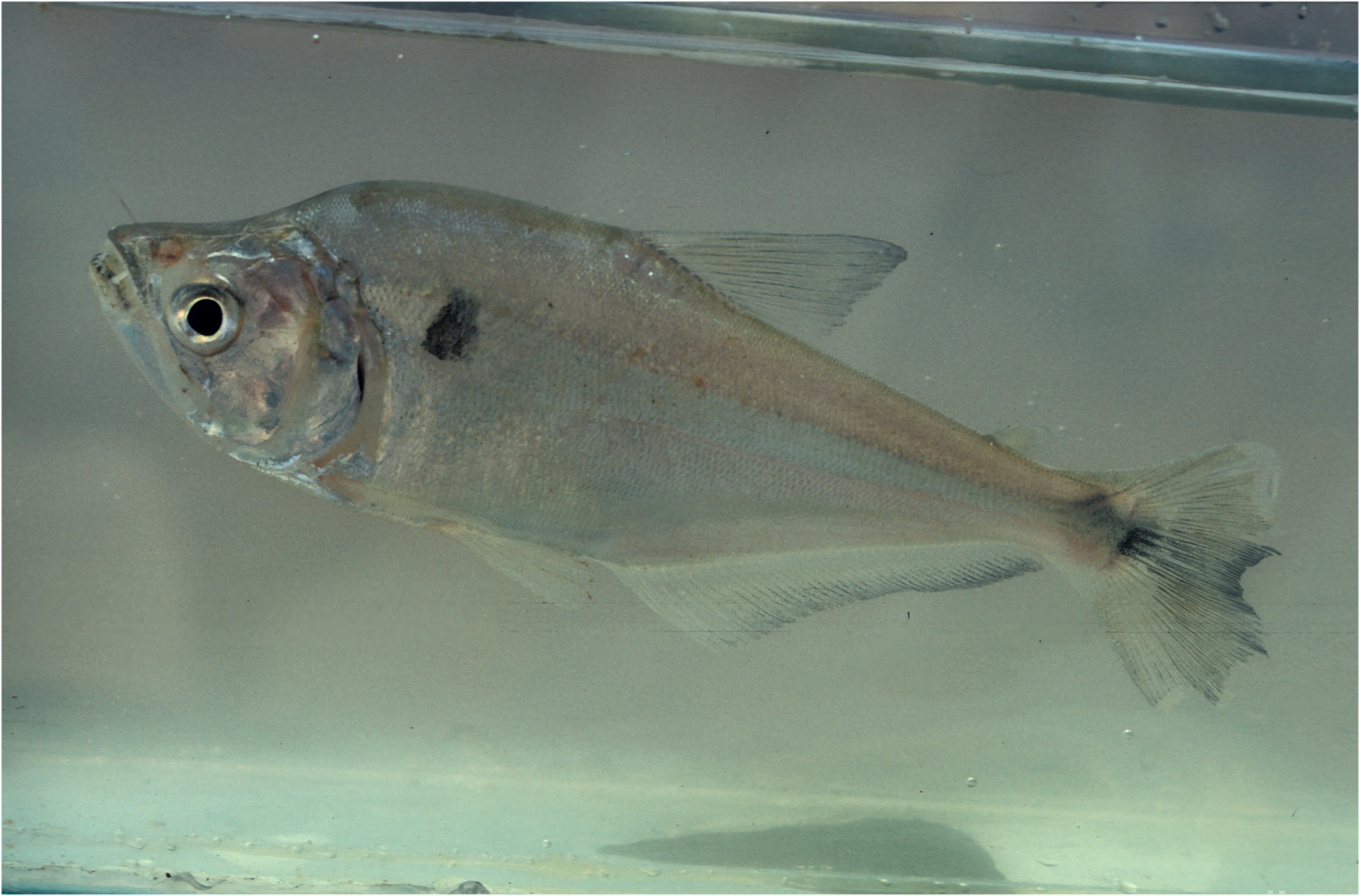
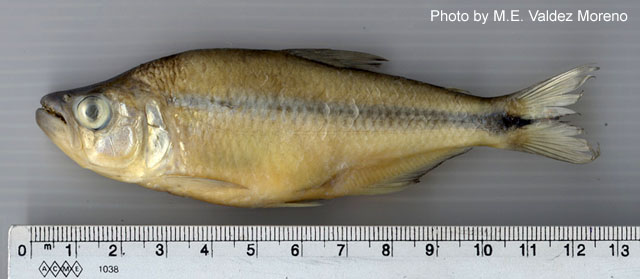
The glass headstander is a translucent, deep characin of the family Characidae (true tetras) reaching about 10 cm. The strongly compressed, almost transparent body has a humped back and an adipose fin (as in many characins); the species often swims at an angle with its head down, a posture that helps it search for prey among plants. It comes from northern and central South America and lives in schools in slow, densely vegetated water of rivers and swamps. As a small predator it hunts insects, zooplankton and small invertebrates. In the rainy season it spawns among the water plants. For its transparency and behaviour it occasionally appears in the aquarium hobby.
Frequently asked questions
How do you recognise the Glass headstander?
The Glass headstander has a torpedo-shaped body, is mainly silver-grey and shows a plain pattern.
Where does the Glass headstander live?
The Glass headstander lives in fresh water and is mostly found around algae or seagrass beds.
How big does the Glass headstander get?
The Glass headstander grows to a maximum of about 10 cm.
Is the Glass headstander dangerous to humans?
No, the Glass headstander is harmless to humans.
Is the Glass headstander edible?
The Glass headstander is not usually eaten.
Download Fin's Fish Guide
Identify fish in seconds, log your catches and dives. Join the TestFlight beta.
All data
Identification
Appearance
Habitat & distribution
Behaviour & biology
For anglers
Safety
Status & sources
Same genus Charax

More from the family Characidae


Download Fin's Fish Guide
Identify fish in seconds, log your catches and dives. Join the TestFlight beta.