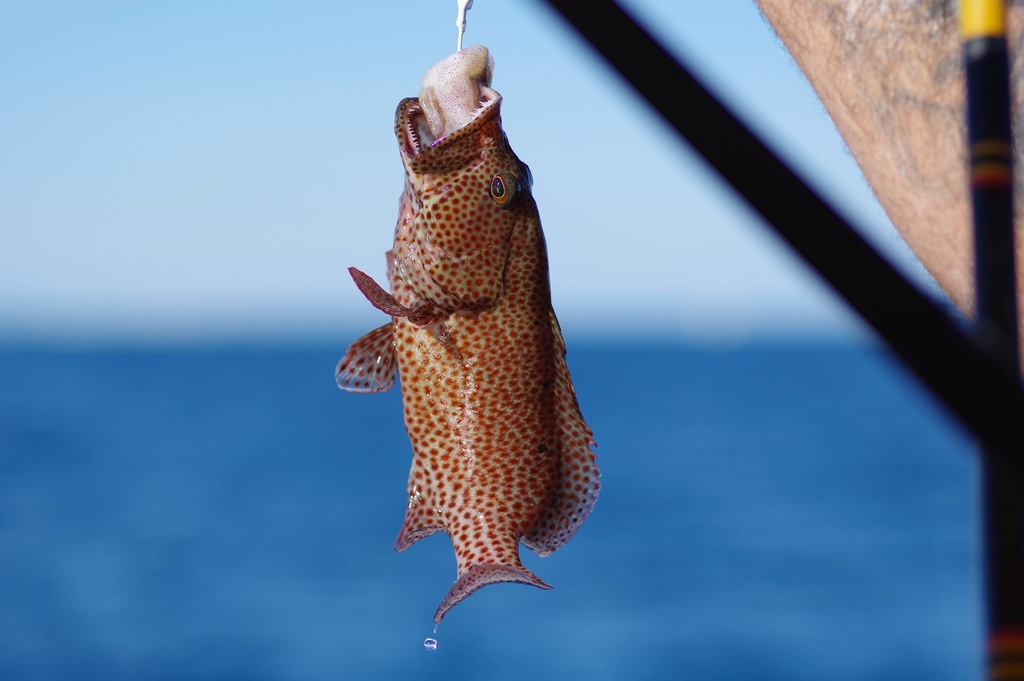
The Coney (Cephalopholis cruentata) is a saltwater fish of the family Serranidae that grows up to 43 cm.
Description
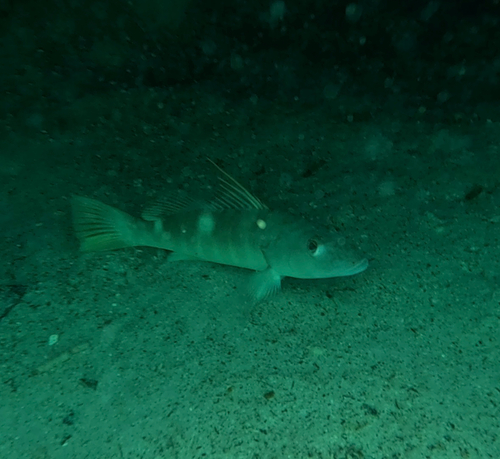
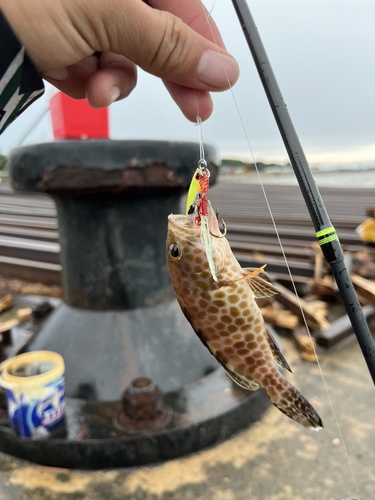
The graysby (Cephalopholis cruentata) is a small grouper of the family Serranidae from the western Atlantic. The species has a stocky, pale body studded with red-brown spots and reaches about 42 cm. It inhabits seagrass (Thalassia) beds and coral reefs and stays hidden near shelters during the day within a small home range; it is solitary and secretive. As an ambush predator it hunts small fishes and crustaceans. Like many groupers the species is a protogynous hermaphrodite, in which fish first function as females and later turn into males.
Frequently asked questions
How do you recognise the Coney?
The Coney has a torpedo-shaped body, is mainly brown and shows a spots pattern.
Where does the Coney live?
The Coney lives in the sea (marine waters) and is mostly found around stony or rocky ground.
How big does the Coney get?
The Coney grows to a maximum of about 43 cm. On average the species is around 20 cm.
Is the Coney dangerous to humans?
The Coney is venomous — handle spines with care and seek medical help after a sting if needed.
Is the Coney edible?
The Coney is rarely eaten.
Download Fin's Fish Guide
Identify fish in seconds, log your catches and dives. Join the TestFlight beta.
All data
Identification
Appearance
Habitat & distribution
Behaviour & biology
For anglers
Safety
Status & sources
Same genus Cephalopholis
More from the family Serranidae


Download Fin's Fish Guide
Identify fish in seconds, log your catches and dives. Join the TestFlight beta.