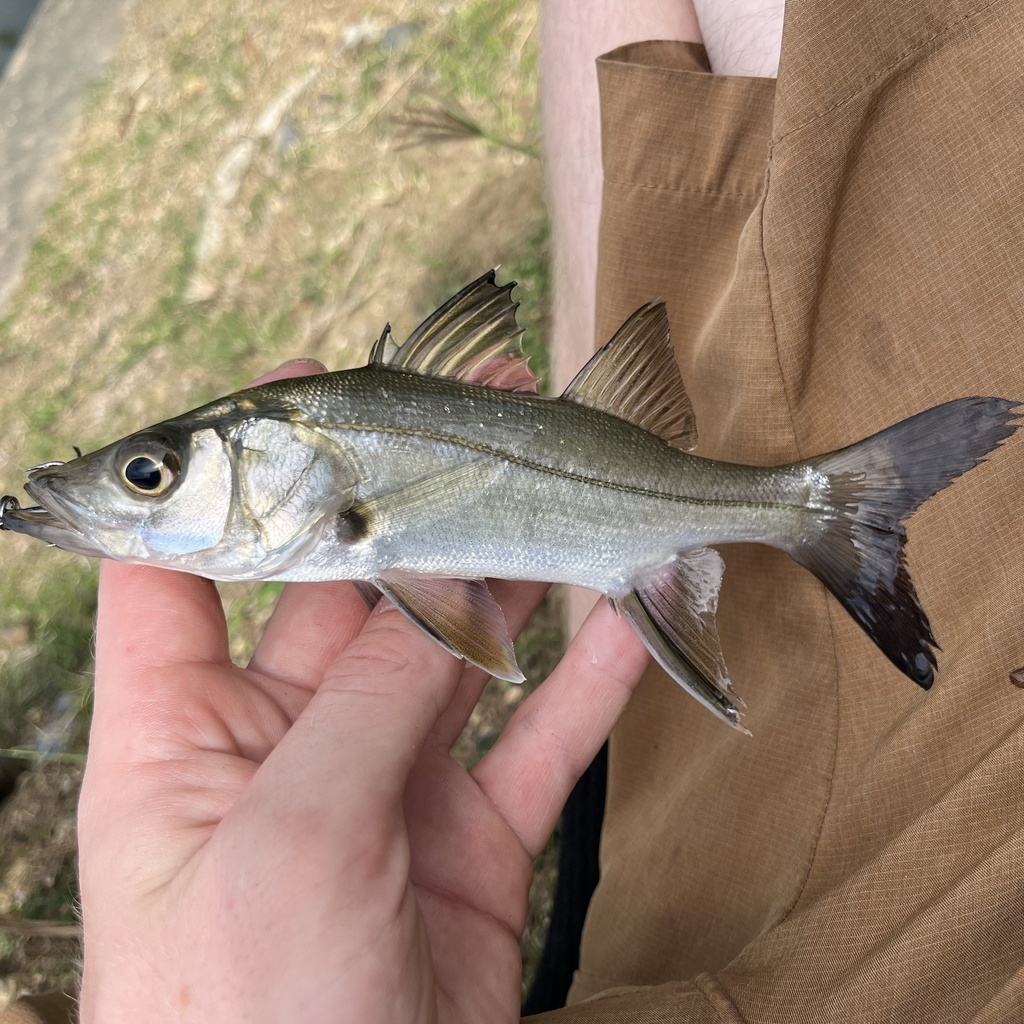
The Constantino snook (Centropomus mexicanus) is a brackish-water fish of the family Centropomidae that grows up to 48 cm.
Description
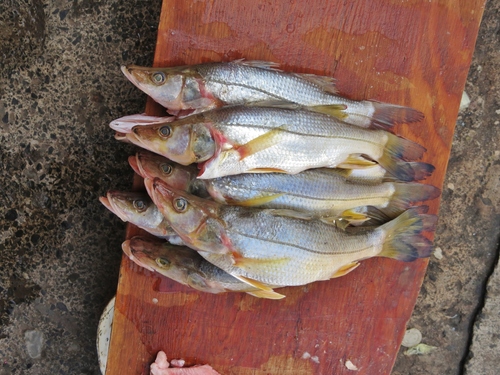
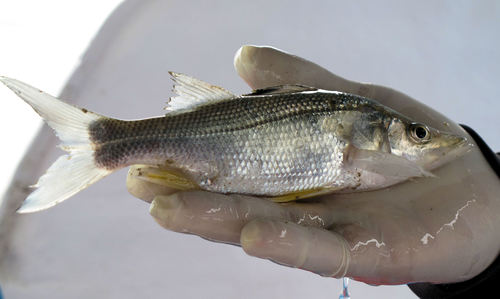
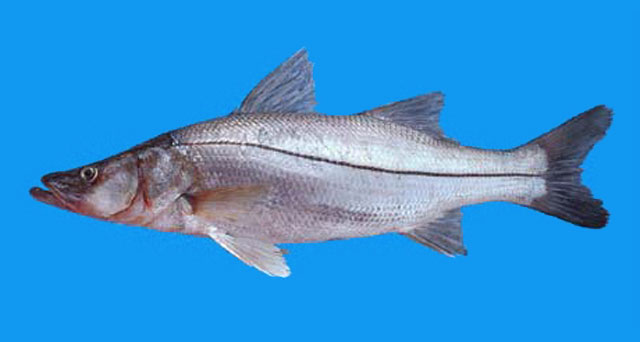
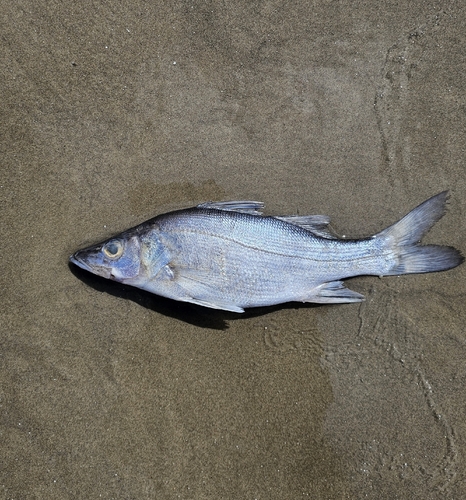
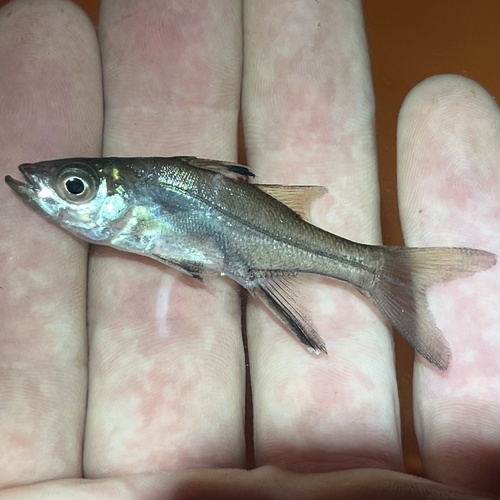
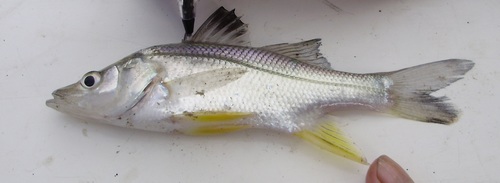
The Mexican snook is a snook (Centropomidae) from the western Atlantic, in the Gulf of Mexico and the Caribbean. The species reaches about 47 cm and has an elongate, silvery body with a conspicuous black lateral line and a projecting lower jaw. It occurs in river mouths and the coastal zone and spawns on shallow banks. The diet consists of small fishes and crustaceans. Juveniles bear a black tip on the dorsal fin and join foraging groups of mojarras, profiting from prey stirred up by their digging. The species is a valued recreational and food fish.
Frequently asked questions
How do you recognise the Constantino snook?
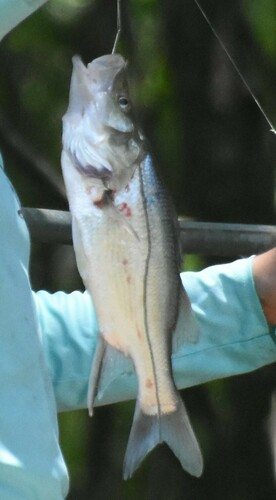
The Constantino snook has a torpedo-shaped body, is mainly silver-grey and shows a horizontal stripes pattern.
Where does the Constantino snook live?
The Constantino snook lives in brackish water and is mostly found around sand or mud bottom.
How big does the Constantino snook get?
The Constantino snook grows to a maximum of about 48 cm. On average the species is around 35 cm.
Is the Constantino snook dangerous to humans?
No, the Constantino snook is harmless to humans.
Is the Constantino snook edible?
Yes, the Constantino snook is commonly eaten.
Download Fin's Fish Guide
Identify fish in seconds, log your catches and dives. Join the TestFlight beta.
All data
Identification
Appearance
Habitat & distribution
Behaviour & biology
For anglers
Safety
Status & sources
Same genus Centropomus
More from the family Centropomidae

Download Fin's Fish Guide
Identify fish in seconds, log your catches and dives. Join the TestFlight beta.