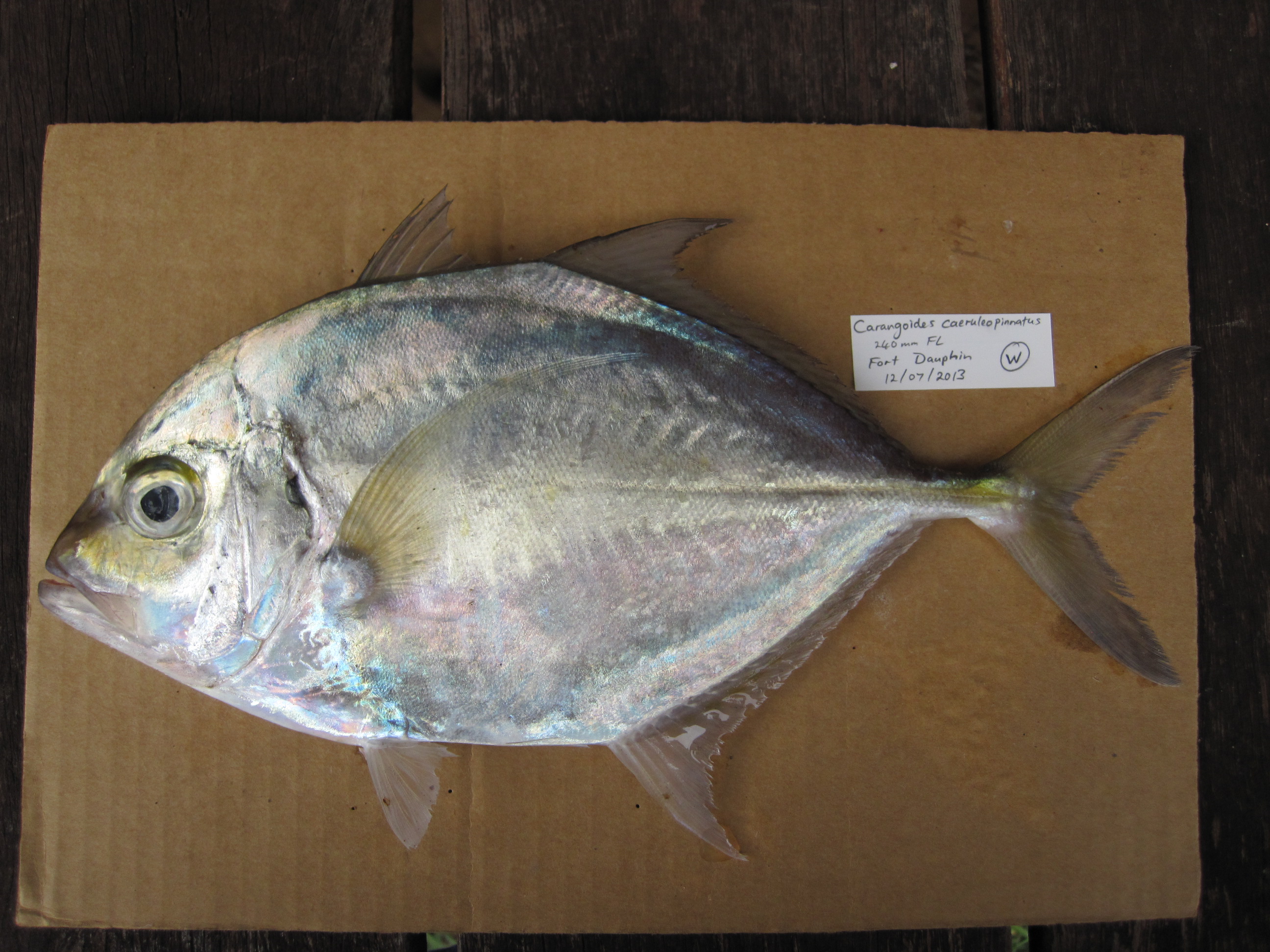
The Coastal trevally (Carangoides coeruleopinnatus) is a saltwater fish of the family Carangidae that grows up to 41 cm.
Description
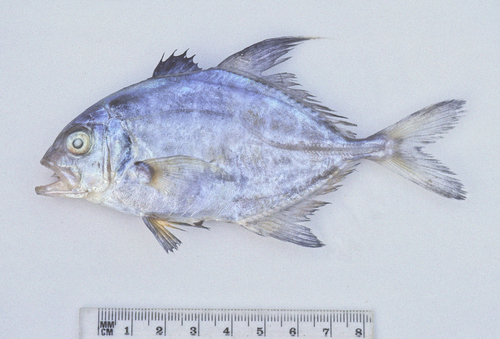
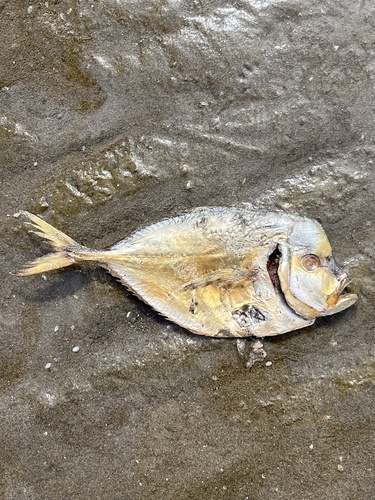
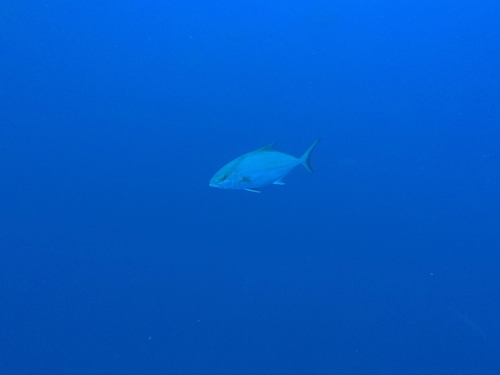
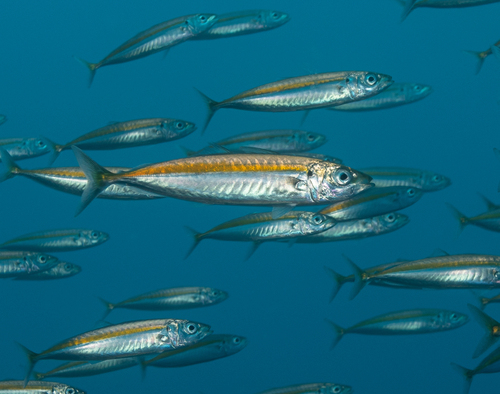
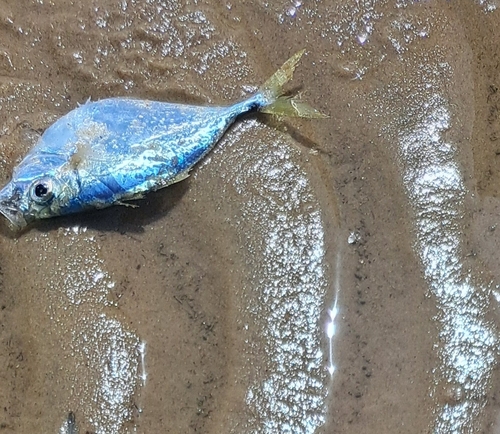
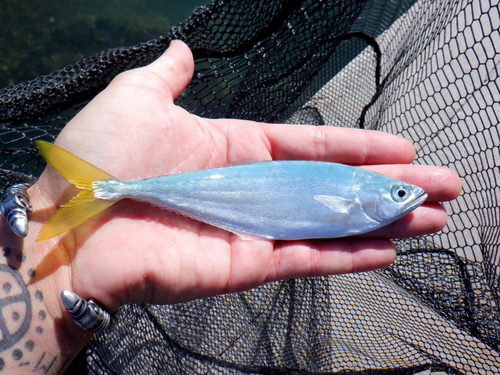
The coastal trevally is a deep, laterally compressed jack of the family Carangidae reaching about 41 cm. The silvery body often has scattered yellow spots on the flank, a deeply forked tail and a row of bony scutes along the tail base that give firmness for fast swimming. The species forms schools in coastal water over reefs and the continental shelf in the Indian and western Pacific Oceans. As a fast hunter it preys on small fish, shrimp and other crustaceans. Because of its power and size it is a sporting catch, and with its tasty flesh it is a valued market and coastal fish across much of its range.
Frequently asked questions
How do you recognise the Coastal trevally?
The Coastal trevally is mainly silver-grey and shows a plain pattern.
Where does the Coastal trevally live?
The Coastal trevally lives in the sea (marine waters) and is mostly found around open water.
How big does the Coastal trevally get?
The Coastal trevally grows to a maximum of about 41 cm.
Is the Coastal trevally dangerous to humans?
No, the Coastal trevally is harmless to humans.
Is the Coastal trevally edible?
Yes, the Coastal trevally is commonly eaten.
Download Fin's Fish Guide
Identify fish in seconds, log your catches and dives. Join the TestFlight beta.
All data
Identification
Appearance
Habitat & distribution
Behaviour & biology
For anglers
Safety
Status & sources
Same genus Carangoides
More from the family Carangidae

Download Fin's Fish Guide
Identify fish in seconds, log your catches and dives. Join the TestFlight beta.