Home · Osphronemidae · Blue gourami
Blue gourami (Trichopodus trichopterus) — Osphronemidae

Blue gourami

Trichopodus trichopterus
Family: Osphronemidae
LC · Least Concern
NativeIntroduced

The Blue gourami (Trichopodus trichopterus) is a freshwater fish of the family Osphronemidae that grows up to 15 cm.

Length
15 cm
Water
Freshwater
Diet
Omnivore
Behaviour
Small groups
Activity
Diurnal
Body shape
Flat / disc-shaped
Substrate
Mixed bottom
Danger
Harmless
Range
Southeast Asia, in lowland swamps, marshy areas, canals and shallow, slow-flowing or standing waters with abundant aquatic plants.
Edibility
Rarely eaten

Want the complete picture on the Blue gourami?

Get the app

Description

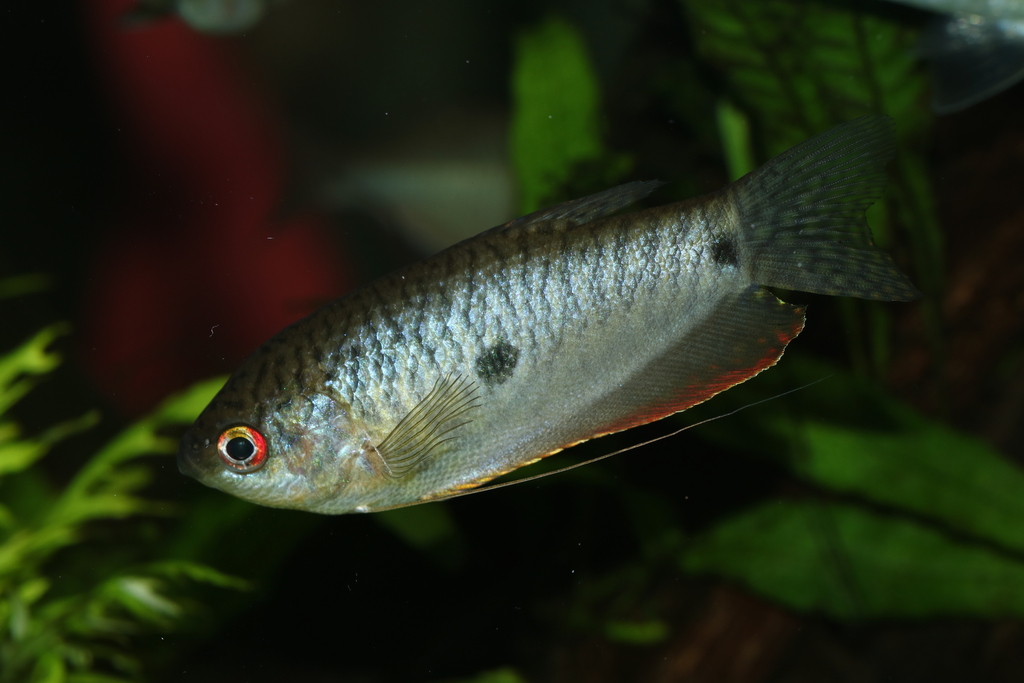
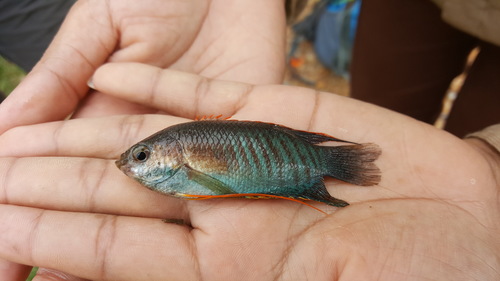
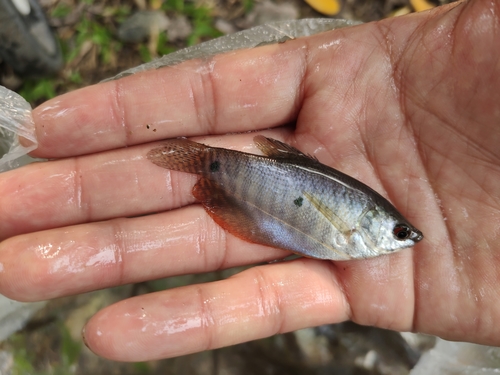
The three spot gourami is a labyrinth fish (family Osphronemidae) of Southeast Asia. The species reaches about 15 cm and has a deep, laterally compressed, silvery-bluish body with two dark spots on the flank that, counting the eye, form the 'three spots'. The pelvic fins are modified into long feeler-threads. It inhabits lowland marshes, wetlands and canals with abundant aquatic plants and can gulp air with a labyrinth organ. Its diet is broad. Males build a bubble nest and guard the brood. The species is a very popular aquarium fish and has been introduced outside its native range.

Frequently asked questions

How do you recognise the Blue gourami?

The Blue gourami has a flattened, disc-shaped body, is mainly silver-grey and shows a spots pattern. Labyrinth fish that can gulp air; thread-like pelvic fins as feelers; males build a bubble nest; popular aquarium fish.

Where does the Blue gourami live?

The Blue gourami lives in fresh water and is mostly found around mixed bottom. Southeast Asia, in lowland swamps, marshy areas, canals and shallow, slow-flowing or standing waters with abundant aquatic plants.

How big does the Blue gourami get?

The Blue gourami grows to a maximum of about 15 cm. On average the species is around 10 cm.

Is the Blue gourami dangerous to humans?

No, the Blue gourami is harmless to humans. None required: this species is harmless to humans.

Is the Blue gourami edible?

The Blue gourami is rarely eaten.

More photos
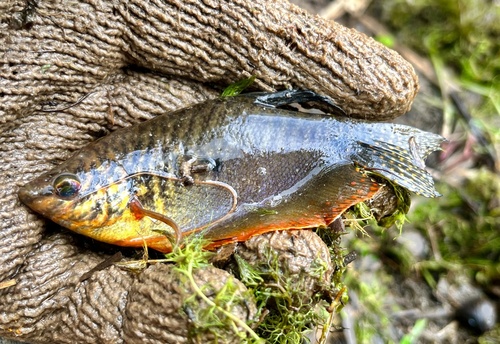
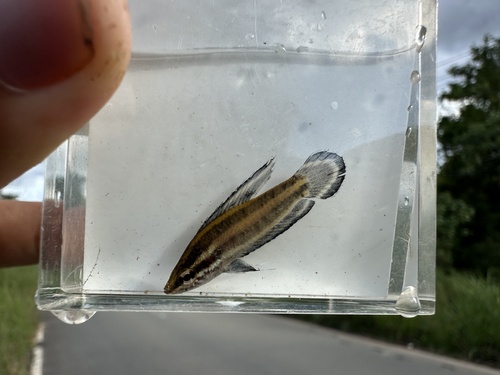
Blue gourami (Trichopodus trichopterus) — Osphronemidae — 2
iNaturalist ((c) 刘光裕 Liu Guangyu, some rights reserved (CC BY-NC))
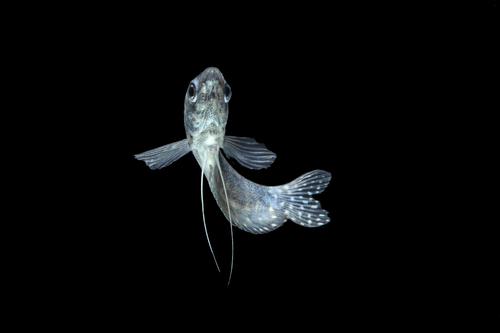
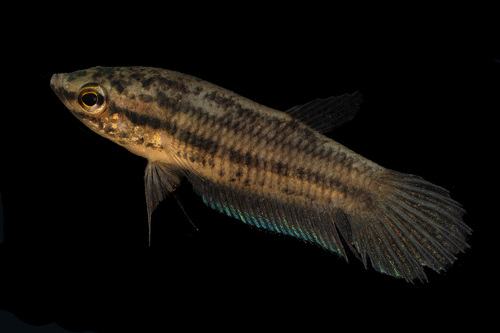
Blue gourami (Trichopodus trichopterus) — Osphronemidae — 3
iNaturalist ((c) Aiman Azmi, some rights reserved (CC BY-NC-SA))
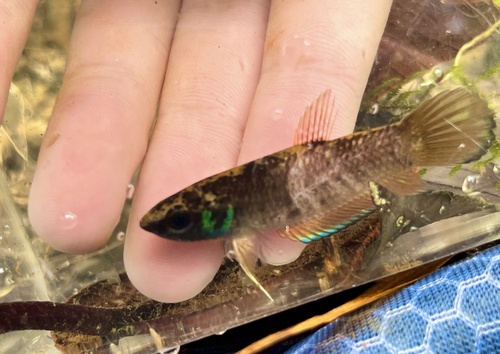
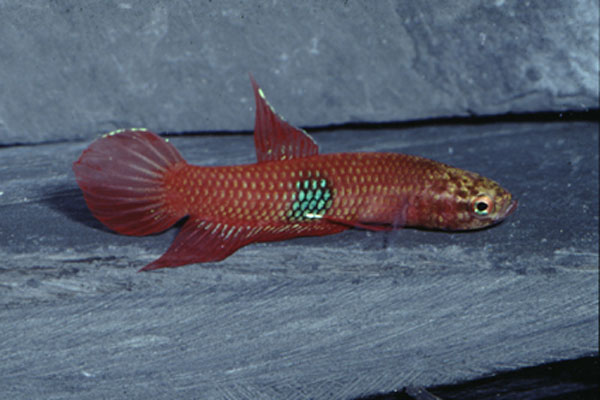
Blue gourami (Trichopodus trichopterus) — Osphronemidae — 4
iNaturalist ((c) cheewapanavet, some rights reserved (CC BY-NC))
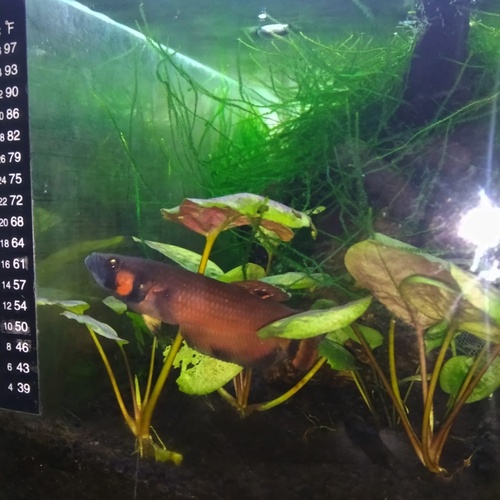
Blue gourami (Trichopodus trichopterus) — Osphronemidae — 5
Wikimedia Commons — Buffon, Georges Louis Leclerc; Cuvier, Georges; Valenciennes (Public domain)
Fin

Want the complete picture on the Blue gourami?

Point your camera at the fish and Fin names the species in seconds. Free, and the Blue gourami is one of 12,519 species in the app.

Get the app →

All data

Identification

English name
Blue gourami verified
Scientific name
Trichopodus trichopterus
Family
Osphronemidae
Other names
Blue gourami; Cosby gourami; Giant gouramy; Gold gourami; Three spot gourami; Golden gourami; Opaline gourami; Threespot gourami; Siamese gurammy; Three-spot gourami; Three-spot gouramy; Two-spot gouramy verified

Appearance

Size class
Small verified
Max length (cm)
15.0 verified
Average length (cm)
10.0 verified
Body shape
Flat / disc-shaped sourced
Dominant colour
Silver / grey inferred
Pattern
Spots inferred
Tail shape
Forked inferred
Mouth position
Superior (upward) inferred
Lips
Thin inferred
Barbels
No sourced
Dorsal fins
One continuous inferred
Dorsal spines
Yes sourced

Habitat & distribution

Water type
Freshwater sourced
Substrate
Mixed bottom sourced
Natural range
Southeast Asia, in lowland swamps, marshy areas, canals and shallow, slow-flowing or standing waters with abundant aquatic plants. inferred
Origin
Native sourced

Behaviour & biology

Diet
Omnivore sourced
Diet (detail)
Zooplankton, insect larvae, small invertebrates and plant material sourced
Social behaviour
Small groups inferred
Territorial
Yes inferred
Activity
Diurnal inferred
Reproduction
Separate sexes sourced
Sexual dimorphism
Yes inferred
Seasonality
Present year-round in its habitat; no pronounced seasonality known. inferred
Special features
Labyrinth fish that can gulp air; thread-like pelvic fins as feelers; males build a bubble nest; popular aquarium fish. sourced

For anglers

Edibility
Rarely eaten sourced
Fishing method
Small in size and barely an angling target; mostly caught incidentally or as baitfish. inferred
Regulations source
FishBase ↗ inferred

Safety

Danger to humans
Harmless sourced
First aid
None required: this species is harmless to humans. sourced

Status & sources

Sources
FishBase via GBIF (DwC-A), CC-BY-NC 4.0

Same genus Trichopodus

More from the family Osphronemidae
Fin

Want the complete picture on the Blue gourami?

Point your camera at the fish and Fin names the species in seconds. Free, and the Blue gourami is one of 12,519 species in the app.

Get the app →
Is this the Blue gourami? Get the app