
The Bighead sculpin (Batrachocottus baicalensis) is a freshwater fish of the family Cottocomephoridae that grows up to 19 cm.
Description
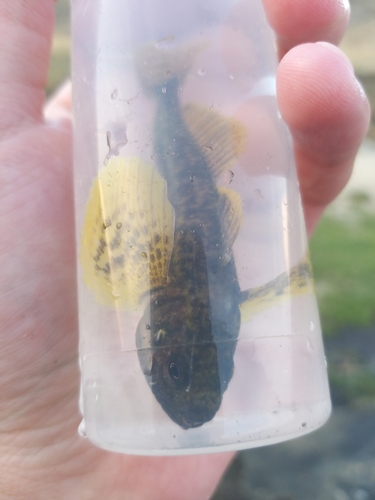
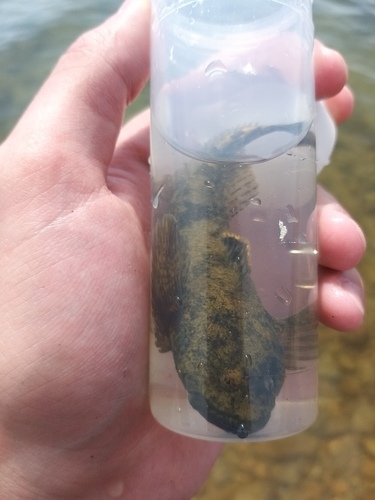
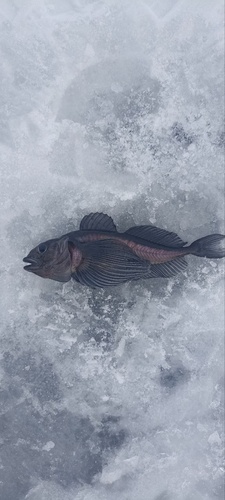
The bighead sculpin is a stocky freshwater sculpin of the family Cottocomephoridae reaching about 19 cm and endemic to Lake Baikal. Characteristic are the strikingly large, broad head and the broad, fan-shaped pectoral fins with which the fish presses against the bottom; the brown-mottled, scaleless body blends well against stones. The species lives on stone and rock bottoms of shallow to moderate water of Lake Baikal and is one of the numerous sculpins found only in this ancient lake. As an ambush predator it seizes amphipods, insect larvae, fish eggs and small fish. In the breeding season the male guards the eggs laid under a stone. The sculpins form an important link in Baikal's food web.
Frequently asked questions
How do you recognise the Bighead sculpin?
The Bighead sculpin has an irregular in shape body, is mainly brown and shows a marbled pattern.
Where does the Bighead sculpin live?
The Bighead sculpin lives in fresh water and is mostly found around stony or rocky ground.
How big does the Bighead sculpin get?
The Bighead sculpin grows to a maximum of about 19 cm.
Is the Bighead sculpin dangerous to humans?
No, the Bighead sculpin is harmless to humans.
Is the Bighead sculpin edible?
The Bighead sculpin is rarely eaten.
Download Fin's Fish Guide
Identify fish in seconds, log your catches and dives. Join the TestFlight beta.
All data
Identification
Appearance
Habitat & distribution
Behaviour & biology
For anglers
Safety
Status & sources
More from the family Cottocomephoridae
Download Fin's Fish Guide
Identify fish in seconds, log your catches and dives. Join the TestFlight beta.