 Fin's Fish Guide
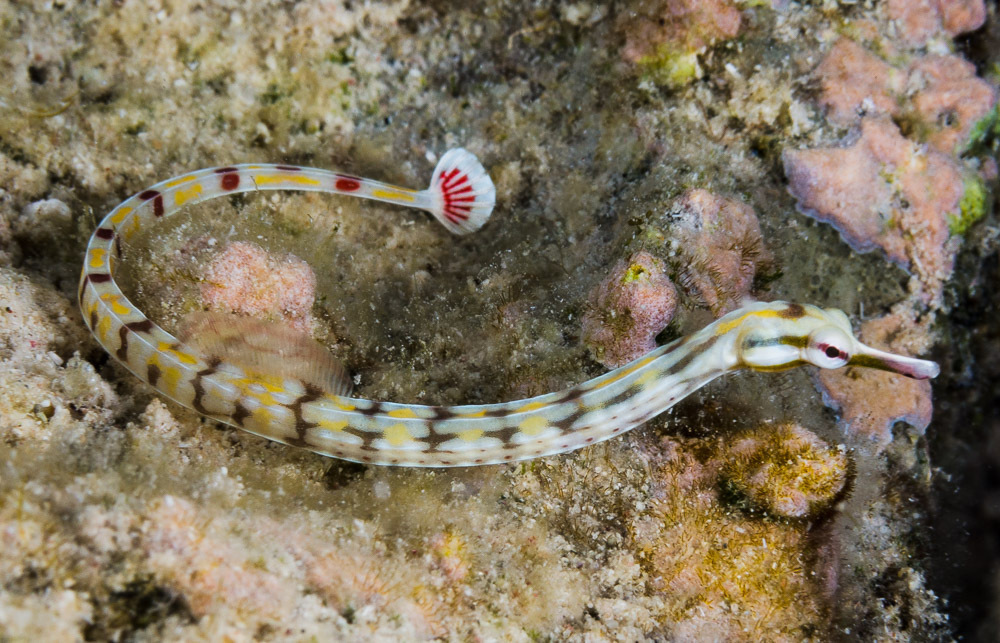
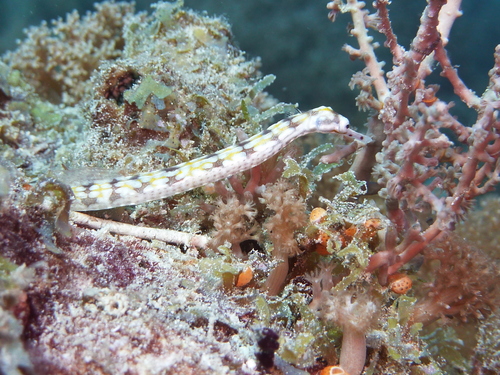
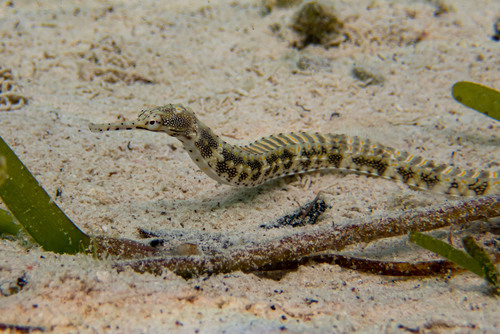
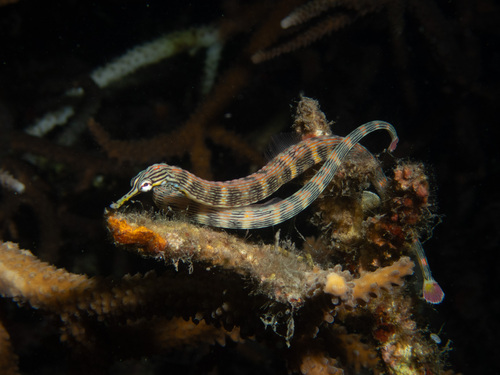
The Banded pipefish (Corythoichthys flavofasciatus) is a saltwater fish of the family Syngnathidae that grows up to 12 cm.
Indo-Pacific, from the Red Sea and East Africa to the western and central Pacific.
Description
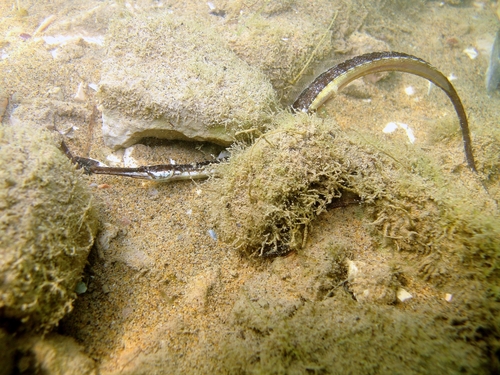
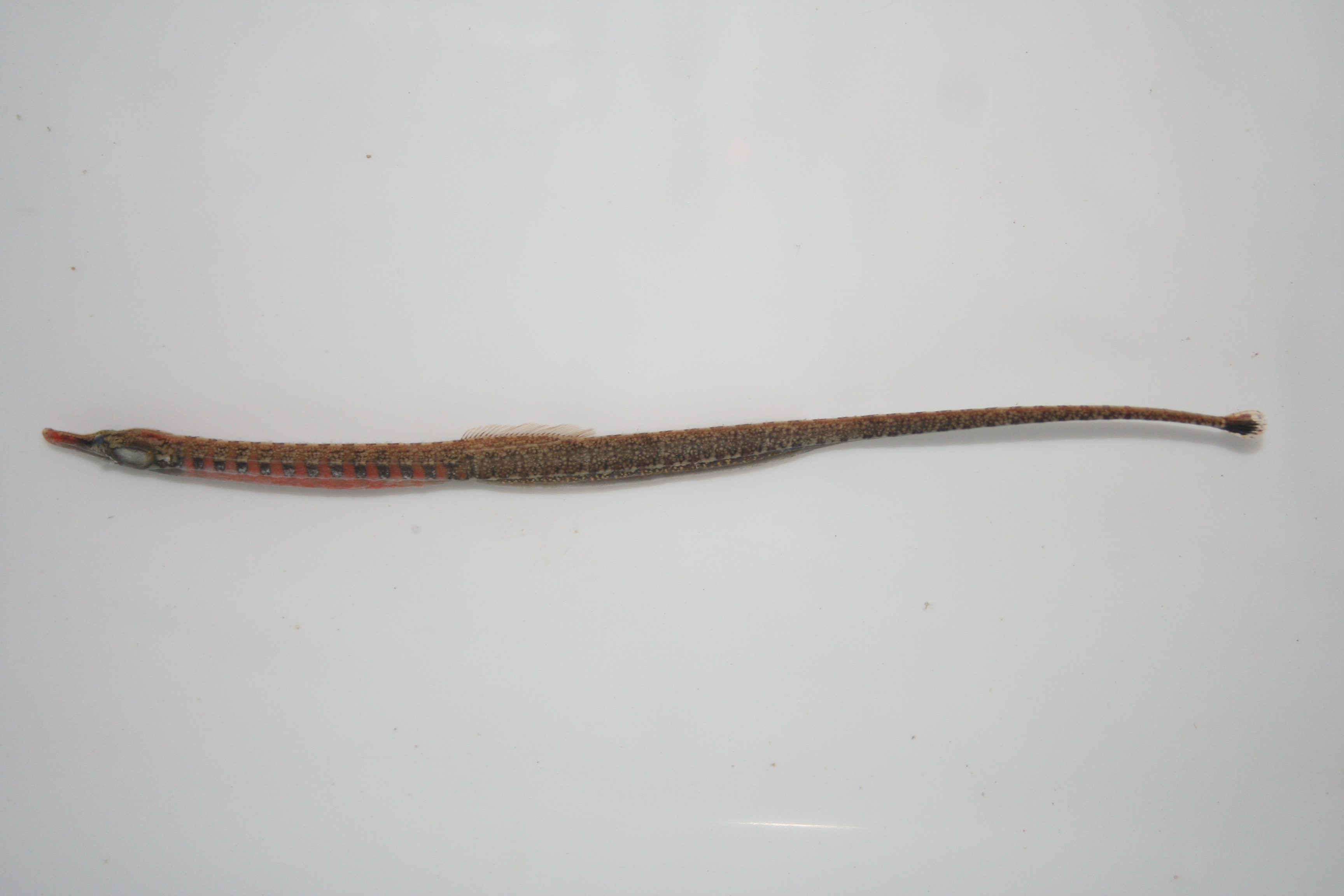
The network pipefish is a small pipefish of the family Syngnathidae widely distributed across the Indo-Pacific. The species has an elongate, ringed body with a fine network of red-brown lines on a pale ground and reaches about 12 cm. It lives among algal-matted rocks and living corals of lagoon and seaward reefs, from the tide line to about 25 m deep. The diet consists of small invertebrates, especially copepods. As in all pipefishes the male carries the eggs in a brood pouch under the tail.
Frequently asked questions
How do you recognise the Banded pipefish?
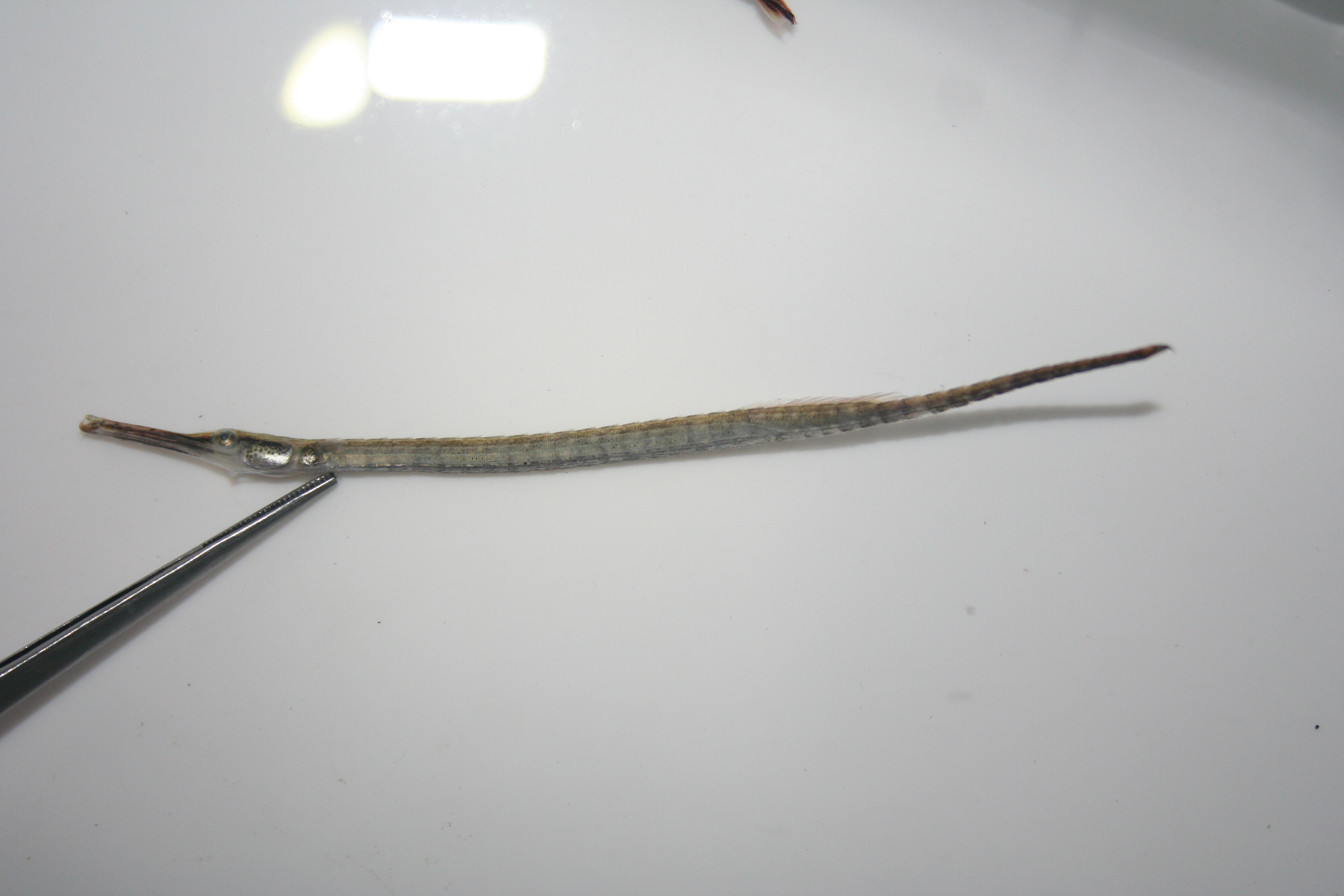
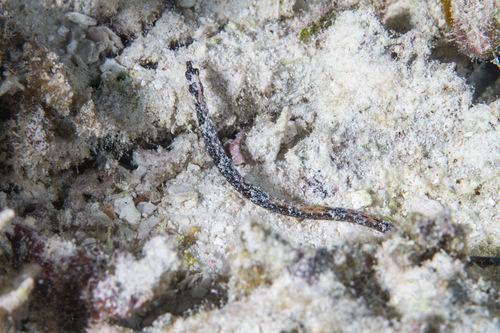
The Banded pipefish has a snake-like body, is mainly white and shows a marbled pattern. Fine network pattern of lines; the male carries the eggs in a brood pouch under the tail.
Where does the Banded pipefish live?
The Banded pipefish lives in the sea (marine waters) and is mostly found around stony or rocky ground. Indo-Pacific, from the Red Sea and East Africa to the western and central Pacific.
How big does the Banded pipefish get?
The Banded pipefish grows to a maximum of about 12 cm.
Is the Banded pipefish dangerous to humans?
No, the Banded pipefish is harmless to humans. None required: this species is harmless to humans.
Is the Banded pipefish edible?
The Banded pipefish is not usually eaten.
More photos

Want the complete picture on the Banded pipefish?
Point your camera at the fish and Fin names the species in seconds. Free, and the Banded pipefish is one of 12,519 species in the app.
All data
Identification
Appearance
Habitat & distribution
Behaviour & biology
For anglers
Safety
Status & sources
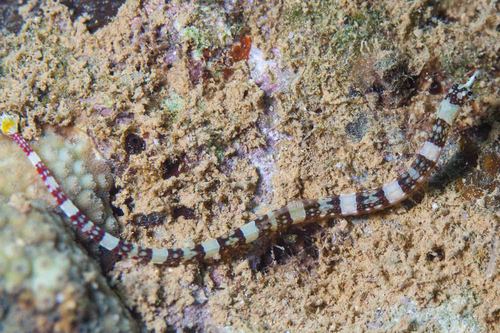
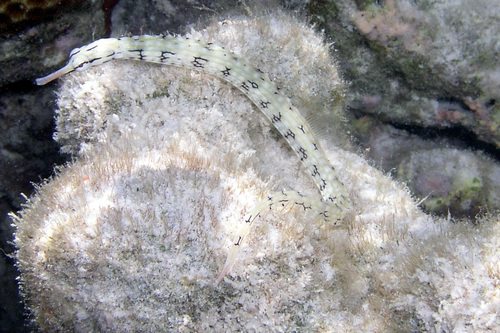
Same genus Corythoichthys
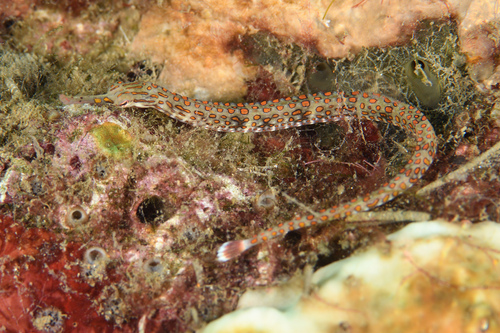

More from the family Syngnathidae


Want the complete picture on the Banded pipefish?
Point your camera at the fish and Fin names the species in seconds. Free, and the Banded pipefish is one of 12,519 species in the app.