
The Lurid driftfish (Ariomma luridum) is a saltwater fish of the family Ariommatidae that grows up to 30 cm.
Description
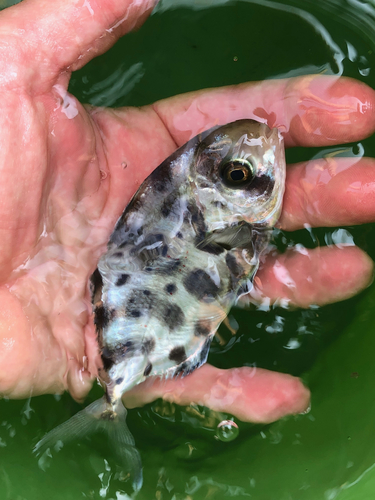
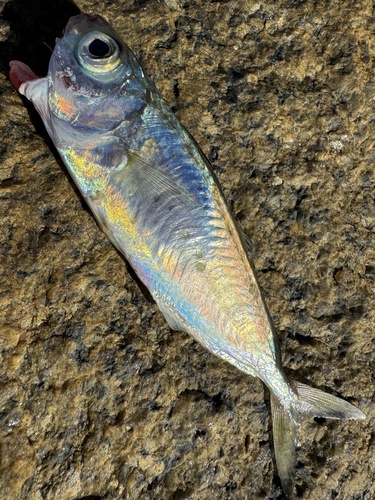
The lurid driftfish is a fish of the family Ariommatidae from deeper coastal and ocean waters of the Pacific. The species grows to about 30 cm and has a streamlined, silvery to brownish body with large eyes and a thin tail stem. Adults live near the bottom on the continental shelf and slope, while juveniles are more pelagic and sometimes stay under floating objects. As an omnivore it feeds on small zooplankton, gelatinous organisms and small invertebrates. Owing to its deeper habits the species is little seen and is harmless to humans.
Frequently asked questions
How do you recognise the Lurid driftfish?
The Lurid driftfish has a torpedo-shaped body, is mainly silver-grey and shows a plain pattern.
Where does the Lurid driftfish live?
The Lurid driftfish lives in the sea (marine waters) and is mostly found around open water.
How big does the Lurid driftfish get?
The Lurid driftfish grows to a maximum of about 30 cm.
Is the Lurid driftfish dangerous to humans?
No, the Lurid driftfish is harmless to humans.
Is the Lurid driftfish edible?
The Lurid driftfish is rarely eaten.
Download Fin's Fish Guide
Identify fish in seconds, log your catches and dives. Join the TestFlight beta.
All data
Identification
Appearance
Habitat & distribution
Behaviour & biology
Safety
Status & sources
Same genus Ariomma


More from the family Ariommatidae
Download Fin's Fish Guide
Identify fish in seconds, log your catches and dives. Join the TestFlight beta.