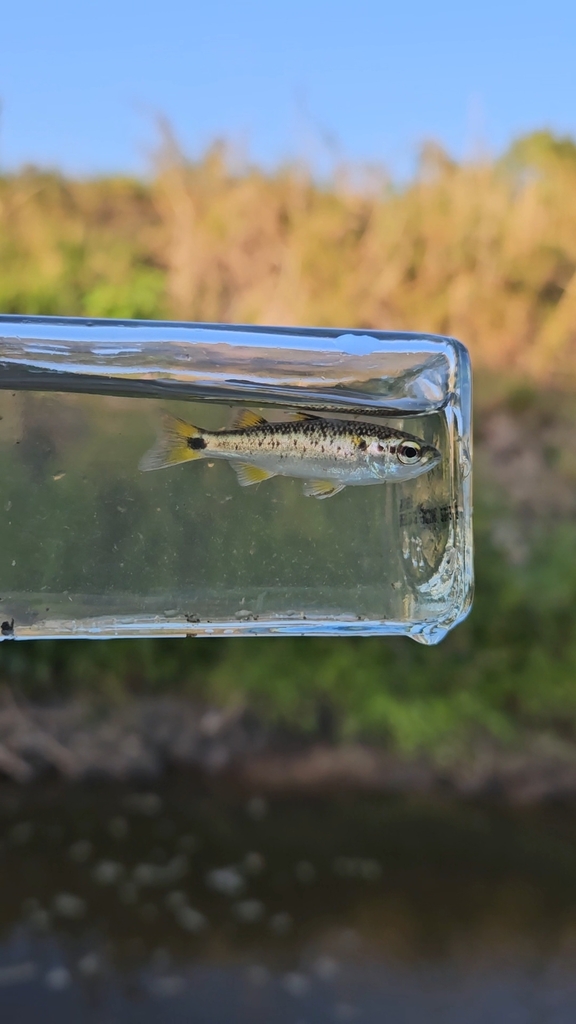
The Mountain mullet (Agonostomus monticola) is a fish that lives in both fresh and salt water of the family Mugilidae that grows up to 36 cm.
Description
The mountain mullet is a mullet (family Mugilidae) of the western Atlantic and adjacent fresh water. The species grows to about 36 cm and has a streamlined, silvery body. It is unusual among mullets: it is the only one that ascends far inland and spends its adult life in clear mountain rivers, migrating to the sea to spawn (catadromous). Its diet consists of insects, small crustaceans, algae and detritus. The species is caught and eaten in parts of Central America and is harmless to humans.
Frequently asked questions
How do you recognise the Mountain mullet?
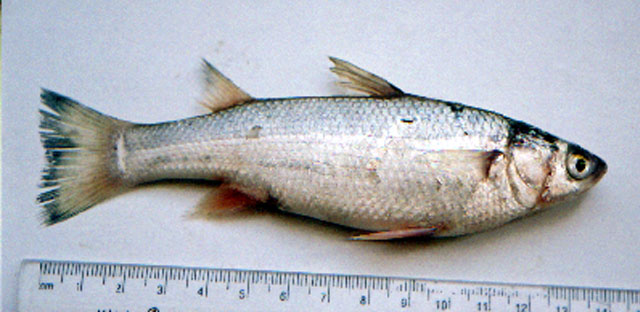
The Mountain mullet has a torpedo-shaped body, is mainly silver-grey and shows a plain pattern.
Where does the Mountain mullet live?
The Mountain mullet lives in both fresh and salt water and is mostly found around mixed bottom.
How big does the Mountain mullet get?
The Mountain mullet grows to a maximum of about 36 cm.
Is the Mountain mullet dangerous to humans?
No, the Mountain mullet is harmless to humans.
Is the Mountain mullet edible?
Yes, the Mountain mullet is commonly eaten.
Download Fin's Fish Guide
Identify fish in seconds, log your catches and dives. Join the TestFlight beta.
All data
Identification
Appearance
Habitat & distribution
Behaviour & biology
For anglers
Safety
Status & sources
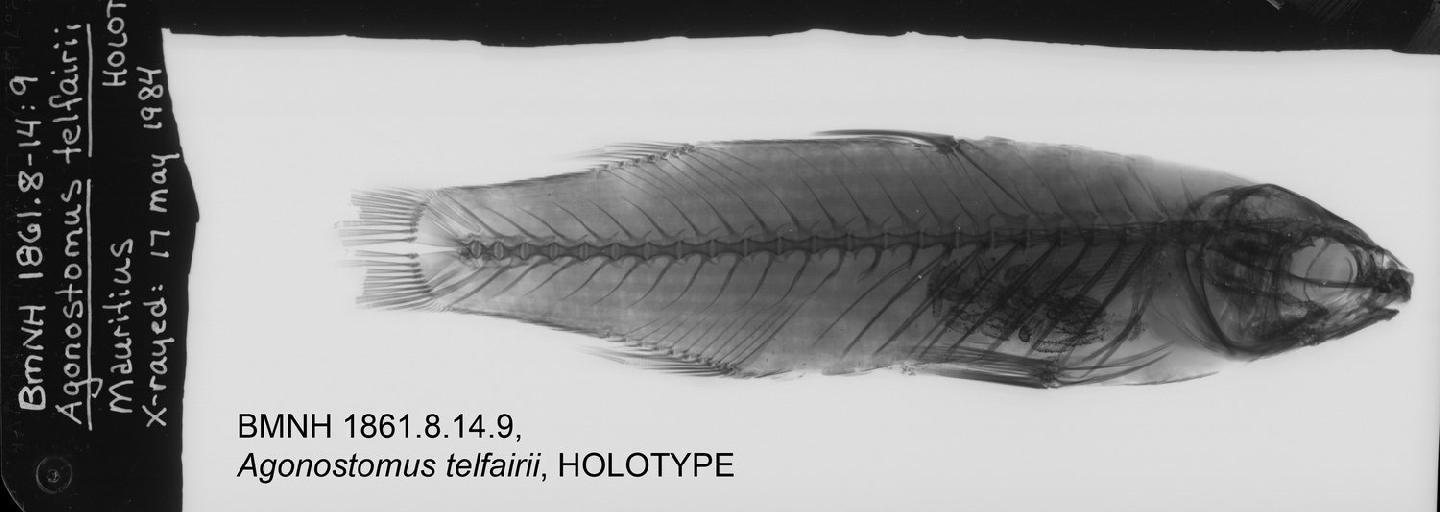
Same genus Agonostomus
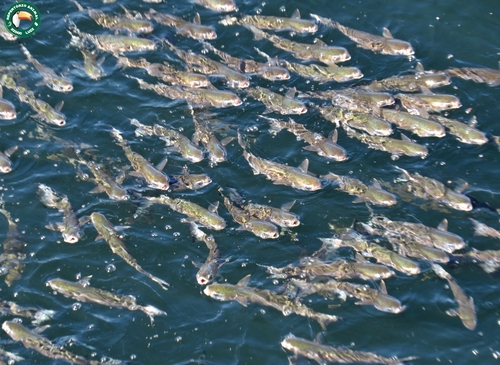
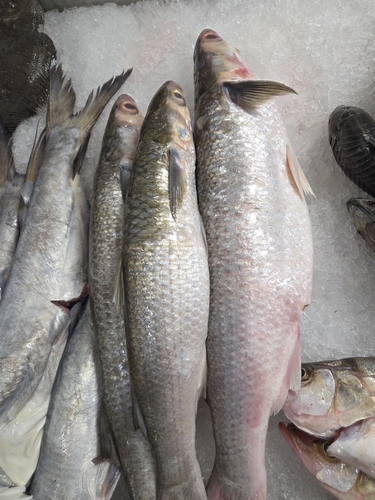
More from the family Mugilidae



Download Fin's Fish Guide
Identify fish in seconds, log your catches and dives. Join the TestFlight beta.